

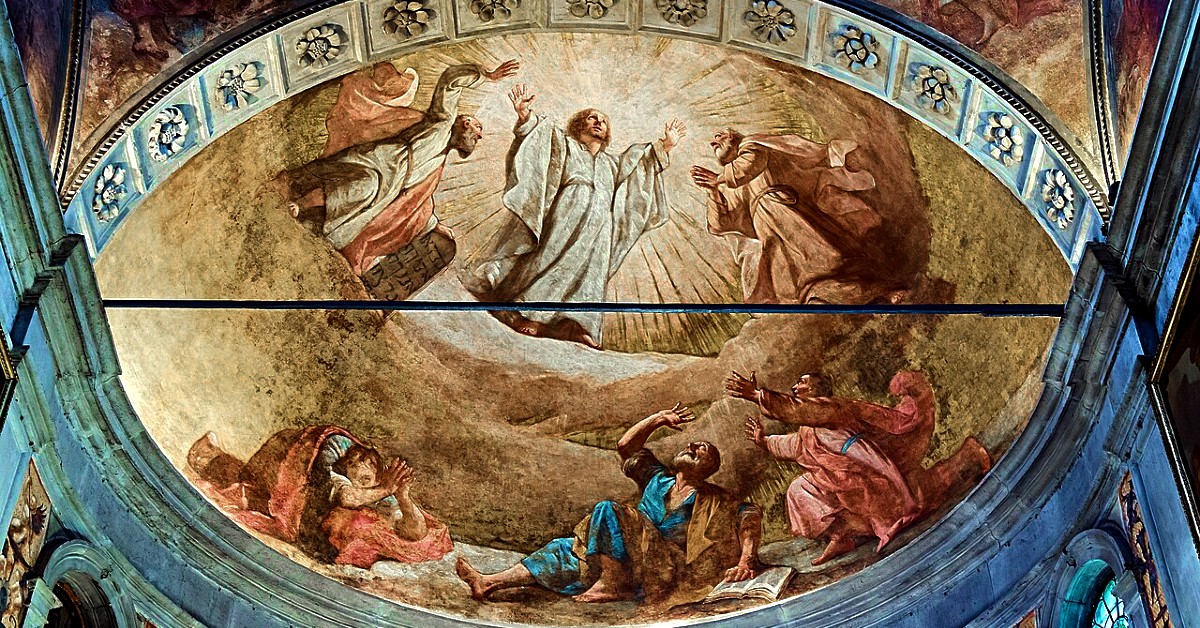
On Aug. 6, Christians around the world will celebrate the Feast of the Transfiguration. In this pivotal moment, Jesus takes Peter, James, and John up a high mountain. There, before their eyes, he is transfigured — his face shines like the sun, his clothes become dazzling white, and the prophets Moses and Elijah appear beside him. A voice from heaven declares, “This is my Son, whom I love. Listen to him!”
In Lent, the Church reserves the second Sunday for the Transfiguration, but there it is to show that the aim of life even through suffering is the final glory we receive from the Glory of the Cross and Resurrection of Jesus first.
Overwhelmed by the glory manifested in the dazzling white garments and the hands-on conversation of Jesus with Elijah and Moses, Peter blurts out, “Lord, it is good for us to be here!” He even suggests building three tents so they can remain in that radiant moment. Peter’s instinctive reaction captures something deeply human: When we encounter beauty, goodness, and divine presence, we want to stay. We want to protect and preserve it. Our job is to create or at least point out beauty in unattractive perspectives.
Peter’s simple declaration — “It is good for us to be here” — carries profound implications for how we view human life, especially in our current culture. In a society that increasingly treats some lives as optional or burdensome, the Transfiguration calls us to see the hidden glory in every person, particularly the most vulnerable.
The timing of the event was significant. The Synoptic Gospels place the Transfiguration shortly after Jesus first predicts his coming suffering and death. The apostles receive this glimpse of glory not as an escape from the Cross, but as strength to face it. They see the full dignity of Christ before they witness his humiliation. In the same way, the pro-life witness invites us to affirm the full dignity and potential of every human being — even when that dignity is not yet fully visible or culturally cast aside as a “choice.” And like Jesus’s encouragement after giving his Passion predictions just before this “peak experience,” we can put in perspective a lasting peace and “glory” of doing the right and rewarding thing: To save and love life.
In the earliest weeks of pregnancy, a new human life exists with a beating heart and unique DNA. It is not, as often voiced, “a potential human being” but rather “a human being with potential.” To some that life may appear small, hidden, or inconvenient. Yet, like the transfigured Christ whose glory was veiled in ordinary humanity until the mountain, every unborn child carries the image of God. Their life is inherently good. “Lord, it is good for us to be here” is the right response to their existence.
Peter wanted to build tents on the mountain. Today, building shelters means creating concrete places of welcome and support: Pregnancy care centers that provide medical and material assistance, with empathetic support to mothers; adoption agencies that help place children in loving homes; churches and communities that walk with families facing unexpected pregnancies; and laws that protect the weakest among us. These are not abstract gestures; they are practical ways of saying to both mother and child, “It is good that you are here,” and that “we are here” for you.
This challenges the idea that some lives are not worth living. The elderly, the disabled, the terminally ill, and those with special needs often face subtle or overt messages that their presence is a burden. The Transfiguration reminds us that true glory can be hidden beneath what the world considers weakness or even a bother, stressing inconvenience. The same Lord who dazzled on the mountain would later hang on a cross, revealing that suffering and sacrifice do not negate dignity — they can become the path to greater glory, resurrection to eternal life.
None of this is being “judgmental or imposing religious beliefs” on anyone. It is support. For the core intuition behind “It is good for us to be here” is deeply human and accessible to people of all or no faith. Parents who welcome a child with disabilities, doctors who treat the tiniest premature infants, and volunteers who sit with the lonely elderly are living this truth. They see worth where others might see inconvenience. Peter didn’t evaluate the Transfiguration scene for utility. He didn’t weigh whether the vision was convenient or aligned with his plans. He simply saw glory and said, It is good. We are called to the same posture toward the vulnerable.
The true pro-life response is compassionate and comprehensive, offering practical help rather than judgment. The Transfiguration of Jesus does not ignore the road to Calvary that lay ahead for Jesus; it equips the disciples to walk it with hope. Likewise, a consistent pro-life ethic calls us to support mothers and families through pregnancy, birth, and beyond.
As we approach the Feast of the Transfiguration, we are invited to climb the mountain again in our imagination. To see the glory of Christ shining through every human face. To hear Peter’s words echo in our hearts: “Lord, it is good for us to be here.”
In a world conditioned to discard the inconvenient or imperfect – categories that account for most abortions and increasing numbers of end-of-life situations – let us continue to build shelters instead of tearing them down. Jesus was spectacularly transfigured for the Apostles following the crisis of his previous temptations and prediction of his suffering and death. It was a glimpse of perseverance and perspective of his Resurrection after death. May we affirm the goodness of every life — born and unborn — and trust that the same divine glory revealed on the mountain is present, often hidden but always real, in the person next to us, or within or hospitalized.
That is the transfiguring power of seeing life as God sees it. Beyond tents, beyond mountains, into eternity. With that view, it is always “good to be here.”
Fr. Denis Wilde, OSA, Ph.D., is a pastoral associate for Priests for Life. A concert pianist, he was formerly an associate professor of music at Villanova University.
Your support brings the truth to the world.
Catholic Online News exists because of donors like you. We are 100% funded by people who believe the world deserves real, uncensored news rooted in faith and truth — not corporate agendas. Your gift ensures millions can continue to access the news they can trust — stories that defend life, faith, family, and freedom.
When truth is silenced, your support speaks louder.


