

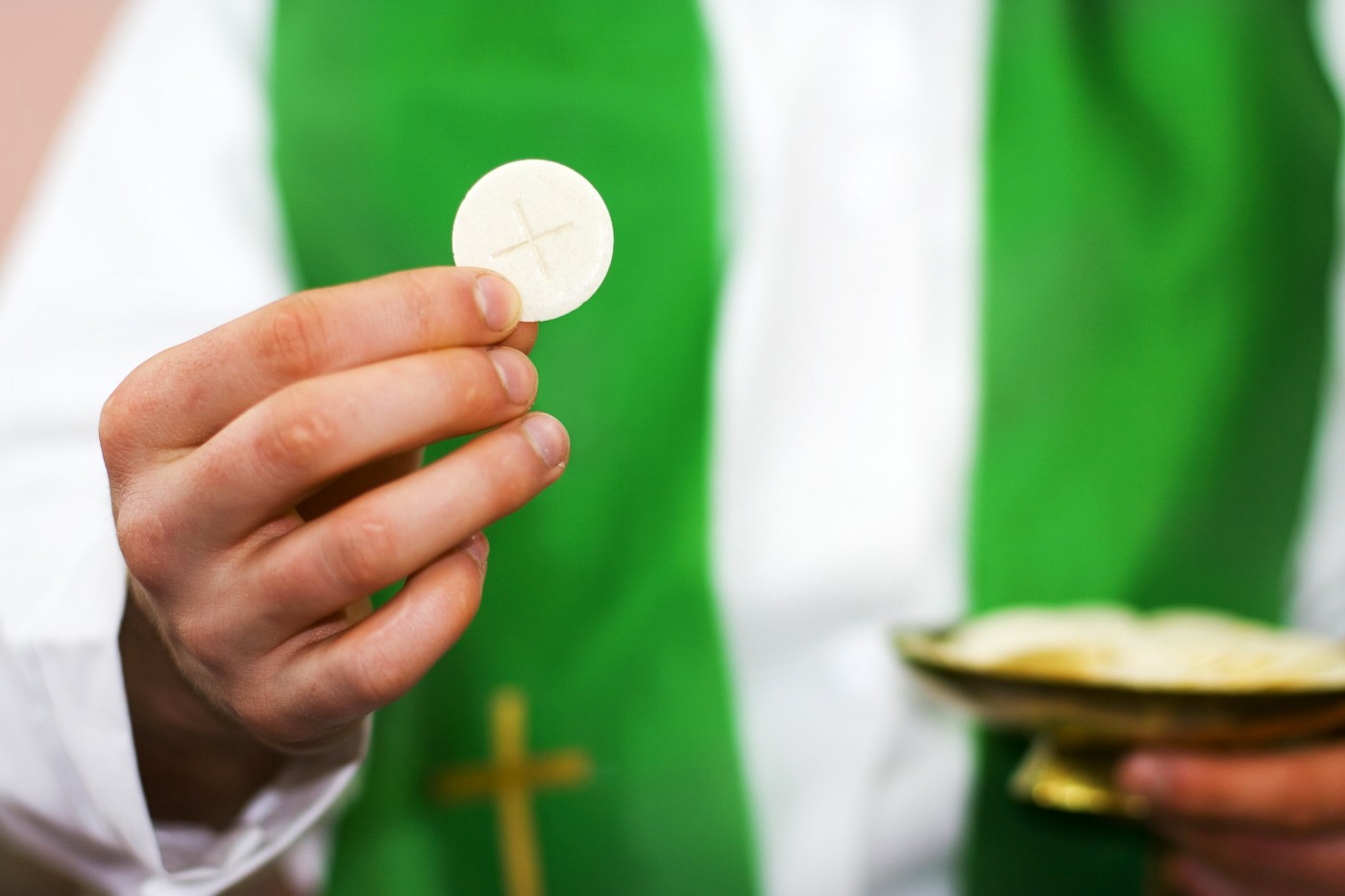
A recent meeting between Vatican officials and bishops from Panama has brought renewed attention to disagreements among Catholics over how Holy Communion should be received, including questions about kneeling, receiving the Eucharist in the hand, and traditional devotional practices.
The Vatican’s Dicastery for Divine Worship and the Discipline of the Sacraments addressed these concerns during an ad limina visit by the Episcopal Conference of Panama, according to a summary published on the dicastery’s official website.
The discussion included concerns about what Vatican officials described as the “danger of extremism in the liturgical sphere and of the instrumentalization of the Eucharistic celebration by certain groups of the faithful.”
The dicastery, headed by Cardinal Arthur Roche, specifically identified disputes involving the reception of Holy Communion and the wearing of chapel veils by women.
“These groups tend to provoke division and confusion by raising issues such as receiving Communion kneeling and in the hand, or the use of the veil by women. It was reaffirmed that the Eucharist is the sacrament of unity and cannot become an object of contention,” the Vatican summary stated.
The remarks have drawn attention to a longstanding discussion within the Catholic Church about Eucharistic reverence, legitimate liturgical practices, and the importance of preserving unity among the faithful.
According to LifeSiteNews, the Vatican’s characterization of these disputes raises concerns about whether Catholics who advocate traditional expressions of Eucharistic devotion are being unfairly associated with division or extremism.
The debate involves practices that have deep historical and theological significance within Catholic worship.
For centuries, receiving Holy Communion on the tongue while kneeling was the customary practice throughout much of the Latin Church. Supporters of this tradition maintain that kneeling expresses humility before Christ, whom Catholics believe is truly present in the Eucharist.
St. Thomas Aquinas addressed the importance of reverence toward the Blessed Sacrament in his Summa Theologiae, explaining the theological significance of the priest’s consecrated hands in handling the Eucharist.
As cited by LifeSiteNews, Aquinas wrote:
“Out of reverence for this Sacrament, nothing touches It but what is consecrated.”
His teaching reflects the historical emphasis placed on the sacred character of the Eucharist and the responsibility of the faithful to approach Holy Communion with profound respect.
The manner of receiving Communion became a particularly prominent issue following the Second Vatican Council, when Communion in the hand began spreading in several European countries.
In 1969, Pope Paul VI issued the instruction Memoriale Domini, which addressed the practice and reaffirmed the traditional manner of distributing Holy Communion while establishing a process through which episcopal conferences could seek permission for Communion in the hand.
According to the late Catholic writer Michael Davies, the practice had already spread in countries including the Netherlands, Germany, Belgium, and France before receiving official authorization in certain places.
Davies argued that its introduction raised questions about obedience to liturgical authority and the preservation of traditional Eucharistic reverence.
Today, Catholic liturgical discipline permits Communion in the hand where authorized, while receiving Communion on the tongue remains a legitimate practice. The Church also recognizes kneeling as an expression of reverence, even where standing is the established norm for receiving Communion.
These distinctions are significant because the Vatican’s recent remarks concern disputes surrounding liturgical practices rather than announcing a prohibition against kneeling, receiving Communion on the tongue, or wearing a chapel veil.
The discussion also comes amid continuing concern about Catholic belief in the Real Presence of Jesus Christ in the Eucharist.
According to LifeSiteNews, a 2025 study by Dr. Natalie Lindemann examined the relationship between traditional liturgical practices and belief in the Real Presence.
The research reported an association between traditional Eucharistic practices and stronger belief in Christ’s presence in the Blessed Sacrament.
Lindemann suggested that restoring altar rails and making kneelers available during Holy Communion could help encourage greater Eucharistic devotion.
Such proposals reflect the conviction among many Catholics that outward gestures of worship can help communicate and reinforce the Church’s teachings about the Eucharist.
Scripture also provides a foundation for gestures of reverence. In Philippians 2:10, St. Paul speaks of every knee bowing at the name of Jesus, a passage frequently associated with the Christian practice of kneeling in worship.
At the same time, the Vatican’s emphasis on Eucharistic unity reflects another central aspect of Catholic teaching: the Eucharist is not simply an expression of individual devotion but the sacrament through which the Church’s communion in Christ is made manifest.
The remarks from the Dicastery for Divine Worship therefore highlight an ongoing challenge for Church leaders: encouraging reverence for the Blessed Sacrament while preventing disagreements over legitimate liturgical practices from becoming sources of division.
For Catholics on different sides of these discussions, the central question remains how the Church can uphold both the sacredness of the Eucharist and the unity of the faithful.
The Vatican’s summary did not announce any changes to existing rules governing the reception of Holy Communion. Instead, its remarks underscore the continuing importance of approaching liturgical questions with fidelity to Church teaching, respect for legitimate traditions, and recognition of the Eucharist as the source and summit of Christian life.
Your support brings the truth to the world.
Catholic Online News exists because of donors like you. We are 100% funded by people who believe the world deserves real, uncensored news rooted in faith and truth — not corporate agendas. Your gift ensures millions can continue to access the news they can trust — stories that defend life, faith, family, and freedom.
When truth is silenced, your support speaks louder.