

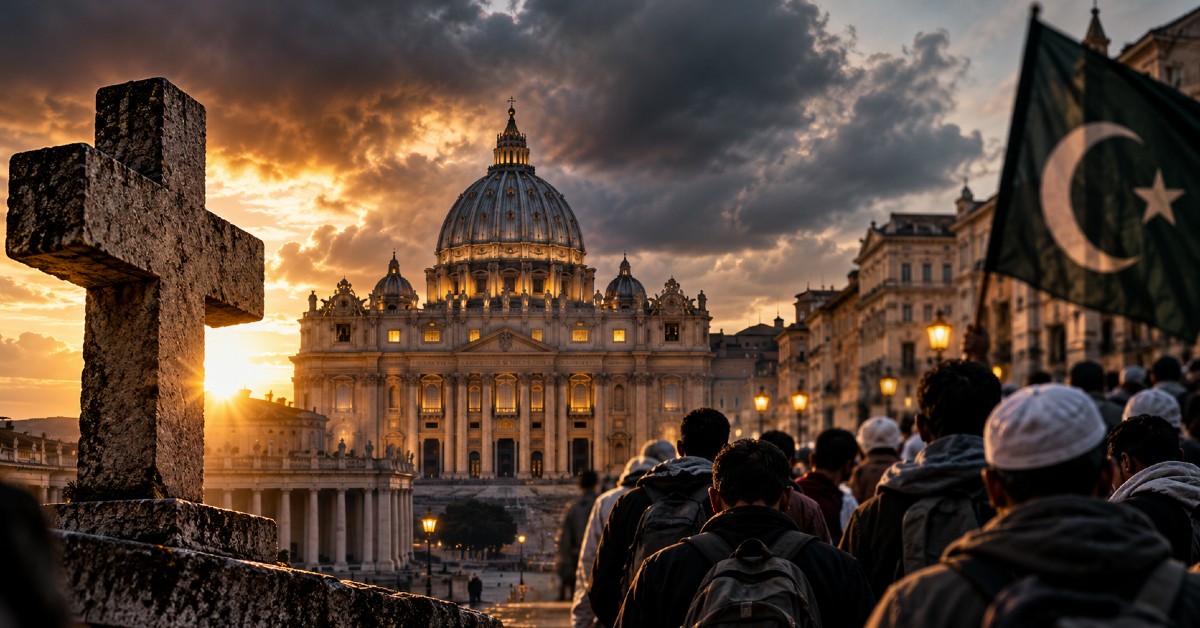
Bishop Athanasius Schneider has raised serious concerns about the future of Christianity in Europe, accusing political leaders and Vatican officials of supporting migration policies that he believes are contributing to the continent’s declining Christian identity.
In an interview with Michael Matt of The Remnant, published October 24 following the 2026 Summorum Pontificum pilgrimage, the auxiliary bishop of Astana, Kazakhstan, argued that large-scale immigration, political unrest, and the response of Church authorities have created a troubling situation for European Christians.
According to LifeSiteNews, Schneider described the current migration situation as an “invasion” and questioned whether European governments were adequately protecting their citizens, cultural traditions, and Christian heritage.
The bishop expressed particular concern about violent demonstrations in European countries, including France, suggesting that unrest could discourage Christians from publicly defending their religious and cultural identity.
He characterized the situation as “a massive intimidation of Catholics or Christians in Europe,” while alleging that some political authorities were tolerating the unrest.
Schneider encouraged Christians and other Europeans concerned about the continent’s future to work together through peaceful means and advocate stronger laws protecting their communities.
His remarks also included a call for governments to reconsider immigration policies, which he believes have failed to sufficiently address the cultural and social consequences of large-scale migration.
However, the bishop’s claims that migration-related unrest represents a coordinated effort to intimidate Christians remain allegations expressed during the interview, rather than independently established conclusions.
The most significant criticism in Schneider’s interview concerned the Vatican itself.
According to LifeSiteNews, the bishop suggested that some Church officials have aligned themselves with European political leaders who favor expanded immigration, giving religious legitimacy to policies he considers harmful to Europe’s Christian foundations.
“I am suspecting … that unfortunately (those) responsible in the Vatican are simply collaborating with the … European political elites,” Schneider told Matt.
He argued that political leaders may seek the Church’s moral authority to support their immigration priorities, particularly by appealing to Christian teachings about charity, hospitality, and concern for the poor.
Schneider expressed concern that these teachings could be interpreted in ways that overlook the responsibility of governments to protect their nations and preserve their cultural identities.
“And, unfortunately, many responsible people in the Vatican are allowing themselves to be deceived or (are) partly agreeing with the process of Dechristianizing Europe,” he said.
He further warned that the consequences could include lasting damage to the continent’s Christian presence.
The bishop’s criticism comes amid continuing discussions within the Catholic Church about immigration, national sovereignty, and the obligations of Christians toward those seeking refuge or better living conditions.
Pope Leo XIV has emphasized the importance of welcoming migrants and ensuring that concern for vulnerable people remains central to the Church’s mission.
During remarks in Spain earlier this year, the pontiff connected the reception of migrants with the Christian obligation to serve others, explaining that worship and charitable action cannot be separated.
“The reception of migrants cannot be anything secondary, nor can it be delegated only to a few volunteers,” Pope Leo said, according to remarks reproduced by LifeSiteNews.
The Pope’s position reflects the Church’s longstanding teaching that every human person possesses inherent dignity, regardless of nationality, immigration status, or religious background.
At the same time, Catholic teaching recognizes that governments have legitimate responsibilities concerning border security, public order, and the common good.
The United States Conference of Catholic Bishops, in its guidance on Catholic social teaching and immigration, explains that nations have a right to regulate their borders and are not obligated to admit every person seeking entry.
These principles reflect the balance between the moral obligation to assist people in need and the responsibility of public authorities to protect the welfare of their communities.
Schneider’s concerns about European migration are not entirely new among senior Catholic clergy.
Cardinal Robert Sarah, the former prefect of the Congregation for Divine Worship and the Discipline of the Sacraments, addressed similar questions during remarks in Poland in 2017.
According to LifeSiteNews, Sarah questioned whether governments were sufficiently distinguishing between refugees fleeing persecution and economic migrants who might be unwilling to integrate into the societies receiving them.
He also emphasized the importance of helping nations recover from war, corruption, and injustice rather than treating migration as the only solution to their difficulties.
“I say again that we must work together to rebuild the nations that have fallen victim to war, corruption and injustice, but this does not mean encouraging the uprooting of peoples and the destruction of nations,” Sarah said.
Although Schneider and Sarah have expressed concerns about the social and cultural effects of migration, their statements do not represent a formal change in Catholic teaching.
The Church continues to affirm both the dignity of migrants and the legitimate authority of nations to establish immigration laws consistent with justice and the common good.
Schneider’s latest remarks nevertheless highlight an ongoing disagreement over how these principles should be applied in Europe, particularly as questions surrounding religious identity, immigration, and national sovereignty continue to generate debate.
For Catholics, the controversy raises broader questions about how European societies can preserve their Christian heritage while remaining faithful to the Gospel’s demands of charity, justice, and respect for human dignity.
Whether Church leaders and political authorities can reconcile these responsibilities remains an important question in the continuing debate over Europe’s religious and cultural future.
Your support brings the truth to the world.
Catholic Online News exists because of donors like you. We are 100% funded by people who believe the world deserves real, uncensored news rooted in faith and truth — not corporate agendas. Your gift ensures millions can continue to access the news they can trust — stories that defend life, faith, family, and freedom.
When truth is silenced, your support speaks louder.


It’s true the Vatican has been infiltrated by communists who have immigration policies that are extremely dangerous and just plain stupid