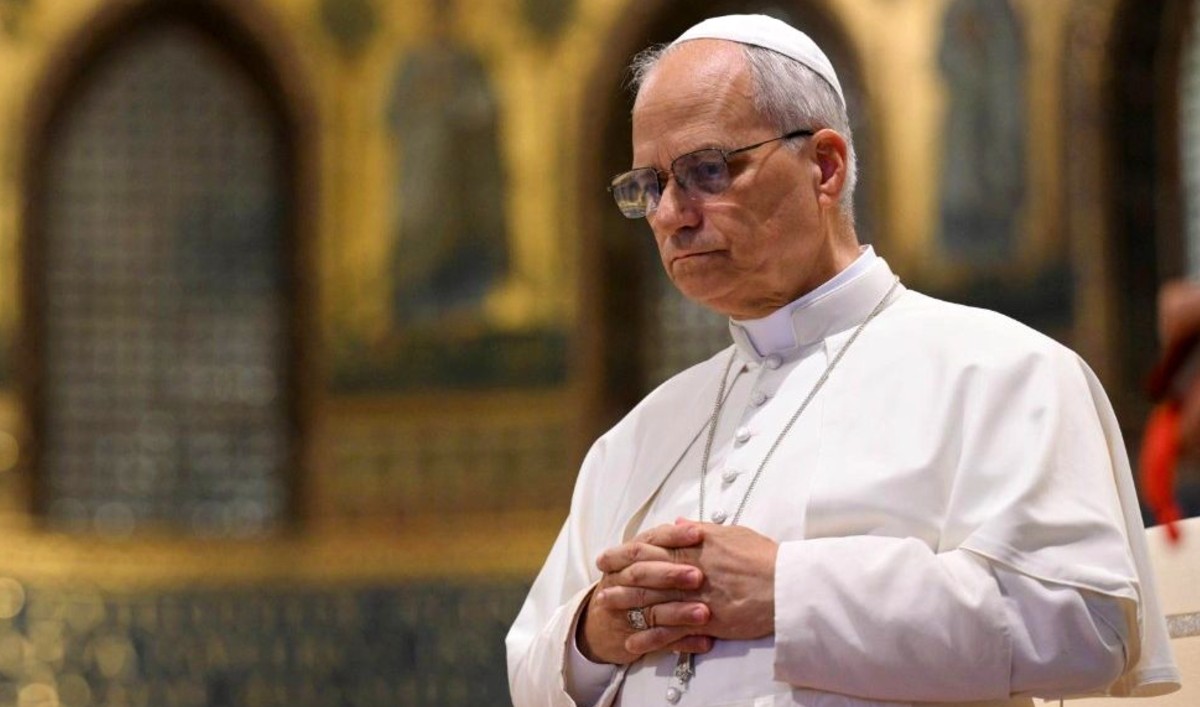

The Holy See’s new representative to the United Nations has defended freedom of expression as a fundamental right while warning that speech deliberately intended to incite hatred or violence falls outside the proper exercise of that freedom.
Archbishop Christophe Z. El Kassis, Apostolic Nuncio and Permanent Observer of the Holy See to the United Nations, delivered the message Sept. 17 during the Global Conference on Promoting Interreligious and Intercultural Dialogue and Tolerance in Countering Hate Speech in New York.
According to the official statement from the Holy See Mission, Archbishop El Kassis grounded his remarks in the Catholic understanding of the dignity of the human person.
“The Holy See reaffirms that every human person is created in the image and likeness of God and possesses an inviolable dignity that no ideology, ideology of hatred, or expression of contempt may diminish,” he said.
From that principle, the archbishop said, comes a responsibility to oppose intolerance and discrimination that threaten peaceful coexistence.
“Hate speech – whether directed against individuals or communities on the basis of their religion, ethnicity, nationality, or any other characteristic – contradicts the commandment to love one’s neighbor, poisons public discourse, inflames division, and too often prepares the ground for violence and persecution,” Archbishop El Kassis said.
The address came one day after Archbishop El Kassis presented his letter of appointment to United Nations Secretary-General António Guterres, according to Vatican News. Pope Leo XIV appointed the Lebanese-born archbishop as the Holy See’s Permanent Observer to the United Nations in New York on July 25.
During his address, Archbishop El Kassis also cited Pope Leo XIV on the moral power carried by human communication.
“The first contribution we can make toward a more humane civilization is to be mindful of our words,” the Pope said, as quoted by Archbishop El Kassis. “Words have enormous power, something we experience in our daily interactions.”
The Holy See’s message, however, did not reject freedom of expression. Archbishop El Kassis explicitly described it as a fundamental right.
“Freedom of expression is a fundamental right that must be protected,” he said. “Yet this freedom carries corresponding responsibilities.”
He then drew a distinction between protecting freedom of expression and treating deliberate incitement as an unrestricted exercise of liberty.
“Speech that deliberately incites hatred or violence cannot claim the protection of liberty; rather, it erodes the very conditions in which genuine freedom can flourish,” Archbishop El Kassis said.
His remarks also emphasized that authentic tolerance should not be confused with religious or moral relativism.
“True tolerance is not indifference or relativism,” he said. “It is the active recognition of the equal dignity of every person and the freedom of conscience that belongs to each.”
According to the Holy See Mission statement, Archbishop El Kassis said dialogue, mutual understanding and the rejection of stereotypes are necessary for building peaceful relationships among people of different religions and cultures.
The comments also come against the backdrop of previous Holy See warnings about the potential misuse of laws intended to combat hate speech. As reported by Vatican News in 2024, the Holy See cautioned at the United Nations that legislation originally designed to address hate speech could be “instrumentalized to challenge the right to freedom of thought, conscience, and religion,” potentially resulting in censorship or compelled speech.
Archbishop El Kassis’ latest remarks therefore emphasized both principles: protecting freedom of expression and conscience while recognizing moral responsibilities in how that freedom is exercised.
Quoting Pope Leo, the archbishop called for communication stripped of hostility and resentment.
“Let us disarm words and we will help to disarm the world,” the Pope said in the passage cited by Archbishop El Kassis.
For the Holy See, the broader challenge is not simply controlling harmful language, but fostering a culture in which human dignity, freedom of conscience and peaceful dialogue can exist together.
Your support brings the truth to the world.
Catholic Online News exists because of donors like you. We are 100% funded by people who believe the world deserves real, uncensored news rooted in faith and truth — not corporate agendas. Your gift ensures millions can continue to access the news they can trust — stories that defend life, faith, family, and freedom.
When truth is silenced, your support speaks louder.