

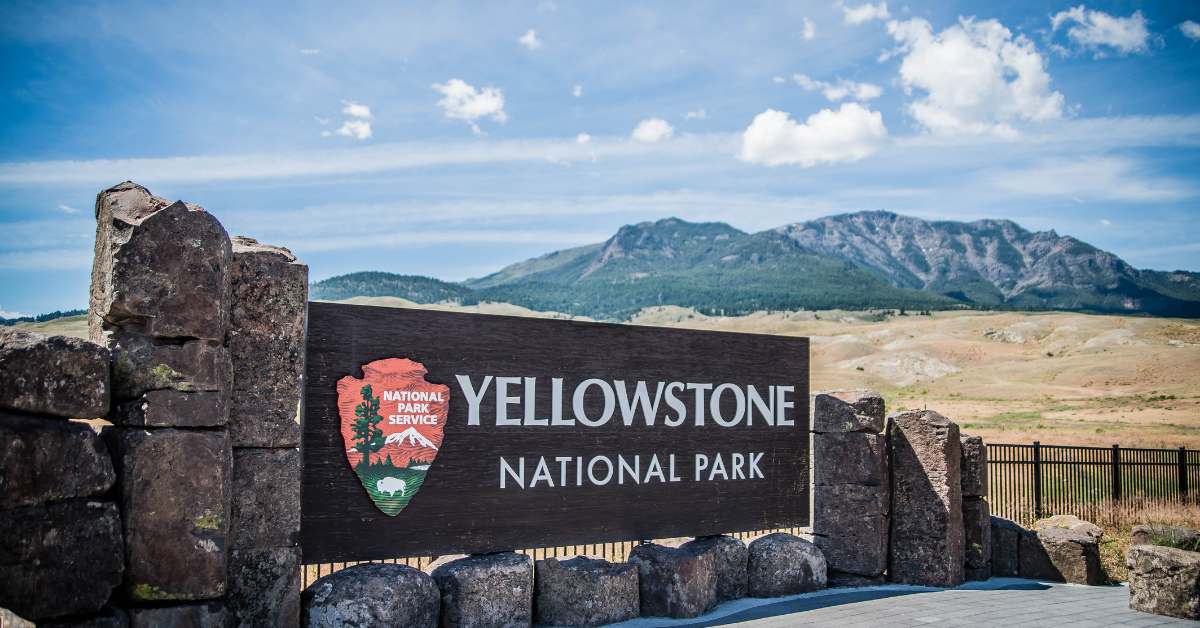
Yellowstone National Park is home to one of the most closely watched volcanic systems on Earth. Beneath its famous geysers and hot springs lies an enormous volcanic system capable of producing eruptions on a scale difficult to imagine.
But despite dramatic headlines that frequently surround Yellowstone, its normal earthquakes, shifting ground and hydrothermal activity are not signs that a massive eruption is imminent.
Instead, two disaster experts have explored a very different question: What could happen if Yellowstone experienced a worst-case super-eruption today?
Ilan Kelman, a professor of disasters and health at University College London, and Matthew Blackett, a reader in physical geography and natural hazards at Coventry University, developed a hypothetical timeline examining the warning signs, eruption and worldwide consequences of such an event, according to the Daily Mail, citing their analysis published in The Conversation.
“We are experts in disasters and volcanoes and what follows is a thought experiment into what might happen in the worst case scenario,” the researchers explained.
Their scenario begins months before an eruption, when earthquake activity beneath Yellowstone would start behaving differently from its normal patterns.
About two months before the hypothetical eruption, scientists could begin detecting unusual earthquakes. As the activity continued and moved upward, officials could eventually raise Yellowstone’s volcanic alert level.
Weeks later, the warning signs could become more serious. Geysers might behave erratically, while changes in spring water chemistry and increased carbon dioxide and sulfurous gases could suggest that magma was moving upward.
According to Daily Mail, in the researchers’ scenario, authorities would eventually order an evacuation extending roughly 100 kilometers beyond Yellowstone National Park, affecting approximately 200,000 residents along with visitors to the region.
If the eruption then occurred, the devastation near Yellowstone would be enormous.
According to the scenario, newly opened cracks would initially release expanding clouds of steam. Magma and superheated material would eventually break through the surface, producing an eruption column potentially reaching about 31 miles into the atmosphere.
Ash could initially spread outward for hundreds of kilometers before upper-level winds carried finer material much farther across the continent.
Within hours, extremely hot flows of gas, ash and volcanic rock could race across areas surrounding Yellowstone, destroying forests and burying the landscape beneath volcanic debris.
Within several days, the disaster could extend far beyond the national park.
The researchers envision heavy ash affecting Wyoming and surrounding states, while large portions of the United States, southern Canada and northern Mexico could experience darkened skies and dangerous outdoor air conditions.
“For southern Canada, much of the US and northern Mexico, day becomes twilight and breathing outdoors without masks becomes increasingly difficult,” the scientists said.
The effects would not end when the eruption stopped.
Within a week, electrical systems, water pumps, sewage treatment facilities, heating systems, fuel stations and communications networks could begin failing as supply chains came under enormous pressure.
Agriculture could also suffer severely. Ash could block roads, damage buildings and disrupt airports and railways. Farms could struggle to operate, while crops and livestock could be lost where water and pasture were buried or contaminated.
Months later, the consequences could become global.
Sulfur dioxide reaching the stratosphere could produce aerosols that reflect sunlight and temporarily cool the planet. The researchers said modeling suggests global average cooling would probably remain below approximately 1.5 degrees Celsius, although particular regions and seasons could experience significantly greater changes.
Their hypothetical scenario ultimately extends years into the future, imagining profound changes to food production, economies and everyday life.
Even under the researchers’ extreme scenario, however, the eruption would not mean the extinction of humanity.
“The good news, at least for our species, is that this unstoppable power of volcanism changed the planet, but did not end humanity – or come close to doing so,” they wrote.
For Catholics, contemplating a disaster of this magnitude need not become an exercise in fear or apocalyptic speculation. The Church has long encouraged prudence, care for human life and solidarity with those affected by natural disasters. Scientific preparation and disaster planning can therefore be understood not as panic, but as practical ways of protecting human life and serving one’s neighbor.
Most importantly, this scenario is not a prediction that Yellowstone is about to erupt. Yellowstone regularly experiences earthquakes and hydrothermal changes, and the ordinary activity recorded there does not by itself indicate that a catastrophic eruption is approaching.
The researchers’ exercise instead demonstrates how deeply interconnected modern civilization has become — and how an extraordinary natural event in one region could rapidly affect communities thousands of miles away.
Your support brings the truth to the world.
Catholic Online News exists because of donors like you. We are 100% funded by people who believe the world deserves real, uncensored news rooted in faith and truth — not corporate agendas. Your gift ensures millions can continue to access the news they can trust — stories that defend life, faith, family, and freedom.
When truth is silenced, your support speaks louder.



Oh my goodness this is hard stuff