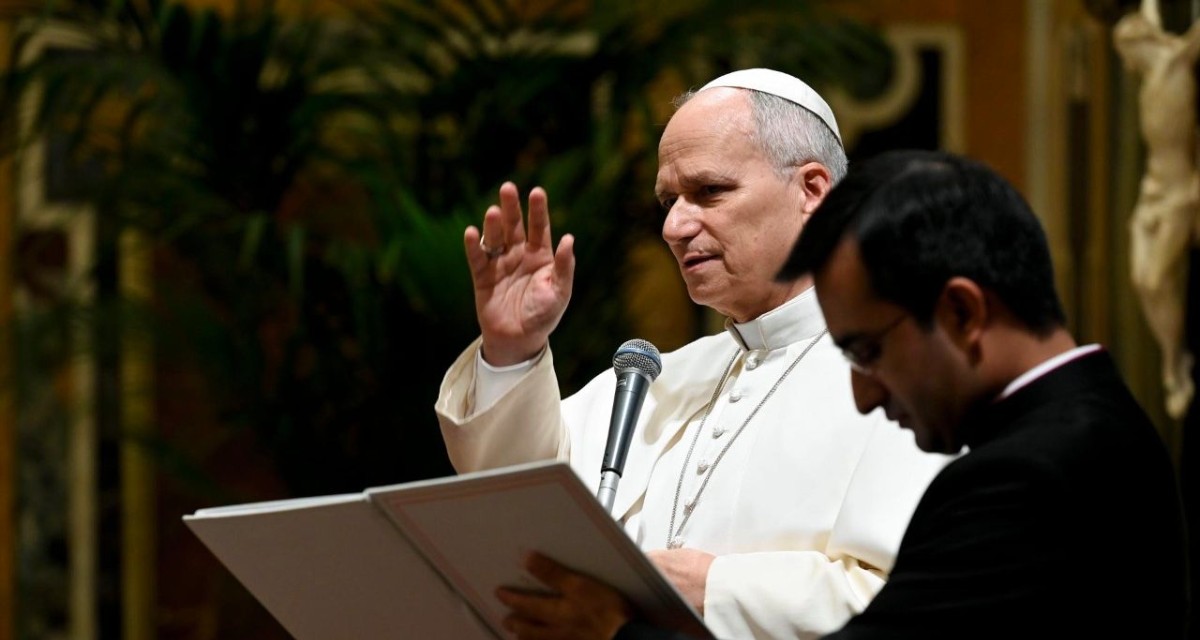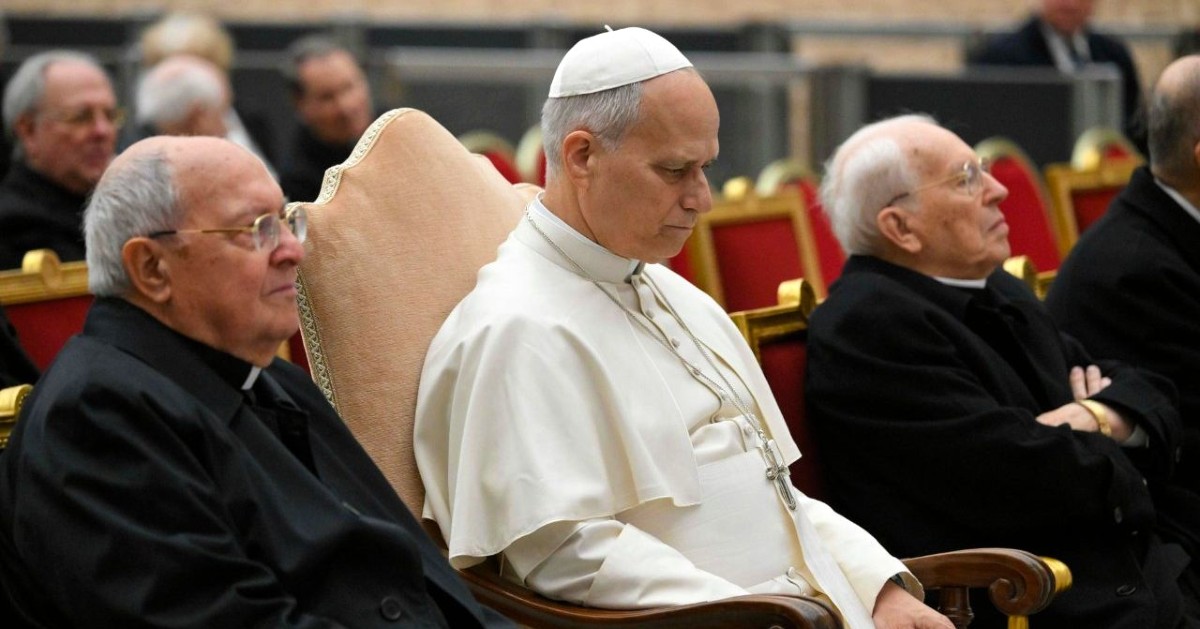

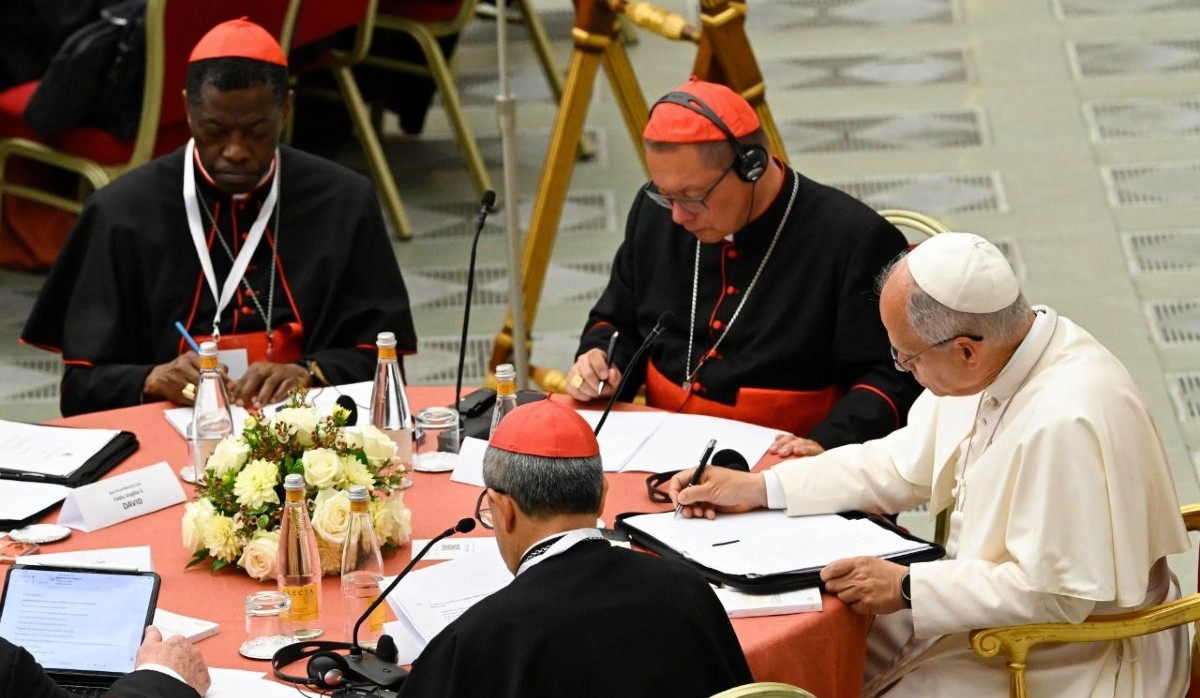
Pope Leo XIV opened the first session of the Extraordinary Consistory on Friday by bringing together 178 cardinals from around the world for a day of prayer, reflection, and discussion on how the Church can proclaim the Gospel amid growing social, political, and spiritual turmoil.
According to Vatican News, the gathering began after Mass in St. Peter’s Basilica, with the cardinals assembling in the Paul VI Hall before dividing into small working groups for discussion. The central question guiding the day’s conversations was: “In what kind of world are we called to proclaim the Gospel?”
Following the chanting of the Veni Creator, Pope Leo delivered opening remarks before Cardinal Luis José Rueda Aparicio introduced the day’s theme. Polish Cardinal Grzegorz Ryś then offered a biblical meditation, inviting the cardinals to reflect on the “sufferings, tensions and questions that run through today’s peoples and ecclesial communities,” while also seeking the “signs of hope, fidelity to the Gospel and possible reconciliation,” according to Vatican News.
During extended group discussions, the cardinals identified numerous challenges confronting both society and the Church. According to Vatican News, participants pointed to increasing polarization, political violence, misinformation, hostility toward religious and ethnic minorities, excessive individualism, the breakdown of family life, loneliness among young and elderly people, declining birth rates, organized crime, drug trafficking, secularism, and a growing loss of spiritual meaning.
Migration, environmental concerns, corruption, and the difficulties of life in large urban centers also emerged as significant topics during the discussions.
Despite these concerns, the cardinals emphasized that the Church’s response must remain rooted in hope.
According to Vatican News, many participants described the Church as “a mother and a welcoming home,” stressing the need to renew parish life while defending human dignity, peace, reconciliation, and the common good. The discussions also highlighted education as a vital place where society can rebuild the common good, while pointing to growing vocations, popular devotion, and the joyful faith of believers as signs of hope.
Several groups reaffirmed the importance of dialogue—including ecumenical and interreligious dialogue—as well as charity, solidarity, and prayer as essential foundations for peace.
Pope Leo returned for the closing session and reflected on Cardinal Ryś’s meditation, observing, “If we are not blind, it is true that there is so much suffering.”
The Holy Father acknowledged that loneliness and suffering have become defining features of modern society. He said the Church responds not only by celebrating the sacraments but also by creating opportunities for genuine human encounter and communion.
While the official discussions focused on the Church’s mission in today’s world, other developments surrounding the gathering also drew attention.
According to LifeSiteNews, at least three prominent cardinals—Cardinal Joseph Zen, Cardinal Péter Erdő, and Cardinal Willem Eijk—were unable to attend due to health-related reasons. Cardinal Erdő continues to recover after reportedly suffering a stroke in May, while Cardinal Zen’s advanced age was cited as making travel difficult.
LifeSiteNews also reported that the agenda for the consistory was adjusted because of the Society of Saint Pius X’s planned episcopal consecrations on July 1. Citing an anonymous cardinal interviewed by Italian newspaper Il Giornale, the report stated, “The proximity of the consecrations led to a change in the original agenda.”
According to the report, planned discussions on liturgy—which had originally been expected to return after earlier meetings this year—were removed from the schedule because of their connection to ongoing dialogue with the SSPX. LifeSiteNews further reported that the consistory is not expected to advise Pope Leo on any possible changes to the restrictions contained in Traditionis Custodes.
The report also noted that some unnamed cardinals expressed concerns about the meeting’s organizational format, which divides participants into numerous working groups with only selected groups presenting reports to the full assembly. According to LifeSiteNews, some participants reportedly viewed the methodology as resembling the structure used during the Synod process.
The Extraordinary Consistory continues through Saturday, with additional sessions expected to address international affairs and the ongoing implementation of the Synod as the cardinals continue discerning how the Church can faithfully proclaim the Gospel in an increasingly divided world.
Your support brings the truth to the world.
Catholic Online News exists because of donors like you. We are 100% funded by people who believe the world deserves real, uncensored news rooted in faith and truth — not corporate agendas. Your gift ensures millions can continue to access the news they can trust — stories that defend life, faith, family, and freedom.
When truth is silenced, your support speaks louder.