
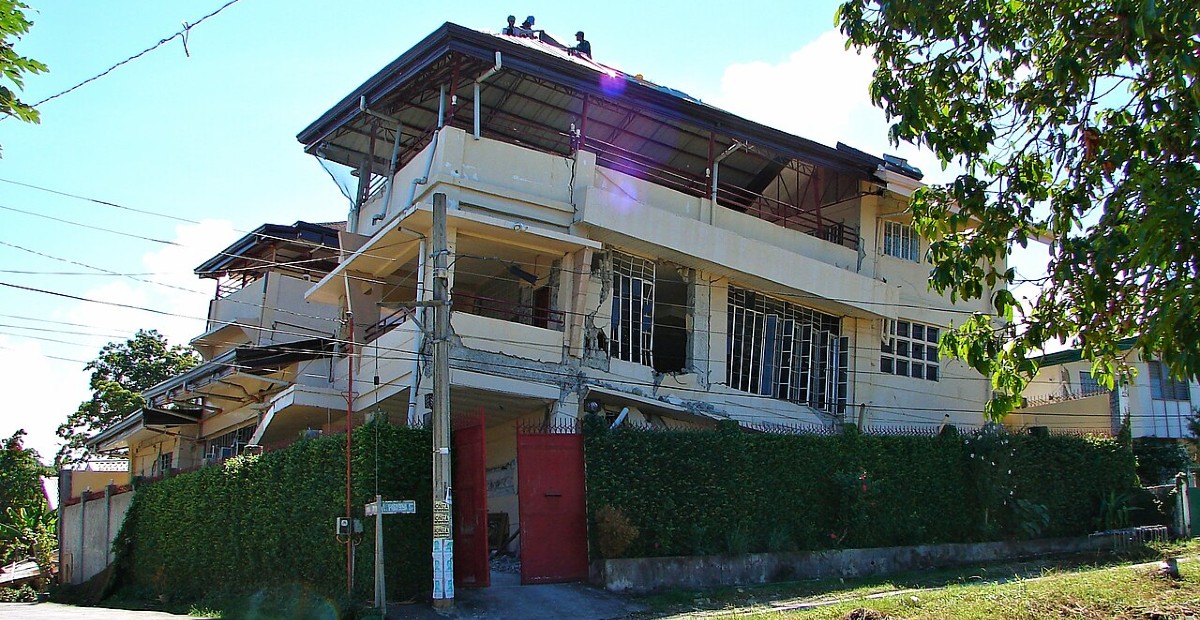
A powerful earthquake struck the southern Philippines on Monday, leaving at least 32 people dead, more than 200 injured, and entire communities facing destruction as rescue efforts continue across the region.
According to the Associated Press, the magnitude 7.8 earthquake struck offshore near Mindanao at approximately 7:37 a.m. local time. The powerful tremor caused buildings to collapse, triggered a deadly landslide, and generated tsunami waves that reached several coastal communities.
Among the hardest-hit areas was the city of General Santos, where multiple buildings either collapsed or suffered severe structural damage. Rescue crews worked throughout the day searching for survivors believed trapped beneath debris.
The earthquake also caused tragedy in Sarangani province, where a landslide claimed the lives of 13 villagers. Rene Punzalan, a provincial disaster-mitigation official, told local media that four additional deaths were reported elsewhere in the province.
Teresito Bacolcol, director of the Philippine Institute of Volcanology and Seismology, said the quake was the strongest to strike the Philippines this year. According to the Associated Press, he urged residents to seek professional guidance before reentering damaged homes and buildings because aftershocks could cause further collapses.
The disaster struck on a particularly significant day for many families. In the town of Malita, hundreds of students and teachers had gathered for a flag-raising ceremony marking the first day of classes following a two-month summer break when the ground suddenly began shaking.
“Their excitement on the first day of school turned to trauma,” school principal Rosavel Cachuela told the Associated Press.
Despite the fear and confusion, no students at the school were injured. Officials credited the calm response of teachers and students for helping prevent additional casualties.
Witnesses across the region described scenes of panic as people rushed into the streets seeking safety.
“Our pickup truck suddenly jerked and I thought we had a flat tire,” Rod Sosmeña, a regional director of the Office of Civil Defense, told the Associated Press. “The shaking was very strong and people dashed out of houses into the streets.”
At least 12 people remained missing in General Santos as rescue operations continued. Search teams focused on damaged schools, warehouses, supermarkets, and other structures where survivors could still be trapped.
The earthquake also disrupted transportation and commerce. According to the Civil Aviation Authority of the Philippines, the General Santos International Airport temporarily suspended operations and canceled 17 domestic flights while officials inspected facilities for damage.
A tsunami warning was issued following the quake after waves reached several coastal areas. According to the Associated Press, waves measuring approximately one meter (three feet) were recorded in Sarangani and Sultan Kudarat provinces, while a 1.4-meter (4.6-foot) wave was observed in Kiamba. Smaller tsunami waves were also detected in Indonesia, Palau, Malaysia, and Japan.
Philippine President Ferdinand Marcos Jr. ordered the immediate deployment of disaster-response agencies and canceled classes in affected regions.
“The national government is moving and we will not leave Mindanao behind,” Marcos said.
The Philippines is one of the world’s most disaster-prone nations due to its location along the Pacific Ring of Fire, where earthquakes and volcanic activity are common. The country also experiences frequent tropical storms and typhoons throughout the year.
As families mourn loved ones and communities begin rebuilding, Catholics around the world are encouraged to pray for all those affected by this tragedy, especially those who lost family members, those still missing, emergency responders, and the many people left homeless by the disaster.
Those wishing to offer prayers for the victims and survivors can light a virtual prayer candle at www.prayercandles.org and entrust the people of the Philippines to the loving care of Our Lord and the intercession of the Blessed Virgin Mary.
Your support brings the truth to the world.
Catholic Online News exists because of donors like you. We are 100% funded by people who believe the world deserves real, uncensored news rooted in faith and truth — not corporate agendas. Your gift ensures millions can continue to access the news they can trust — stories that defend life, faith, family, and freedom.
When truth is silenced, your support speaks louder.