
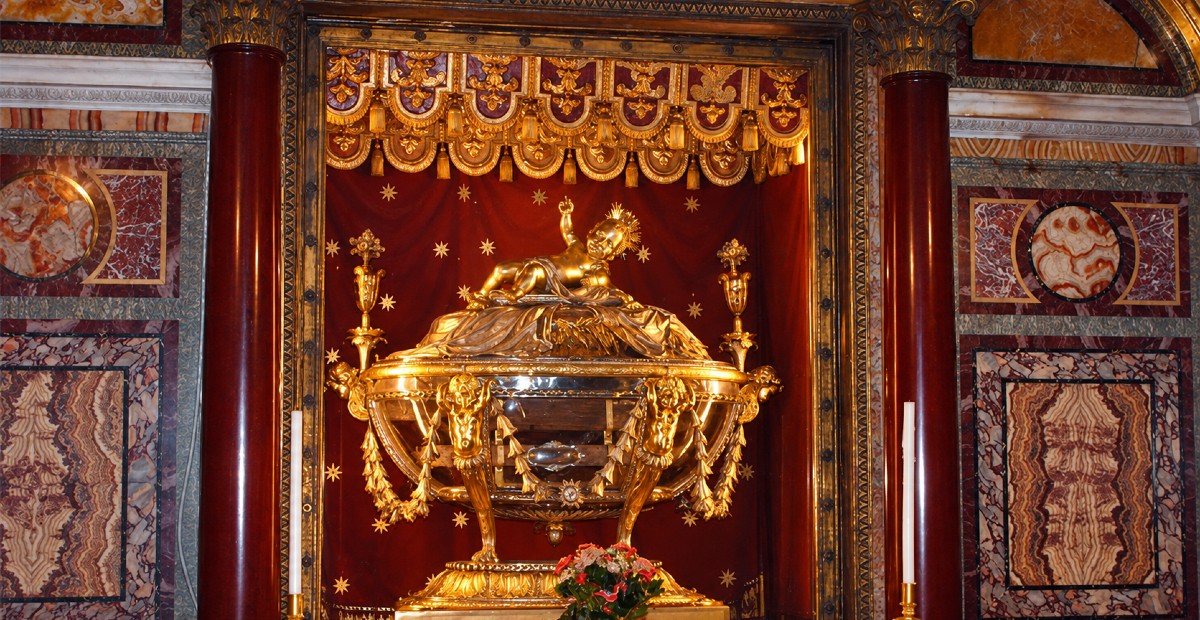
Pilgrims visiting Rome’s Basilica of Saint Mary Major will have an opportunity to draw closer to the relics traditionally associated with the manger of Jesus, as a restoration project temporarily brings the Sacred Cradle into a side chapel.
According to Vatican News, the move will allow work on the historic niche and reliquary in the Confessio before the Papal Altar, where the relics are normally preserved. Their temporary location in the right nave will offer visitors a setting for prayer and reflection near these treasured reminders of Christ’s birth.
The Basilica’s press release describes the arrangement as allowing the faithful to approach the Sacred Cradle in “an atmosphere of unique intimacy and quiet contemplation.”
The relics consist of five thin pieces of sycamore wood, traditionally identified as fragments of the manger in which Mary laid Jesus after His birth. As Vatican News explains, an ancient tradition connects their presence in Rome with devotion to the places of the Nativity and with Saint Jerome, who lived in Bethlehem during the fourth and fifth centuries.
For Catholics, their veneration draws attention to the mystery of the Incarnation: the Son of God entered human history in the humility of an infant laid in a manger.
That devotion has helped shape Saint Mary Major’s identity for centuries. According to Vatican News, the Basilica was known in ancient times as Santa Maria ad Praesepe, a name reflecting its enduring connection to the Nativity.
The restoration will address the conservation needs of both the relics and their historic setting. The Basilica’s statement explains that the existing arrangement is “no longer adequate for ensuring optimal conservation conditions.” A new case will incorporate modern standards for stability, security, and microclimate control while fitting within the architecture of the Confessio.
Behind the Sacred Cradle, a new mosaic of blue vitreous enamels and golden tiles will symbolically evoke the sky of the Nativity.
The project continues a long history of artistic care surrounding the relics. Vatican News reports that Giuseppe Valadier designed a cradle-shaped reliquary in 1802. During the pontificate of Blessed Pius IX, architect Virginio Vespignani created the monumental Confessio between 1861 and 1864, incorporating approximately seventy varieties of colored marble.
The temporary chapel setting will also place the relics near Pompeo Batoni’s painting of the Annunciation. According to the Basilica’s statement, this arrangement will establish a symbolic connection between the angel’s announcement to Mary and the birth of Christ in Bethlehem.
On Christmas Eve, December 24, the Holy Crib will be solemnly transferred to the Papal Altar in accordance with the Basilica’s tradition. Vatican News reports that the relics will remain there during the Christmas celebrations before returning on Epiphany to their historic location, with the new reliquary and renewed mosaic backdrop.
The conservation work will be supervised by the Vatican Governorate’s Directorate of Museums and Cultural Heritage and entrusted to Progetto Arte Poli of Verona, according to the Basilica’s statement reported by Vatican News.
Your support brings the truth to the world.
Catholic Online News exists because of donors like you. We are 100% funded by people who believe the world deserves real, uncensored news rooted in faith and truth — not corporate agendas. Your gift ensures millions can continue to access the news they can trust — stories that defend life, faith, family, and freedom.
When truth is silenced, your support speaks louder.