
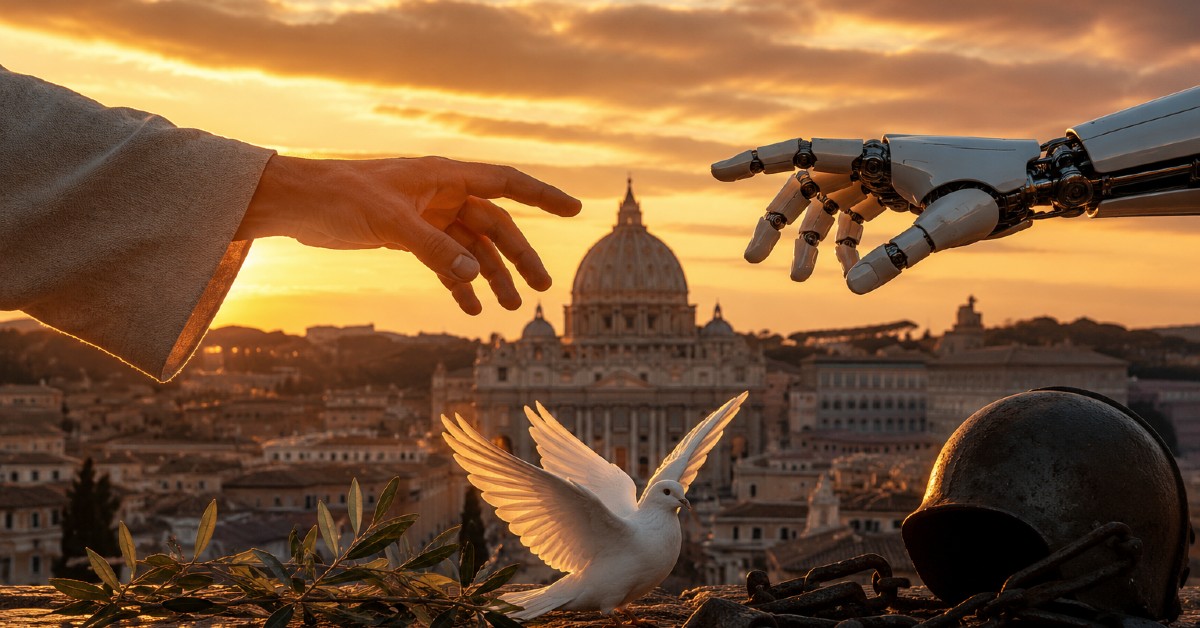
Leading scientists, Nobel laureates, Church representatives, and international leaders gathered in Rome this week to issue a united call for peace, warning that rapid advances in artificial intelligence and renewed nuclear tensions demand stronger moral leadership and meaningful human oversight.
According to Vatican News, more than 200 experts participated in the Global Nobel Laureates Assembly on Artificial Intelligence and Nuclear War, which concluded July 16 with the signing of the “Rome Declaration for an Unarmed and Disarming Peace.” The declaration urges nations to pursue international cooperation as artificial intelligence, autonomous weapons, and nuclear technology continue to reshape the modern world.
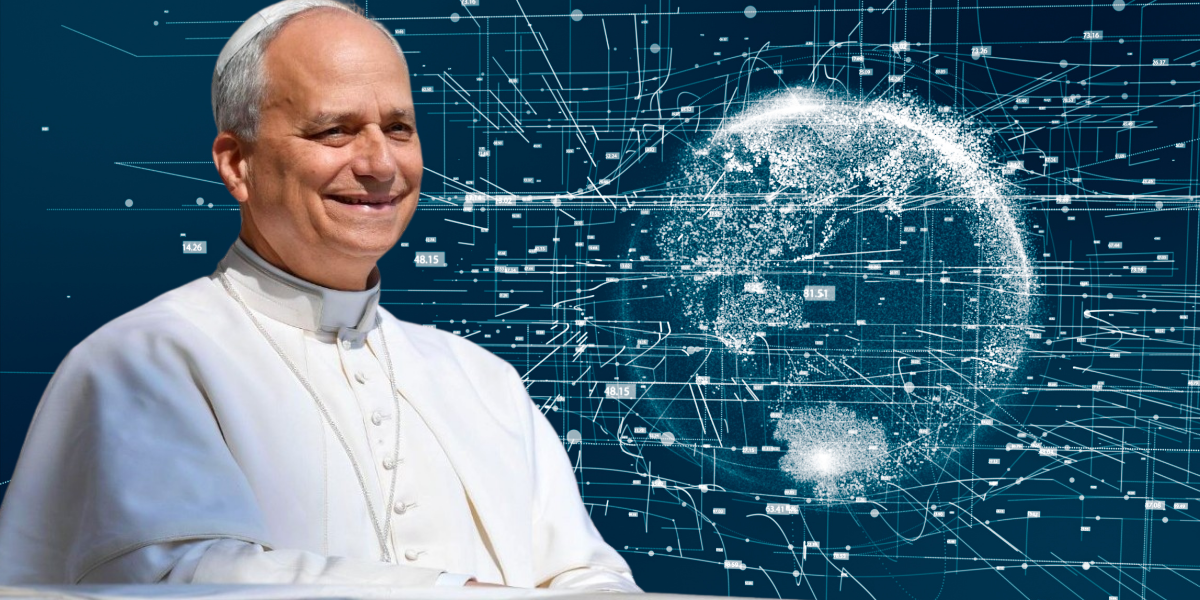
The assembly was inspired by Pope Leo XIV’s encyclical Magnifica humanitas, which focuses on protecting the dignity of the human person in the age of artificial intelligence. The Vatican hosted the gathering July 14–15 at Borgo Laudato si’ in the Pontifical Gardens of Castel Gandolfo before the final signing ceremony at Rome’s Capitoline Hill.
Participants emphasized that while scientific innovation can greatly benefit humanity, technological progress must never be separated from ethical responsibility.
Speaking during the closing session, Cardinal Baldo Reina, Vicar General of Rome, warned that society is living through “a pivotal moment” marked by artificial intelligence, nuclear weapons, geopolitical instability, and growing uncertainty.
According to Vatican News, Cardinal Reina said, “Scientific and technological progress offers extraordinary opportunities for healthcare, education, public health, environmental protection, the fight against poverty, and the building of peace. Yet the same progress, if detached from ethics, responsibility, and respect for the dignity of the human person, can become an instrument of domination, exclusion, and even destruction.”
He also stressed that decisions affecting the future of humanity must never be surrendered to machines.
“The Declaration presented today reminds us with great clarity that no machine, no algorithm, and no autonomous system can be placed at the center of decisions upon which the survival of humanity depends,” Cardinal Reina said.
He added, “Decisions concerning life and death, peace and war, and the future of peoples and generations yet to come must remain under full, responsible, and meaningful human control.”
Father Andrea Ciucci, Chancellor of the Pontifical Academy for Life, reflected on the dual nature of human creativity, noting that the same ingenuity capable of producing great achievements can also cause devastating harm. According to Vatican News, he cautioned that artificial intelligence and nuclear technology are no exception, observing that “AI can move human beings to build or to destroy.”
The assembly also heard sobering warnings from Nobel Prize-winning physicist Professor David Gross, who expressed concern that global nuclear risks have grown significantly in recent decades.
According to Vatican News, Gross said that arms control treaties have largely disappeared while nine nations now possess nuclear weapons. “We are in the middle of an accelerated arms race,” he warned.
He urged governments to adopt policies that reduce the risk of nuclear conflict, explaining, “We ask that nuclear nations promote policies that reduce the risk of war, nuclear war, and annihilation.”
Recalling a well-known appeal for peace, Gross concluded, “Remember your humanity and forget the rest,” warning that the survival of both present and future generations is at stake.
Professor Daniel Holz of the University of Chicago also acknowledged the seriousness of the challenges facing the world but encouraged hope. According to Vatican News, he said, “The bad news” is that “it is a time of unprecedented danger,” but “the good news is that there are plenty of things we can do to make ourselves safer from nuclear weapons and from AI.”
Peace Ambassador Sharon Stone echoed the assembly’s emphasis on protecting the human person as artificial intelligence continues to develop. According to Vatican News, she reminded participants that while machines continue to grow more capable, humanity’s moral responsibility must grow as well, declaring, “Human dignity is not an algorithm.”
For Catholics, the declaration reflects the Church’s longstanding teaching that every advancement in science and technology must serve the dignity of the human person and the common good. As artificial intelligence becomes increasingly influential and nuclear tensions persist around the world, the Rome Declaration calls on world leaders to ensure that moral responsibility—not technology itself—remains at the center of decisions affecting the future of humanity.
Your support brings the truth to the world.
Catholic Online News exists because of donors like you. We are 100% funded by people who believe the world deserves real, uncensored news rooted in faith and truth — not corporate agendas. Your gift ensures millions can continue to access the news they can trust — stories that defend life, faith, family, and freedom.
When truth is silenced, your support speaks louder.