
Scientists believe the world at the end of this century could be dramatically different from the one we know today, with sweeping changes affecting ecosystems, agriculture, and the way food is produced. According to the Daily Mail, a new scientific study explores how rising global temperatures and emerging technologies could reshape life by the year 2100.
The research, published in the Australian Journal of Botany, examined possible futures for Australia’s ecosystems under a scenario in which average global temperatures increase by approximately 4°C above pre-industrial levels. Although the study focused on Australia, the researchers said many of the environmental trends they identified could apply across the globe.
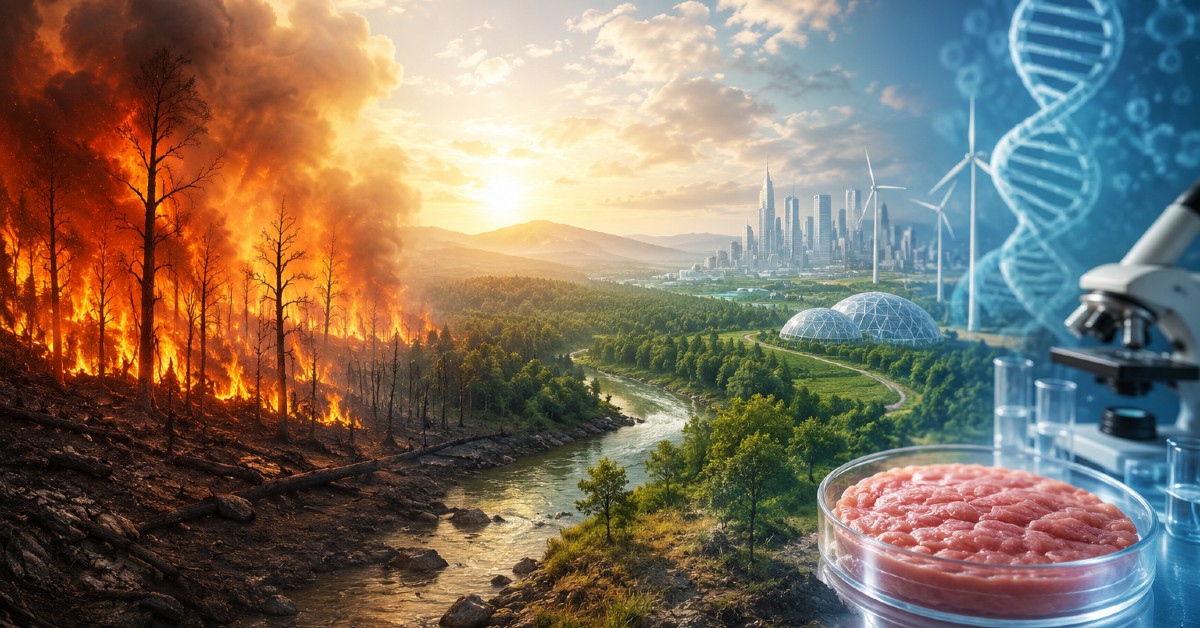
According to the Daily Mail‘s report on the study, the researchers concluded that significant global warming is now “more likely than not.” They warned that higher temperatures could contribute to more frequent and severe wildfires, alter natural habitats, reduce traditional livestock farming, and accelerate the use of genetic technologies to manage invasive species.
“70 years from now, many ecosystems will be substantially different,” the researchers wrote.
They added, “Climate change is one driver, with associated changes in incidence of fires, extreme temperatures, droughts, floods and atmospheric carbon dioxide. But other drivers may also become important, such as large-scale replacement of livestock by cell culture products and genetic technologies for suppression of selected species.”
Among the study’s most significant concerns is the increasing risk of extreme wildfire conditions. According to the Daily Mail, the researchers said hotter temperatures and changing climate patterns could transform forests and other natural landscapes while threatening the survival of numerous plant and animal species.
Professor Mark Westoby of Macquarie University, one of the study’s authors, said certain ecosystems may become increasingly difficult to preserve.
“Some important vegetation types, such as rainforests, depend on long intervals between hot fires,” Westoby said.
“As extreme fire weather becomes more common, it will become harder and harder to maintain those ecosystems.”
The researchers also examined how biotechnology could transform food production over the coming decades. According to the Daily Mail, the study suggests conventional cattle and sheep farming could decline as cultivated meat and dairy products grown from animal cells become more widely available.
That transition has already begun in some parts of the world. Cultivated chicken has been approved for sale in Singapore, the United States, and Israel, while companies are producing milk proteins through precision fermentation without using cows. Researchers have also developed laboratory-grown alternatives to products such as chocolate and coffee.
The study also points to expanding use of gene-editing technologies to manage invasive species that threaten native ecosystems. According to the Daily Mail, scientists are already investigating genetically engineered mosquitoes to reduce disease-carrying populations, while similar technologies are being explored to control invasive animals including mice, rats, and cane toads.
For Catholics, these scientific developments highlight the importance of faithful stewardship of God’s creation. The Church encourages scientific advancement that serves the common good while respecting the dignity of the human person and exercising responsible care for the natural world entrusted to humanity.
The researchers emphasized that the study is not intended to predict the future with certainty. Rather, it presents a series of possible scenarios designed to help governments, scientists, and communities prepare for the environmental and technological challenges that may emerge during the remainder of this century.
As the Daily Mail noted in its coverage of the research, understanding these possible futures today may help shape wiser decisions for generations to come.
Your support brings the truth to the world.
Catholic Online News exists because of donors like you. We are 100% funded by people who believe the world deserves real, uncensored news rooted in faith and truth — not corporate agendas. Your gift ensures millions can continue to access the news they can trust — stories that defend life, faith, family, and freedom.
When truth is silenced, your support speaks louder.