
A respected canon lawyer is raising serious concerns about the Vatican’s handling of its recent disciplinary measures against the Society of St. Pius X (SSPX), arguing that an accompanying explanatory note exceeded its legal authority under canon law.
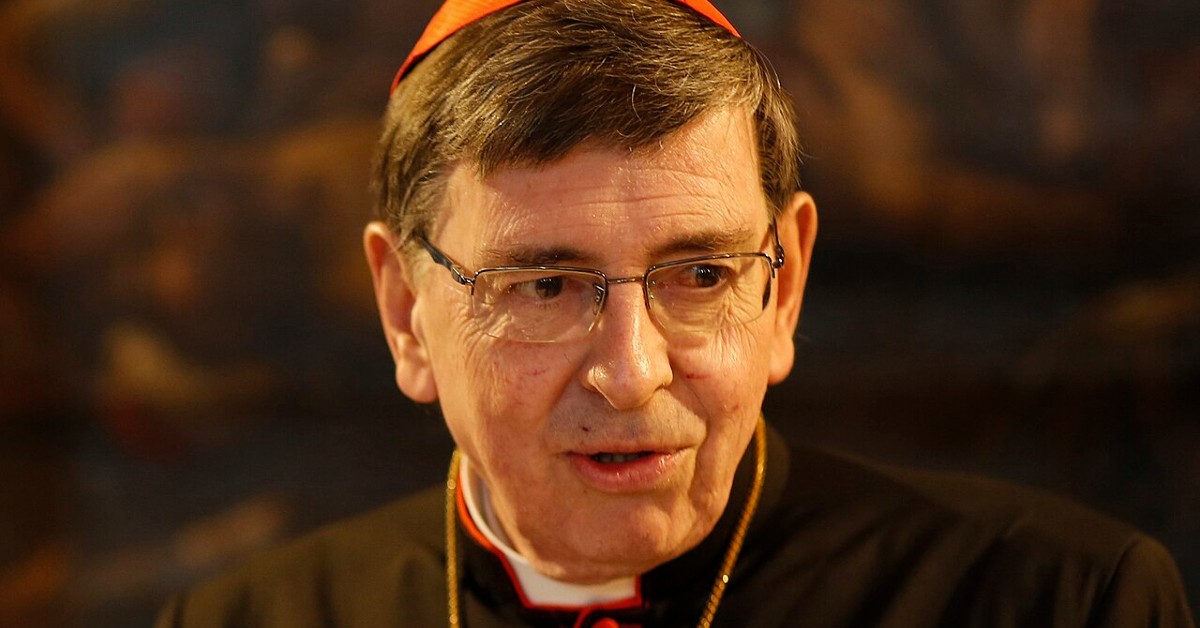
According to LifeSiteNews, Father Gerald Murray discussed the issue during an appearance on EWTN’s The World Over, where he criticized portions of the Vatican’s July 2 documentation following the illicit episcopal consecrations carried out by the SSPX in Écône, Switzerland.
“This is a canonical mess,” Murray said. “An explanatory note can explain what a decree contains. It can’t add to a decree. So, the decree did not say the priests were excommunicated. Therefore, the explanatory note cannot do that having legal effect.”
He added, “This was a canonical mistake on the part of the authors of this document. It’s very regrettable. Same applies to lay people.”
Murray emphasized that the Vatican’s formal decree applied specifically to the six bishops who participated in the unauthorized episcopal consecrations and did not declare SSPX priests to be excommunicated.
“The bishops’ schismatic act was to ordain or get ordained as bishops,” he explained. “That’s quite clear. That’s a public fact. It’s verifiable. The Holy See did not declare in the decree any of the priests to have committed a schismatic act.”
“The priests have not been declared excommunicated in the decree. Therefore, they are not held by the Vatican to be excommunicated.”
According to LifeSiteNews, Murray acknowledged that canon law provides for automatic (latae sententiae) excommunication for the crime of schism, but noted that such penalties do not have public juridical effect until they are formally declared.
“There’s an automatic excommunication for being a schismatic, but as long as that has not been declared, it doesn’t have public effect,” Murray said.
He also noted that the Society of St. Pius X has consistently maintained that it is not in schism with the Catholic Church.
“We know that the society has maintained all along that they’re not schismatics,” he said. “So, you could say that priests could be in a state of good faith in making that assertion.”
Murray likewise questioned the explanatory note’s treatment of lay Catholics who attend SSPX chapels. According to LifeSiteNews, he argued that canonical penalties must be based on identifiable external acts rather than presumed beliefs or attitudes.
“In the decree, there’s a warning. We call that a canonical warning not to adhere to the schism. That’s (just) a warning,” he said.
Regarding what would constitute adherence to schism, Murray stated, “It has to be an act. It can’t be a mental attitude because you don’t judge the mind of people unless it’s been expressed in words.”
He also disputed the explanatory note’s assertion regarding the validity of confessions and marriages celebrated by SSPX clergy. Murray pointed to the faculties granted by Pope Francis that authorized SSPX priests to validly hear confessions.
“The confessions of the priests of St. Pius X during the reign of Francis, they got faculties to hear confessions given by Pope Francis,” Murray said. “An act of the Congregation for the Doctrine of the Faith in an explanatory note cannot undo what Pope Francis did. So (the authors) missed the boat on that.”
Murray further criticized the reconciliation documents issued alongside the decree, which outline steps for SSPX priests and lay faithful seeking reconciliation with the Church. According to LifeSiteNews, he argued that the documents appear to presume a loss of full communion that has not been established by the decree itself.
“The document about the laity, it basically assumes that lay people who attend Mass at the St. Pius X society on a regular basis or belong to one of their organizations are out of full communion with the Church and need to be reconciled and brought back into full communion with the Church,” he said.
“But wait a minute. They haven’t been excommunicated. Therefore, they’re not under a canonical penalty that affects their full communion,” Murray added. “And the idea that you lose full communion because you agree with some of the things that the society says, that’s not good enough.”
The Vatican’s July 2 decree followed the July 1 episcopal consecrations conducted by the SSPX without a papal mandate. The Dicastery for the Doctrine of the Faith declared the six participating bishops to have incurred automatic excommunication, while accompanying documents addressed the status of priests and laity associated with the Society and outlined proposed paths toward reconciliation.
Your support brings the truth to the world.
Catholic Online News exists because of donors like you. We are 100% funded by people who believe the world deserves real, uncensored news rooted in faith and truth — not corporate agendas. Your gift ensures millions can continue to access the news they can trust — stories that defend life, faith, family, and freedom.
When truth is silenced, your support speaks louder.