
A mysterious boat-shaped formation in eastern Turkey is once again drawing international attention as researchers investigate whether the site could contain the remains of Noah’s Ark, the biblical vessel that carried Noah, his family, and animals through the Great Flood.
A research team has collected more than 400 samples from the formation, with laboratory testing now underway. The findings could help determine whether the unusual structure is a natural geological formation or evidence of something constructed by human hands.
In an exclusive interview with LifeSiteNews, Lauren Witzke, a member of the Noah’s Ark Scans research team, discussed the latest drilling operations, preliminary scanning results, and the scientific questions that remain unanswered.
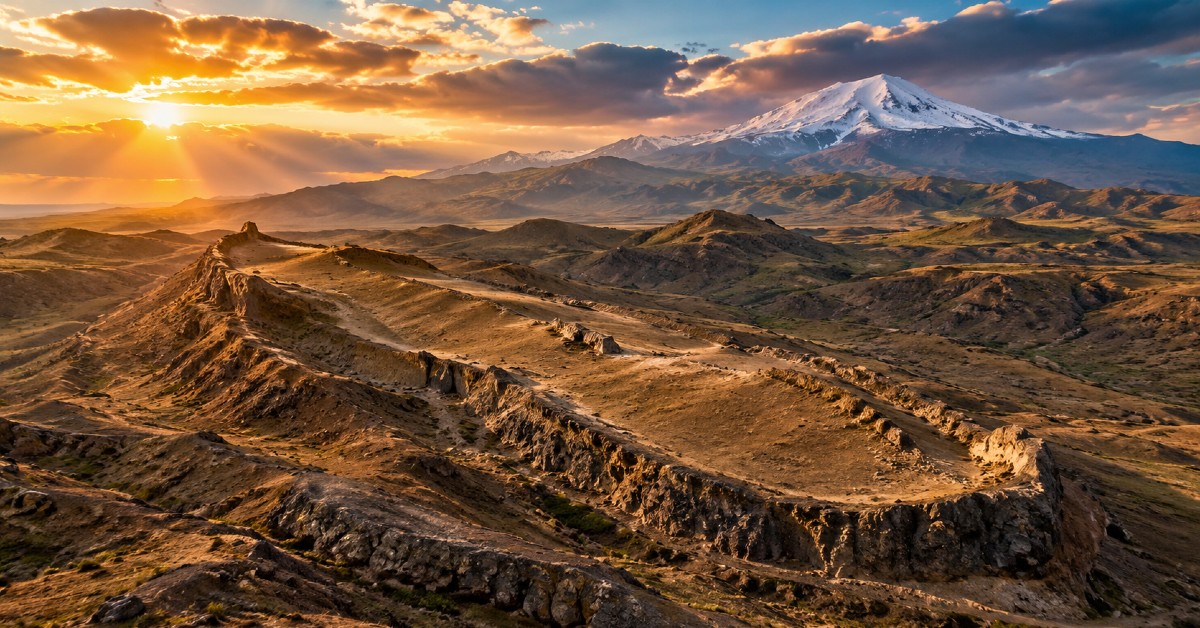
The investigation centers on the Durupinar formation, located approximately 30 kilometers south of Mount Ararat. The site has attracted attention for decades because of its striking resemblance to the outline of a large ship.
According to LifeSiteNews, the current investigation represents the first drilling campaign at the location conducted with official authorization and under the supervision of Turkish universities.
The team hopes that its findings will provide new evidence about the formation’s origins.
Researchers Report Unusual Structures Beneath the Surface
One of the most significant developments involves advanced underground scanning technology used to examine the formation before drilling began.
In her exclusive interview with LifeSiteNews, Witzke said the team brought American defense scientist Dr. Khrosrow Bakthar to the site earlier this year to conduct an investigation using technology known as BaktharRadar.
According to Witzke, the preliminary results suggested the presence of organized features beneath the surface that researchers believe could indicate an artificial structure.
She recalled Bakthar contacting her with his initial findings, saying, “Lauren, I found layers … organized chambers … corridors … it’s NOT Geological!”
Witzke told LifeSiteNews that the scanning results helped researchers identify specific locations for drilling and sample collection.
The formation measures approximately 515 feet in length, according to the research team, which believes its dimensions correspond to those described in the Book of Genesis.
Genesis 6:15 describes the Ark as measuring 300 cubits long, 50 cubits wide, and 30 cubits high.
However, the presence of unusual underground features does not, by itself, establish that the formation is a man-made vessel. The team’s interpretation remains subject to further analysis, and the final scanning report has not yet been released.
More Than 400 Samples Await Laboratory Results
The latest drilling campaign has allowed researchers to collect material from different areas and depths within the formation.
According to Witzke’s interview with LifeSiteNews, the team used dry drilling techniques to recover more than 400 samples, including material from the formation’s outer edges, upper layers, and deeper interior.
Some of the material is being examined for organic substances that researchers believe could potentially be associated with decomposed wood.
Witzke said samples are undergoing analysis at Sivas Cumhuriyet University and additional independent laboratories.
The team also hopes to secure funding for ancient animal DNA testing, which Witzke believes could help investigate whether animals were once present inside the structure.
“You have to prove the animals were there,” she told LifeSiteNews.
Such testing would represent an important part of the team’s effort to connect the formation with the biblical account. Nevertheless, no laboratory findings establishing the presence of an ancient wooden vessel or animal remains have been announced.
Witzke indicated that the researchers intend to release their findings after laboratory analysis and expert confirmation.
Scientists Continue to Question the Ark Theory
Despite the research team’s enthusiasm, the Durupinar formation remains the subject of considerable scientific disagreement.
As LifeSiteNews noted in its interview, previous geological investigations have challenged the suggestion that the formation represents Noah’s Ark.
A 1996 study associated with geologist Lorence Collins and explorer David Fasold argued that the structure could be explained through natural geological processes, including erosion, rock deformation, and the movement of surrounding material.
Critics have also questioned whether apparent right angles and chamber-like features detected by underground scanning necessarily indicate human construction.
Natural rock fractures and other geological processes can produce formations that resemble organized structures.
Witzke rejected these explanations, arguing that the latest investigation uses more advanced technology and collects material from locations and depths not adequately examined in earlier studies.
She also emphasized that the current team does not endorse every claim made by previous researchers.
“Noah’s Ark Scans and our 2026 study have never claimed to find iron,” Witzke told LifeSiteNews, addressing earlier reports concerning possible metal discoveries at the site.
The distinction is important because the new investigation must ultimately be evaluated according to its own evidence rather than discoveries claimed during previous expeditions.
Until laboratory results and detailed scanning data are made available for independent examination, the formation’s true nature remains unresolved.
Research Team Reports Threats and Theft
The LifeSiteNews interview also revealed troubling allegations concerning the safety of individuals involved in the investigation.
Witzke claimed that Noah’s Ark Scans founder Andrew Jones experienced threats after participating in media interviews about the project.
She further alleged that his apartment was subsequently broken into and that electronic equipment containing research information was stolen.
According to Witzke, the missing items included computers and storage devices, while other valuable belongings were left behind.
She believes the incident was connected to the Ark investigation, although the interview did not establish who was responsible or provide independent confirmation of the suspected motive.
Witzke said backup copies prevented the loss of the team’s research data.
Why the Search Matters to Christians
For Christians, the possibility of discovering physical evidence connected to Noah’s Ark carries profound religious significance.
The Book of Genesis recounts how God instructed Noah to build an ark before a devastating flood. Noah obeyed, preserving his family and representatives of the animal world.
Following the flood, Genesis 8:4 records that the Ark came to rest upon the mountains of Ararat.
The account continues with God’s covenant with Noah, symbolized by the rainbow, as a sign of His promise and faithfulness.
For Catholics, the story also holds a deeper theological meaning.
The Catechism of the Catholic Church, paragraph 1219, presents Noah’s Ark as a prefiguration of salvation through Baptism. Just as Noah and his family were brought safely through the waters, Baptism signifies the believer’s passage into new life through Jesus Christ.
The Church’s understanding of Scripture recognizes that the sacred writings communicate the truth God intended for our salvation. Archaeological discoveries may contribute to historical understanding, but Catholic faith does not depend upon identifying the physical remains of Noah’s Ark.
The investigation in Turkey therefore raises questions of considerable historical and archaeological interest without determining the truth of Christian belief.
Major Findings Expected in the Coming Weeks
The research team anticipates several important developments before the end of 2026.
According to Witzke’s exclusive statements to LifeSiteNews, Bakthar’s final technical report was approximately 70 percent complete at the time of the interview and is expected to be released in November.
Laboratory findings from the soil and core samples are also expected to follow.
Witzke additionally revealed that Dr. Cenker Atila, the Turkish archaeologist directing the project, is preparing a press conference concerning what she described as an important discovery.
She did not disclose the nature of that finding.
Looking further ahead, the team hopes to begin excavation work in 2027, subject to the necessary Turkish government permits and official supervision.
Whether the Durupinar formation ultimately proves to be an extraordinary archaeological discovery or an unusual product of natural geological forces remains to be seen.
For now, the next phase of scientific testing may offer the clearest evidence yet about what lies beneath the surface of this remarkable site.
And for Christians following the investigation, the unfolding research serves as another opportunity to reflect on one of Scripture’s most enduring accounts of faith, obedience, judgment, and God’s promise of salvation.