
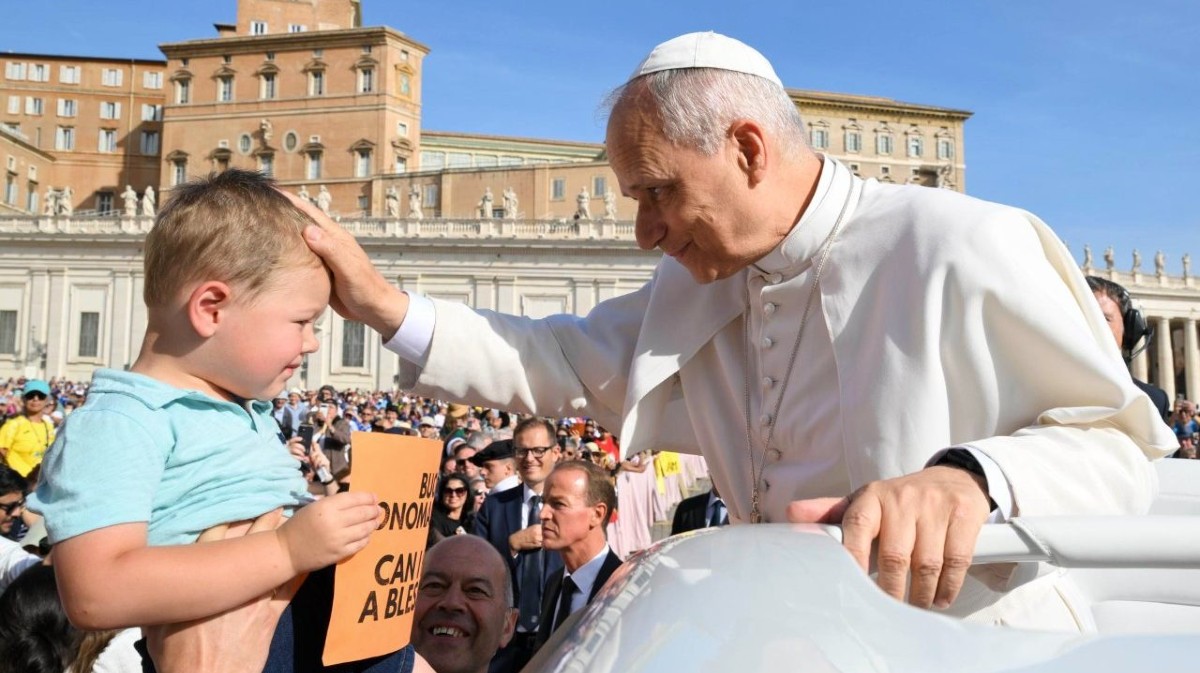
Faith and reason are not opposing forces, and asking difficult questions can be an important part of growing closer to Jesus Christ. That was the message Pope Leo XIV delivered Thursday, Oct. 8, as he encouraged Catholic students and educators to pursue knowledge with humility, intellectual honesty and a commitment to serving others.
Celebrating Mass at St. Peter’s Basilica to mark the opening of the academic year for Rome’s pontifical universities and ecclesiastical institutions, the Holy Father reminded those gathered that Catholic education must be rooted in something greater than academic achievement.
According to Vatican News, approximately 5,000 faithful attended the celebration, which brought together members of Rome’s international Catholic academic community.
At the heart of the Pope’s homily was a reminder that the pursuit of truth is inseparable from the Christian life.
“Reason, the act of asking questions and putting them into words in the light of the Word of God and the Tradition of the Church, are an essential part of the journey of faith in following Jesus Christ,” Pope Leo said.
His words offered an important reminder that the Catholic faith does not require believers to abandon their intellectual curiosity. Rather, questions and careful reflection, when guided by Sacred Scripture and the teachings of the Church, can help deepen one’s understanding of God.
The Pope encouraged students and professors to “consider study as service to faith and truth, for your own good and for that of so many brothers and sisters for whom the Lord gave his life”.
This understanding of education places responsibility on those who have been given opportunities to learn. Knowledge is not simply something to possess, but something to share for the benefit of others.
Drawing from St. Paul’s Letter to the Galatians, Pope Leo described the Apostle’s message as “a call to intelligence, memory and critical thinking.”
According to Vatican News, the Holy Father emphasized that intellectual formation plays a vital role in the Church’s mission, particularly when believers encounter distorted interpretations of religious teaching.
“In every age, there is no shortage of false teachers who exploit the religious fervour of many believers for their own ends, often leading them to radicalise certain aspects of the teaching they have received at the expense of the whole, which is Christ and his Gospel,” the Pope warned.
His warning highlighted the importance of understanding the fullness of Catholic teaching rather than isolating individual elements from the broader message of Christ and His Church.
Pope Leo also reflected on the relationship between human intelligence and memory, drawing attention to the distinction between collecting information and truly understanding human experience.
“Intelligence must therefore become memory: not simply by juxtaposing data, as an algorithm now does more quickly than we can, but by remembering experiences, with the resonances that only the human soul can perceive, and by entering more deeply into contact with their goodness,” he said.
The Pope’s remarks underscored the unique role of human reflection in an age when technology can process vast amounts of information. Learning, he suggested, must involve more than the accumulation of facts. It must also engage the human person’s experiences, relationships, and search for goodness.
Beyond academic study, the Holy Father encouraged students to recognize the spiritual value of the relationships they form during their education.
“Cultivate friendship at university,” he urged, describing friendship as a “precious gift” that becomes especially meaningful through the shared pursuit of truth in Christ.
He also called attention to the international character of Rome’s pontifical institutions, where students from across the world come together to prepare for service to the Church.
According to Vatican News, approximately 11,750 students are enrolled in Rome’s pontifical universities, colleges, and institutes, representing a diverse community of priests, seminarians, religious, and lay faithful.
Rather than simply studying alongside people from different backgrounds, Pope Leo encouraged students to build genuine relationships, exchange experiences, pray together, and learn from one another.
The Pope also reminded those receiving an education that many people throughout the world do not enjoy the same opportunities.
“Let us open the door; let us not close ourselves off,” he said.
His message challenged Catholic educational institutions to look beyond their classrooms and recognize their responsibility to the wider Church and society.
The Holy Father further encouraged students to unite their academic pursuits with their everyday Christian lives.
“Integrate life into your studies and your studies into life, according to the logic of the Incarnation, without which Revelation falls silent,” he said.
As the new academic year begins, Pope Leo’s message extends beyond the universities of Rome. For Catholics of every age, his words serve as a reminder that learning about the faith is a lifelong journey.
Whether through studying Sacred Scripture, exploring the Catechism, asking questions about Church teaching, or engaging in thoughtful conversations with others, the search for truth can become an opportunity to draw closer to Christ.
The Pope’s message ultimately points to a central purpose of Catholic education: not simply to acquire knowledge, but to allow that knowledge to strengthen faith, inspire service, and lead others toward the truth found in Jesus Christ.
Your support brings the truth to the world.
Catholic Online News exists because of donors like you. We are 100% funded by people who believe the world deserves real, uncensored news rooted in faith and truth — not corporate agendas. Your gift ensures millions can continue to access the news they can trust — stories that defend life, faith, family, and freedom.
When truth is silenced, your support speaks louder.