

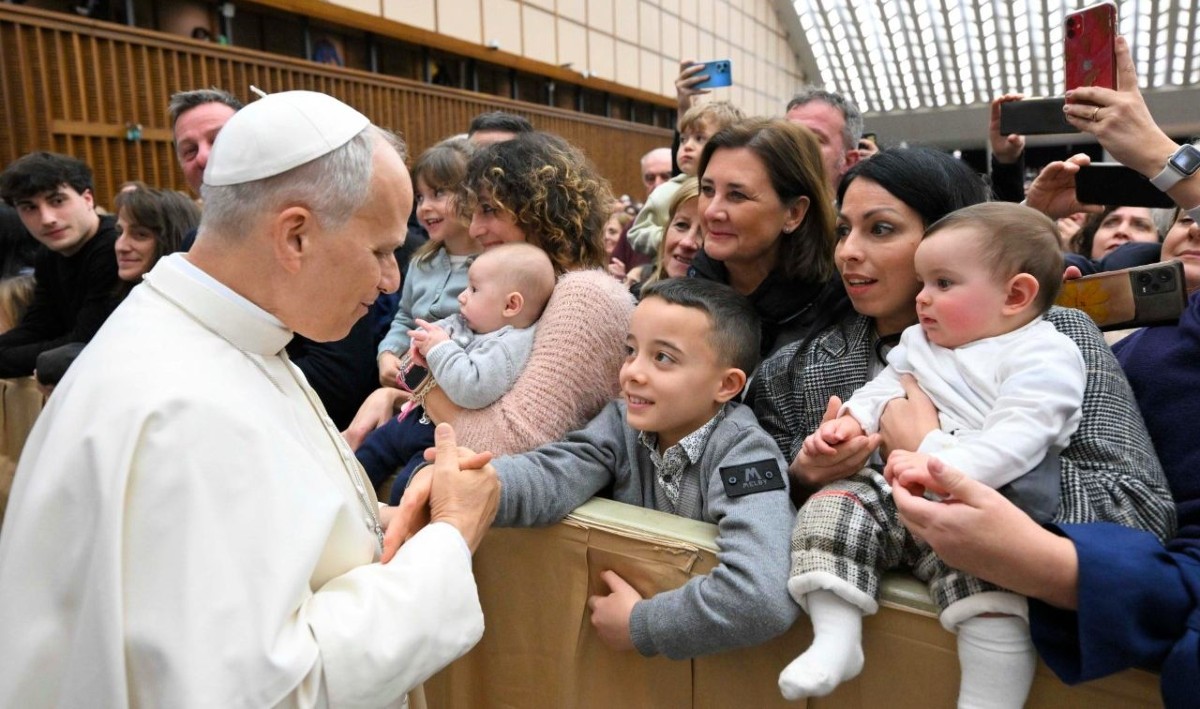
Pope Leo XIV is calling the Church to examine how faithfully she accompanies families, particularly when people experience wounds, uncertainty and circumstances far removed from what they once hoped their lives would become.
Speaking Wednesday at a Vatican gathering marking ten years since Pope Francis published Amoris laetitia, the Pope urged bishops and Church leaders to consider both what the landmark apostolic exhortation has accomplished and the difficult pastoral questions that remain.
According to Vatican News, the October 7–14 meeting brings together heads of the Eastern Churches and presidents of bishops’ conferences from around the world. The gathering, which includes plenary sessions, group discussions and prayer, will conclude with a Mass celebrated by Pope Leo and will produce a summary report reflecting what emerges from the discussions.
“I hope that, through the many stories you bring from your Churches and from different cultural contexts, a shared narrative of these ten years may gradually take shape, one marked by joy and hope, and that will enable us to face honestly the trials and difficulties that remain,” Pope Leo said.
The Pope placed the discussions within the Church’s broader understanding of marriage and family life, recalling the path established by the Second Vatican Council and continued by his predecessors.
When the Council Fathers addressed “the dignity of marriage and the family” in Gaudium et Spes, Pope Leo said, they recognized family life as “a privileged point of entry into the great cultural, economic, social and political questions of our time, including the work of promoting peace among peoples.”
Those questions have become even more interconnected today, he said.
Against that background, Pope Leo described Amoris laetitia as an important stage in the Church’s pastoral care for marriage and family life. He encouraged Church leaders to examine what the document has produced within their local Churches during the past decade, including its fruits, unresolved questions and the experiences of families themselves.
The Pope emphasized that families are not simply recipients of the Church’s pastoral ministry. They also have an active role in carrying out her mission.
“Families themselves participate in the Church’s mission in the ordinary fabric of their lives, through love and fidelity, care and forgiveness, the education of children, their efforts in transmitting faith, attention to the elderly and the vulnerable, and the many ways in which they serve their communities and society,” he said.
Through these ordinary acts, he continued, families “bear witness to the Gospel and contribute to the life and mission of the Church.”
Pope Leo also stressed that pastors have a responsibility to proclaim “the beauty of God’s plan for marriage and the family and His call for love and tenderness.”
But proclaiming that truth must also involve listening carefully to the realities families face.
According to Vatican News, the Pope pointed specifically to a growing distance between contemporary understandings of sexuality and intimacy and the Christian vision of marriage. He acknowledged that young people still desire enduring realities such as love, fidelity and belonging, even as many struggle to see lifelong commitment as the path toward those desires.
“Young people continue to long for love, fidelity and belonging, yet many find it difficult to embrace how such a vision of love can take shape in their own lives or to believe that a lifelong commitment is the condition for reaching what they desire,” Pope Leo said.
He also noted that decisions about marriage and family life do not occur in isolation.
“Economic insecurity, migration, violence, loneliness and other forms of emotional fragility also shape the choices people make and the possibilities they can imagine for their future,” he said.
These realities, Pope Leo suggested, require the Church to ask difficult questions rather than simply observe cultural changes from a distance.
Among the questions he raised were what people are truly seeking beneath those changes and what their “joys and hopes, griefs and anxieties” reveal. He also asked Church leaders to examine where pastoral language and practices successfully open a path toward the Gospel — and where they fail to reach people or help them pursue what is good.
One theme stood at the heart of the Pope’s address: human fragility.
“The experience of fragility raises the question of whether we are able to remain close to one another when life no longer corresponds to what had been hoped for, and whether we can recognize the work of grace even in situations marked by limits, wounds and apparent failure,” Pope Leo said.
Fragility, he emphasized, is not something experienced only by certain families. It belongs to the human condition and is present within the life of the Church herself.
“We need grace, forgiveness and new beginnings to accomplish God’s will, and we learn that fidelity is itself a grace to be received and a path to be gradually renewed, often through trial,” he said.
That reflection led Pope Leo to pose one of the most pointed questions of his address: “What kind of Church, then, do people encounter precisely when they are most fragile?”
He followed it with further questions for the Church’s examination: “Do our communities help them discover that they still have a place, a responsibility and gifts to offer? Can the truth we proclaim be encountered through the patience, closeness and mercy of our pastoral presence? How can we announce to them the fullness of the Gospel’s teaching about the family?”
The Pope called on participants to give those questions serious consideration during the Vatican meeting and to remain attentive to the Holy Spirit, including when listening to experiences that may challenge them.
The goal is not to abandon the fullness of the Gospel’s teaching on marriage and family, but to discern how the saving grace of Christ can reach families amid weakness and resilience, hope and disappointment, and the human longing for communion and meaning.
“Listening to one another, allowing what we hear to resonate within us, and remaining attentive to the promptings of the Holy Spirit can awaken the pastoral creativity we need in the face of new questions,” Pope Leo said.
As Church leaders begin their days of discussion, prayer and discernment, the Pope offered a final prayer that their listening would ultimately serve the Church’s mission to families throughout the world.
“May the Lord give us the freedom to listen to one another, the wisdom to recognize His work among His people, and the courage to follow where He leads us, so that, each day, the Gospel may become ever more fully good news for families throughout the world,” he concluded.
Your support brings the truth to the world.
Catholic Online News exists because of donors like you. We are 100% funded by people who believe the world deserves real, uncensored news rooted in faith and truth — not corporate agendas. Your gift ensures millions can continue to access the news they can trust — stories that defend life, faith, family, and freedom.
When truth is silenced, your support speaks louder.


