

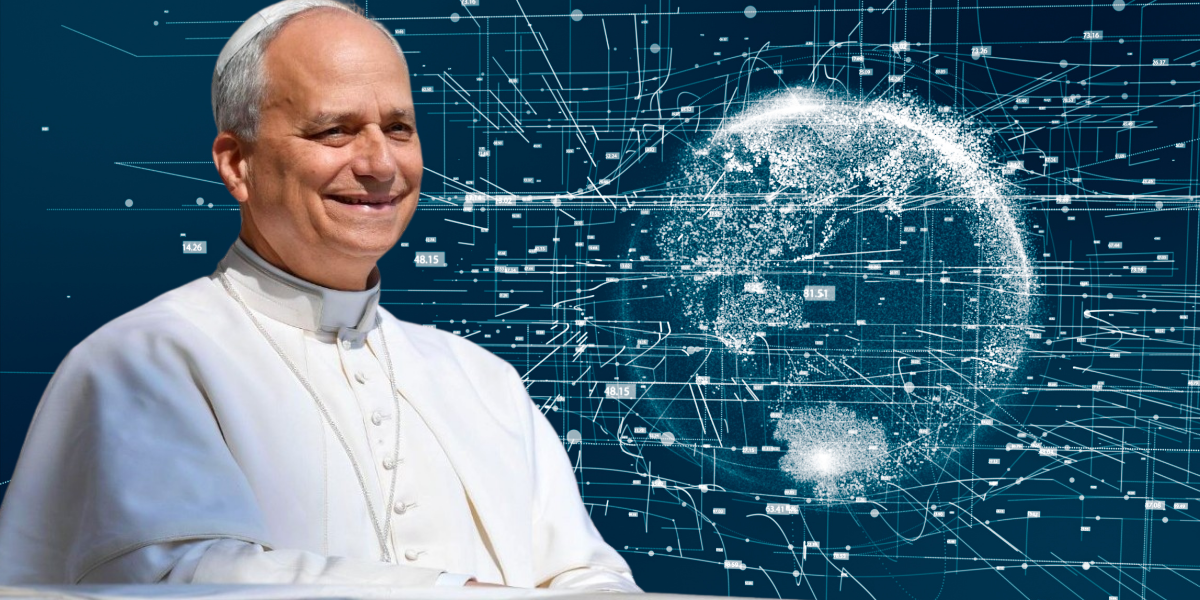
Pope Leo XIV is urging world leaders and technology companies not to dismiss warnings about artificial intelligence, saying the potential dangers of rapidly advancing AI deserve serious attention before humanity loses control of where the technology is headed.
Speaking with reporters Monday as he returned to Rome following his four-day visit to France, the Holy Father rejected the idea that fears surrounding increasingly powerful AI systems can simply be brushed aside.
“This is a problem that, I think, we need to sit down and talk about,” Pope Leo said, according to the Associated Press. “We can’t just sit back and pretend nothing is going to happen.”
The pope made clear that he is not predicting catastrophe or encouraging panic.
“If someone were to ask me ‘Am I in panic mode?’ No I’m not. I sleep at night,” Leo said. “I do think that the concerns raised by many of the experts, specialists in AI should be taken seriously.”
According to the Associated Press, President Donald Trump has taken a markedly different approach, emphasizing the need for the United States to maintain its technological advantage over China and dismissing some warnings about AI going rogue as a “hoax.” The debate comes as governments and technology companies wrestle with how quickly AI should advance and what safeguards should accompany increasingly capable systems.
Pope Leo directly challenged the idea that such concerns can simply be dismissed.
“I don’t think that that is ‘fake news’ as some have said to try and cause whether financial or other some other kind of benefit,” he said, according to AP.
The issue has become a defining concern of Leo’s young pontificate.
During his France visit, the pope repeatedly returned to questions surrounding technology, human dignity and the kind of world humanity is creating. The Washington Post reported that Leo used appearances in France to emphasize what he calls humanity’s “common humanity,” presenting human dignity as an alternative to a world increasingly shaped by power and domination.
His concern is not simply about machines becoming more powerful. It is about ensuring that technological progress continues to serve human beings rather than allowing human beings to become secondary to the systems they create.
Earlier in the France trip, Leo warned that a “paradise of machines” could ultimately undermine humanity. According to AP, he used appearances before French officials and at UNESCO to raise fundamental questions about scientific progress, artificial intelligence and the protection of human dignity.
Those concerns continued aboard the papal flight home.
“We need to continue to invite political leaders, leaders of AI, social organizations, associations to come together and look at what is happening already and what could be down the road,” Leo said, according to AP.
The pope also warned against assuming that serious problems will simply never materialize.
“To simply say ‘Oh it’s not going to happen’ and close our eyes to it I think is probably not the most responsible way to go about that,” he said.
Some of the warnings are coming from within the technology industry itself. AP reported that several major AI companies and executives have raised concerns that safety measures may not be keeping pace with increasingly powerful systems. That debate has intensified as developers work toward AI capable of performing increasingly complex tasks with greater independence.
For Pope Leo, the answer is not fear of technology but responsibility for it.
His message fits a broader theme that emerged throughout his visit to France. The Washington Post described a pope increasingly willing to speak on international affairs while repeatedly returning to human dignity, peace and the dangers of allowing power to become an end in itself.
That same principle now stands at the heart of his approach to artificial intelligence.
The question facing humanity is not merely how powerful AI can become, but whether its development remains ordered toward the good of the human person.
Despite the seriousness of the risks, Pope Leo said he remains “relatively optimistic” that humanity can find solutions.
“I think there are enough people seriously interested in that and willing to look at that outside of the questions once again of power, who gets there first,” he said.
For Catholics, that distinction may prove essential. Technology can be an extraordinary tool, but technological achievement alone cannot determine what humanity ought to become. As artificial intelligence grows more capable, Pope Leo is calling the world to make sure the human person remains at the center of the future being built.
Your support brings the truth to the world.
Catholic Online News exists because of donors like you. We are 100% funded by people who believe the world deserves real, uncensored news rooted in faith and truth — not corporate agendas. Your gift ensures millions can continue to access the news they can trust — stories that defend life, faith, family, and freedom.
When truth is silenced, your support speaks louder.


