

A remarkable archaeological discovery in Israel is offering powerful new insight into the early Church, revealing that belief in the divinity of Jesus Christ may have been more widespread—and more publicly professed—than many historians once believed.
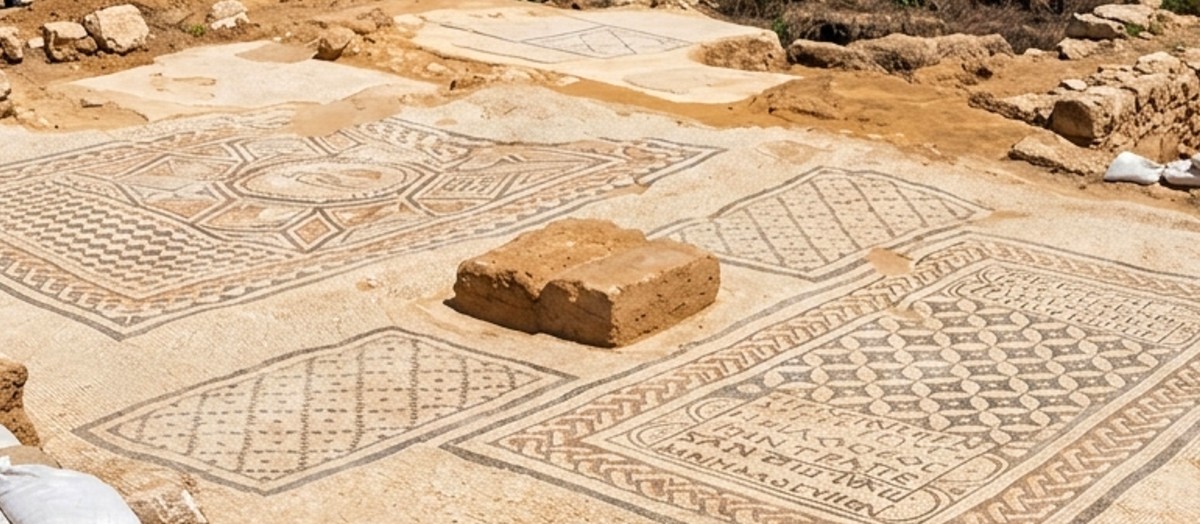
According to a report from the Daily Mail, an ancient mosaic dating back roughly 1,800 years contains a Greek inscription that explicitly refers to Jesus as God. The inscription reads: “The god-loving Akeptous has offered the table to God Jesus Christ as a memorial,” providing striking early evidence of Christian worship centered on Christ’s divine identity.
The mosaic, discovered in 2005 beneath what is now a prison complex in Megiddo, Israel, is believed to have been part of a house-church—an early Christian gathering space used before the construction of formal basilicas. This context highlights the quiet but deeply committed faith of early Christians, who often worshipped in humble and hidden settings.
What has surprised researchers most is the presence of a Roman centurion named Gaianus, who is mentioned in the inscription as a benefactor. According to the Daily Mail, the mosaic states that “Gaianus, also called Porphyrius, centurion, our brother, has made the mosaic at his own expense as an act of generosity.” This detail suggests that individuals within the Roman military—once known for persecuting Christians—may have already been supporting the faith as early as the third century.
This challenges long-standing assumptions that early Christians were only drawn from the poor or marginalized. Instead, the discovery points to a broader and more diverse early Church, one that included people of influence and authority.
The naming structure used for Gaianus—also called Porphyrius—has drawn comparisons to figures in the New Testament, such as Paul the Apostle, who was referred to as “Saul also called Paul.” Such dual names were common in the ancient world, especially among those navigating both Jewish and Gentile cultures.
The mosaic also honors several women—Primilla, Cyriaca, Dorothea, and Chreste—indicating their active and possibly leadership roles within the early Christian community. Their inclusion reflects the often-overlooked contributions of women in the life of the Church from its earliest days.
For Catholics today, this discovery serves as a powerful reminder: from the beginning, the Church has boldly proclaimed the truth of who Jesus is—not merely a teacher or prophet, but truly God. Even in times of uncertainty and persecution, early believers bore witness to this truth with courage, generosity, and faith.
As modern Christians reflect on this ancient testimony, the message remains clear—faith in Christ is not a later development, but a foundation laid by the earliest followers who recognized Him as Lord and gave their lives to Him.
Your support brings the truth to the world.
Catholic Online News exists because of donors like you. We are 100% funded by people who believe the world deserves real, uncensored news rooted in faith and truth — not corporate agendas. Your gift ensures millions can continue to access the news they can trust — stories that defend life, faith, family, and freedom.
When truth is silenced, your support speaks louder.