
Spain is mourning another devastating railway disaster after two high-speed passenger trains collided near Toledo on Wednesday, October 28, killing at least 68 people and leaving families waiting for news of loved ones.
The tragedy, which occurred on a major rail route connecting Madrid and Seville, has become Europe’s deadliest train accident in more than a decade. It also marks Spain’s second major fatal railway collision in 2026, raising renewed concerns about passenger safety and the country’s extensive high-speed rail network.
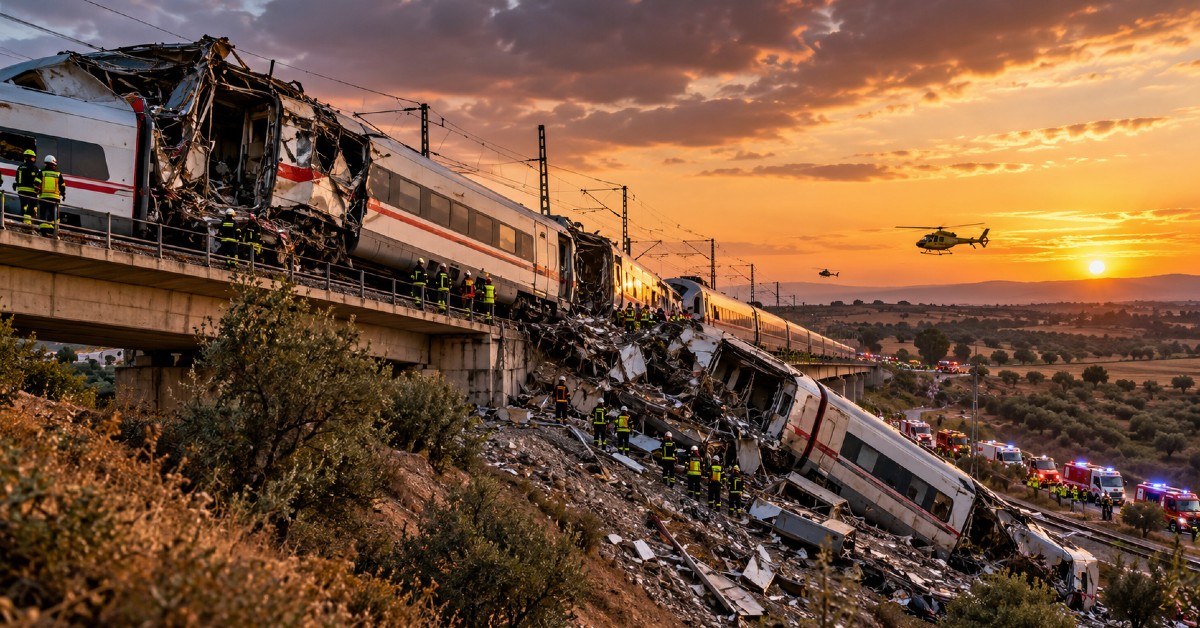
According to Reuters, the collision happened shortly after 9 a.m. between the towns of Mora and Orgaz, when a train operated by Spain’s state-owned Renfe struck the rear of a stationary train belonging to private operator Iryo.
The force of the impact derailed several carriages, sending wreckage down an embankment and leaving emergency personnel searching through severely damaged train cars for survivors and victims.
Authorities reported that 147 passengers were aboard the Iryo service, while another 397 were traveling on the Renfe train.
Rescue workers continued their search throughout the day, with officials warning that the number of fatalities could rise.
According to The Guardian, Castilla-La Mancha regional president Emiliano García-Page cautioned that additional victims might remain trapped because “it has not yet been possible to reach the bottom of the carriages”.
Emergency crews, including firefighters, police officers, medical personnel, and helicopter teams, responded to the scene. Nearby communities also prepared facilities to assist those affected by the disaster.
The scale of the destruction was reflected in accounts from passengers who survived the collision.
Miguel, who was traveling with colleagues in the rear carriage of one train, described the terrifying moment of impact in an interview with COPE radio.
“We heard a massive roar, a truly enormous thud that went on for 10 seconds, as if the train were about to derail,” he recalled, according to Reuters.
Another passenger, identified as Eduarda, told Cadena SER radio that the impact threw her forward. After evacuating and descending an embankment, she witnessed the devastation surrounding the derailed carriages.
“I saw dead people,” she said, according to Reuters.
As emergency teams worked to recover victims, Spanish authorities began examining the circumstances that allowed two trains traveling in the same direction to collide.
Spain’s transport minister, Óscar Puente, said a computer communications failure had triggered a red railway signal, automatically halting traffic. However, the Renfe train was subsequently authorized to continue despite the stationary Iryo train ahead.
According to Reuters, Puente said the decision to restart the train was erroneous and violated established safety protocols.
Renfe confirmed that its train had proceeded after receiving authorization but emphasized that the full circumstances surrounding the accident remained under investigation.
The company said investigators would need to establish the precise sequence of events and traffic conditions that led to the collision.
The disaster has brought painful memories of another tragedy earlier this year.
In January, 46 people died when an Iryo train derailed and struck an oncoming Renfe train near Adamuz in Córdoba province. The causes of that accident remain under investigation, with preliminary findings identifying possible defects involving the railway track, rail, or connecting weld.
According to Reuters, Wednesday’s collision is Europe’s deadliest railway disaster since the 2013 train crash near Santiago de Compostela, Spain, which claimed 80 lives.
The two major accidents within a single year have intensified questions about railway infrastructure, maintenance, and safety oversight.
Reuters reported that Spanish railway safety authority figures show an increase in recorded accidents, including collisions and derailments, from 45 in 2016 to 69 in 2025.
The report also noted that Spain has invested heavily in expanding its high-speed rail system, while a comparatively smaller portion of infrastructure spending has been directed toward maintenance, renewal, and upgrades.
As investigators examine the latest collision, national leaders have expressed solidarity with the victims and their families.
Prime Minister Pedro Sánchez conveyed his condolences and confirmed that emergency services were coordinating efforts to assist those affected.
“My love, solidarity and support to all the victims and their families,” Sánchez said in a statement shared on X, according to The Guardian.
Political parties suspended campaign activities ahead of Spain’s November 29 general election, while the country’s football federation postponed 24 Copa del Rey matches scheduled for Wednesday.
Spain’s health minister, Mónica García, also urged members of the public to donate blood as medical services responded to the emergency.
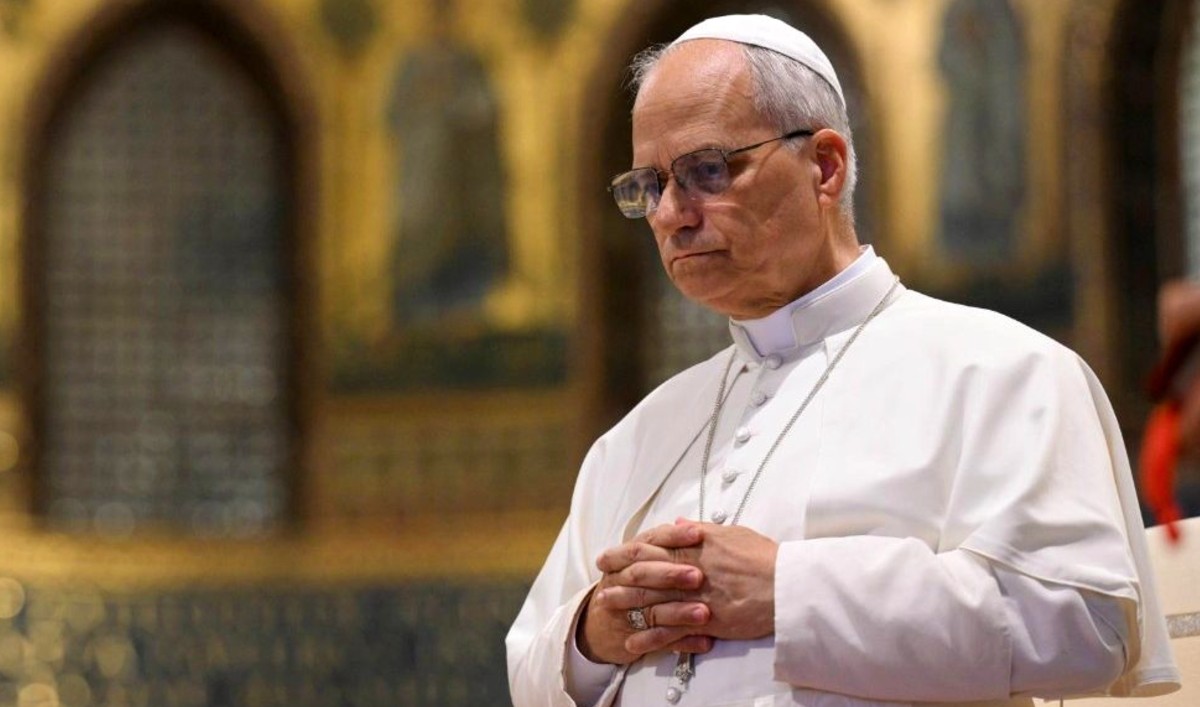
For Catholics in Spain and around the world, the tragedy is a solemn reminder of the fragility of human life and the importance of standing beside those who suffer.
Behind the growing death toll are individuals whose lives have been lost, families confronting unimaginable grief, and survivors facing the physical and emotional consequences of the disaster.
As rescue operations continue, the faithful are invited to pray for the eternal rest of those who have died, for healing and strength for the injured, and for consolation for grieving families.
Prayers are also needed for the emergency responders and medical professionals working amid the wreckage, and for those entrusted with determining how such a devastating collision occurred.
In the face of sudden tragedy, the Catholic faith calls believers to respond with compassion, solidarity, and hope, remembering that every human life possesses an immeasurable dignity.
As Spain confronts another national tragedy, the urgent work of recovering victims, supporting families, and establishing accountability continues.
For now, a nation grieves, and families await answers.
Your support brings the truth to the world.
Catholic Online News exists because of donors like you. We are 100% funded by people who believe the world deserves real, uncensored news rooted in faith and truth — not corporate agendas. Your gift ensures millions can continue to access the news they can trust — stories that defend life, faith, family, and freedom.
When truth is silenced, your support speaks louder.