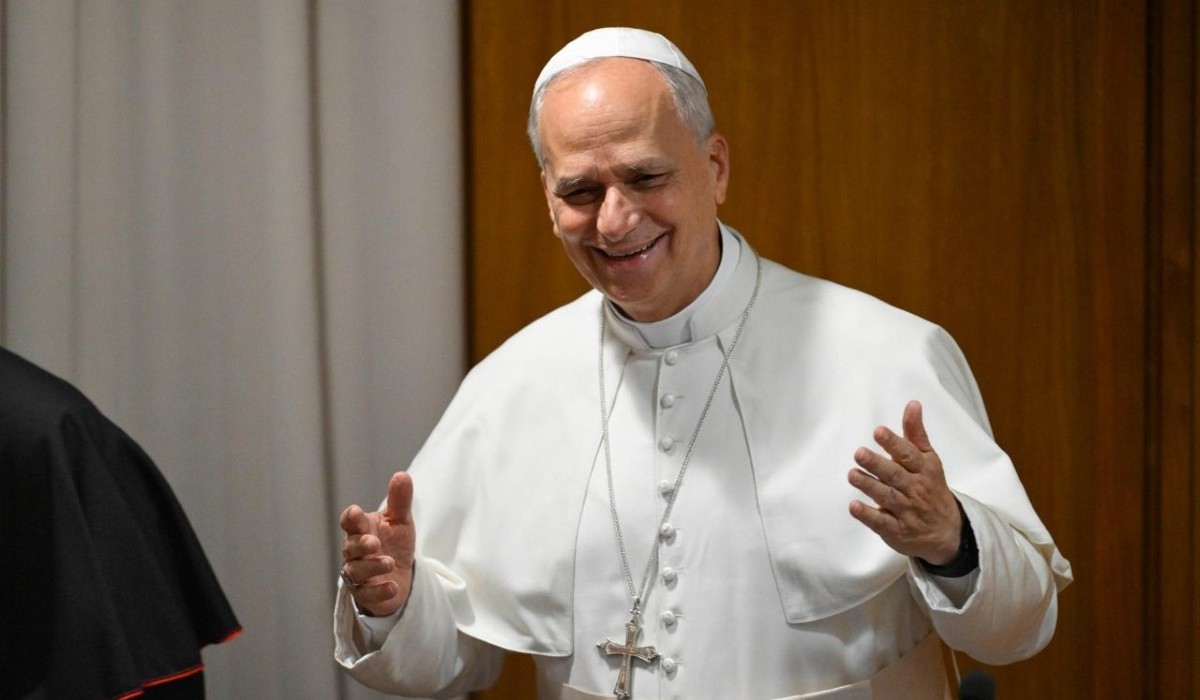

As Pope Leo XIV recovers from lung surgery, questions surrounding the leadership of the Catholic Church have taken on renewed importance. With the Holy Father’s public engagements suspended and his hospitalization expected to last at least a week, Catholics may wonder how the Vatican continues operating when the pope is temporarily unable to fulfill his usual responsibilities.
The answer lies in a centuries-old system of Church governance designed to maintain stability, preserve essential functions and ensure continuity during periods of uncertainty.
According to EWTN News, Pope Leo XIV entered the hospital on Oct. 13 for surgery to remove a lung nodule. The Vatican subsequently confirmed that the procedure was successful, although his recovery will require an extended hospital stay. His scheduled appointments have been canceled through Oct. 20.
While the pope holds supreme authority in the Catholic Church, the Vatican’s daily operations do not come to a halt when he becomes ill.
Matthew Bunson, vice president and editorial director of EWTN News, explained during Pope Francis’ hospitalization in 2025 that “the machinery of state tends to keep functioning.”
Much of the Vatican’s administrative work continues through the officials and institutions responsible for carrying out the Church’s ongoing responsibilities.
Andreas Widmer, a former Swiss Guard who served under Pope St. John Paul II and now teaches at The Catholic University of America, offered a similar explanation.
“Things keep going. He is kept apprised by [Vatican officials],” Widmer told EWTN News.
This continuity allows the Church’s administration to continue functioning even when the Holy Father must temporarily step away from public appearances and routine duties.
However, a prolonged or permanent inability to exercise the papal office presents more complicated questions.
Throughout modern Church history, several popes have considered what should happen if serious illness prevents them from fulfilling their responsibilities.
According to EWTN News, Pope Paul VI prepared a letter in 1965 indicating that he should be considered resigned if he became incapacitated while serving as pope. That situation never arose, and he remained in office until his death in 1978.
Pope Francis also addressed the possibility of medical incapacitation. In 2022, he revealed that he had signed a resignation document during the first year of his pontificate and entrusted it to Cardinal Tarcisio Bertone, who was serving as Vatican secretary of state.
The document was intended to address a situation in which Francis could no longer carry out his responsibilities because of serious medical impairment.
Yet Francis also emphasized the enduring nature of the papal vocation. In his 2024 biography, he described the Petrine ministry as being “for life,” while acknowledging that grave physical incapacity could warrant resignation.
These examples demonstrate the seriousness with which pontiffs have approached questions of illness, responsibility, and the continuity of Church leadership.
“A pope is not going to leave this to chance. They take their responsibility very seriously,” Widmer told EWTN News.
Importantly, hospitalization does not automatically change a pope’s authority or create a vacancy in the papal office. The pope remains pope while receiving medical treatment.
The circumstances change significantly, however, when a pontiff dies.
At that point, the Church enters a period known as sede vacante, meaning that the Apostolic See is vacant. Special procedures govern the Vatican until a successor is elected.
One of the most important figures during this transition is the camerlengo of the Holy Roman Church.
According to EWTN News, the camerlengo is among the officials who retain their responsibilities following the death of a pope. His duties include formally confirming the pontiff’s death and overseeing certain administrative functions during the vacancy.
“It’s his job to certify the death of the reigning pope and to make sure the wishes of the pope are respected,” Bunson explained.
“Then the cardinals are summoned to Rome,” he added, describing the process that eventually leads to the election of a new pontiff.
Certain other Vatican offices also remain active during this period, reflecting the Church’s commitment to maintaining essential spiritual and charitable services.
Among them is the Apostolic Penitentiary, which handles matters concerning the internal forum and the Church’s ministry of reconciliation and forgiveness.
Bunson emphasized the spiritual significance of this continuity, explaining that its head “always keeps his job” because “there must always be the opportunity for God’s loving mercy.”
Another important position is the almoner of his holiness, who oversees charitable assistance offered in the pope’s name.
Pope Francis established that the papal almoner would retain his responsibilities during a vacancy in the Apostolic See, ensuring that charitable assistance to those in need would continue even during a transition in Church leadership.
Together, these provisions reflect an important distinction between the pope’s personal ministry and the continuing mission of the Catholic Church.
Although the Holy Father occupies a unique and irreplaceable office, the Church possesses established structures that allow its essential work to continue during illness and periods of transition.
For now, the Vatican has indicated that Pope Leo XIV’s surgery was successful and that he is expected to remain hospitalized for at least a week.
His recovery offers Catholics an opportunity not only to pray for the Holy Father’s health but also to reflect on the responsibilities of the papacy and the enduring mission of the Church.
As Pope Leo continues his recovery, the faithful can take comfort in knowing that the Church’s work of serving the faithful, administering its institutions, extending charity, and proclaiming the Gospel continues.
And while Vatican officials carry out their responsibilities, Catholics around the world are invited to remain united in prayer for the Holy Father’s healing, strength, and return to his ministry.
Your support brings the truth to the world.
Catholic Online News exists because of donors like you. We are 100% funded by people who believe the world deserves real, uncensored news rooted in faith and truth — not corporate agendas. Your gift ensures millions can continue to access the news they can trust — stories that defend life, faith, family, and freedom.
When truth is silenced, your support speaks louder.