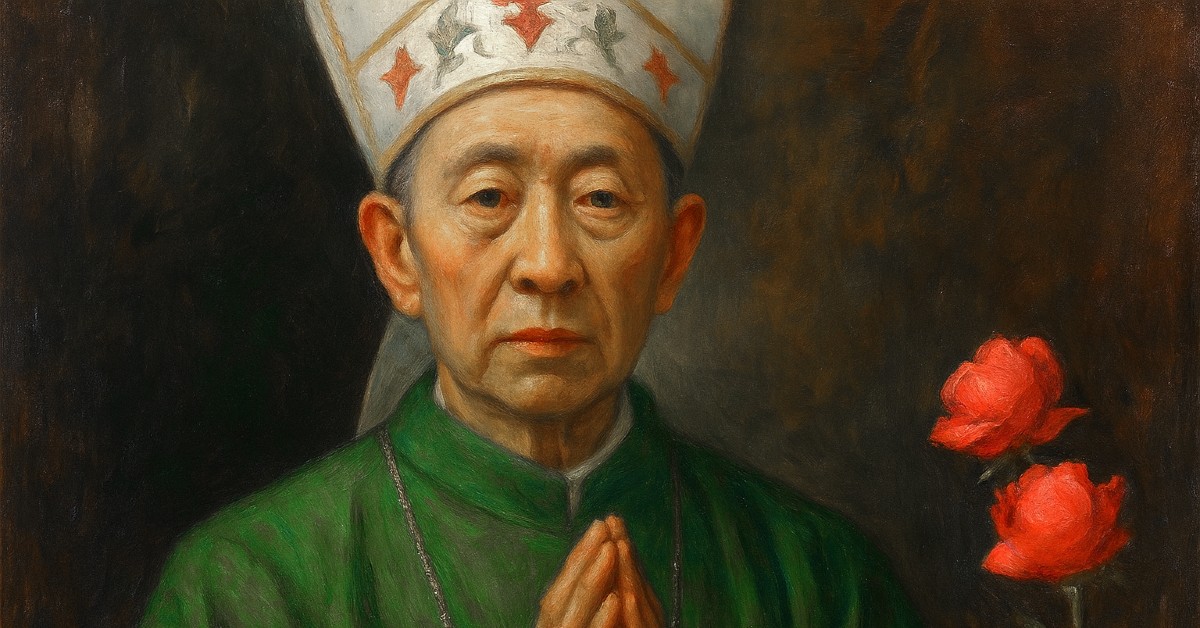

A women’s supplement published by the Vatican newspaper L’Osservatore Romano is drawing scrutiny after featuring articles that reinterpret Catholic teachings and traditions concerning Satan, original sin, Mary Magdalene, and the Church’s historical treatment of women.
The July 2026 edition of Women Church World brought together writers and scholars who approached several longstanding theological and historical questions through feminist, psychological, and sociological perspectives. According to LifeSiteNews, critics argue that the collection conflicts with traditional Catholic doctrine in several important areas.
One of the most striking arguments concerns the existence and nature of the devil.
According to LifeSiteNews, feminist writer Dacia Maraini argues in the article “The Invisible Enemy Within” that humanity has moved from believing in an external devil toward recognizing evil within the human person.
“Historically, the world can be divided into two distinct periods: one in which the devil existed outside us, taking on the concrete forms handed down by popular culture, such as the fallen angel or the cloven-hoofed goat, and another in which we came to realise that evil resides within us,” Maraini said.
Maraini also connects what she describes as the “Devil” affecting women with cultural and social conditioning. She argues that “only culture, education, responsibility, ethics and empathy” can break deeply rooted patterns and help women free themselves from what keeps them captive.
Such an interpretation stands in tension with Catholic teaching that Satan and the demons are real spiritual beings rather than merely symbols for psychological or social forces. The Church teaches that the devil and other demons were originally created good but became evil through their own free choice.
Questions about Genesis and original sin also appeared in the supplement.
According to LifeSiteNews, theologian Marinella Perroni argues that the Genesis account does not contain the devil or original sin in the form later articulated within Christian tradition. Her interpretation presents the serpent as deceptive but does not identify it directly with Satan, while emphasizing humanity’s desire to become like God.
Another article turns to Eve and the relationship between men and women.
According to LifeSiteNews, Ritanna Armeni argues that “the image of Eve taken from Adam’s rib” contributed to a view in which women occupy a “derivative condition.” Armeni calls for “overcoming a vision of humanity built upon the precedence of one sex over the other.”
Catholic doctrine, however, affirms the equal dignity of men and women as persons created in the image and likeness of God. Differences between the sexes do not make one sex less human or less valuable than the other.
The supplement also revisits the traditional portrayal of St. Mary Magdalene.
Historian and theologian Adriana Valerio argues that the familiar image of Magdalene as a penitent woman developed through “a series of exegetical errors and deeply rooted prejudices that have been perpetuated over the centuries,” according to LifeSiteNews.
Valerio also criticizes interpretations of Magdalene that she believes contributed to negative attitudes toward female sexuality. She writes that the traditional image “came to support the demonisation of female sexuality and sensuality, which, in order to be redeemed, were thought to require penance and mortification.”
Her treatment of the seven demons cast out of Mary Magdalene likewise offers a markedly different interpretation. According to the article cited by LifeSiteNews, Valerio describes demons in the New Testament as “entities held responsible for suffering, illnesses, or mental disorders,” rather than indications of vice or immoral behavior.
Other contributions examine accusations of witchcraft and the historical relationship between Christianity and women.
According to LifeSiteNews, Lucia Capuzzi and Rita Pinci cite theologian Stefanie Knauss in arguing that “patriarchy found in [the Catholic] religion a justification for women’s inferiority and for the need to control their behaviour.”
Sandra Petrignani similarly portrays European witch hunts through the lens of conflict between women and male-dominated religious and social institutions. “The women of the night were the bearers of a complex civilization, one that stood in opposition to that of the Church and of a society ruled by male power,” Petrignani writes.
LifeSiteNews disputes that historical framing, arguing that witch persecutions were considerably more complicated and were shaped by religious conflict, political instability, local judicial systems, social fears, and the upheaval surrounding the Reformation.
The controversy is particularly significant because these arguments appeared not in an independent theological journal but in a supplement of L’Osservatore Romano, the Vatican newspaper.
The publication of disputed theological perspectives does not itself constitute a change in Catholic doctrine or an act of the Church’s Magisterium. Nevertheless, the articles raise questions about how theological speculation and revisionist interpretations are presented within publications closely associated with the Holy See.
For Catholics, the distinction is important. The Church’s teachings concerning creation, original sin, the existence of Satan, redemption through Jesus Christ, and the necessity of divine grace cannot be changed simply through academic or cultural reinterpretation.
The debate surrounding the July edition of Women Church World therefore reaches beyond questions of feminism or Church history. It touches on a more fundamental issue: how contemporary scholarship should engage difficult questions while remaining faithful to Scripture, Tradition, and the authoritative teaching of the Catholic Church.
Your support brings the truth to the world.
Catholic Online News exists because of donors like you. We are 100% funded by people who believe the world deserves real, uncensored news rooted in faith and truth — not corporate agendas. Your gift ensures millions can continue to access the news they can trust — stories that defend life, faith, family, and freedom.
When truth is silenced, your support speaks louder.