
Pope Leo XIV’s appointment of a new archbishop in Slovakia is drawing attention to an ongoing debate within the Catholic Church over pastoral outreach, traditional moral teaching, and the controversial Vatican declaration Fiducia Supplicans.
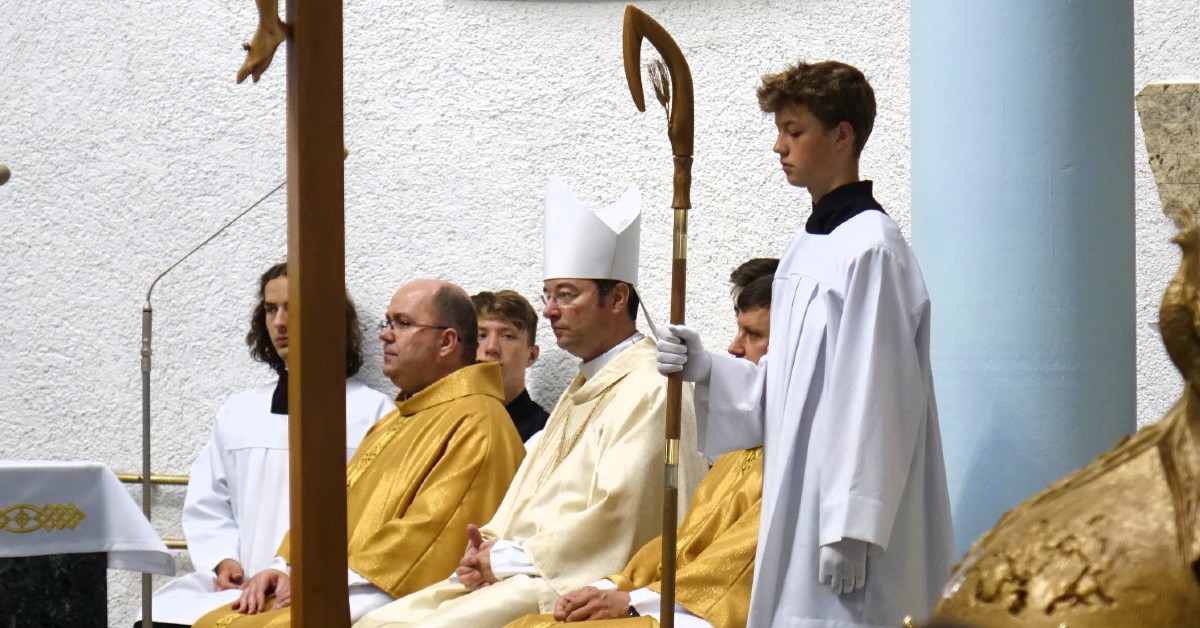
Bishop Marek Forgáč, 52, has been named metropolitan archbishop of Košice, succeeding Archbishop Bernard Bober, whose resignation was accepted by the Holy Father. The appointment places Forgáč at the head of an archdiocese serving approximately 700,000 Catholics and nearly 500 priests, according to LifeSiteNews.
While the appointment represents an important leadership transition for the Church in Slovakia, Forgáč’s previous comments concerning blessings for couples in irregular relationships have renewed questions about how Catholic bishops should balance pastoral sensitivity with the Church’s established moral teachings.
The controversy centers on a July 2024 interview in which Forgáč discussed Fiducia Supplicans, the Vatican declaration issued in December 2023 under Pope Francis.
The document permits certain spontaneous, non-liturgical blessings for couples in irregular situations, including same-sex couples, while maintaining that such blessings must not resemble marriage ceremonies or imply Church approval of relationships contrary to Catholic teaching.
In the interview with the Slovak publication Nové Mesto, Forgáč acknowledged that “Slovakia we are poorly prepared for” the approach introduced by the declaration, according to LifeSiteNews.
He also described Pope Francis’ vision of a Church “that has open doors for all,” while emphasizing that such openness does not mean abandoning “the values of the Gospel or of moral life.”
Those remarks have become a point of contention among Catholics concerned that the distinction between welcoming individuals and appearing to affirm relationships contrary to Church teaching may not always be sufficiently clear.
For critics, the central issue is not whether Catholics experiencing same-sex attraction or living in irregular relationships deserve compassion. Catholic teaching has consistently emphasized the dignity of every human person and the obligation to treat others with respect and sensitivity.
Rather, the disagreement concerns whether blessing couples together, even outside a liturgical setting, risks communicating approval of relationships the Church does not recognize as morally acceptable.
The debate became particularly pronounced after Fiducia Supplicans was published, with bishops, cardinals, and theologians expressing concerns about potential confusion among the faithful.
Forgáč’s comments on the relationship between universal moral principles and individual pastoral circumstances have also attracted scrutiny.
During the same 2024 interview, the bishop explained that pastoral care requires attention to the particular circumstances of each person rather than relying exclusively on generalized judgments.
“Yes, there are general norms, but we need to see the concrete person standing before us. His story sometimes may not fit into a concrete paragraph,” Forgáč said, according to the interview quoted by LifeSiteNews.
He continued, “The synod is about meeting the person, not the book,” adding, “Let us perceive, let us listen to every person, what he comes with, what troubles him.”
The statements reflect an emphasis on personal accompaniment associated with the pastoral priorities of Pope Francis. However, they have also prompted concerns about whether individualized pastoral approaches could be interpreted as allowing exceptions to universal moral principles.
LifeSiteNews argued that Forgáč’s language raises questions about the application of Catholic moral teaching, particularly regarding actions the Church considers intrinsically evil.
The distinction is important because Catholic doctrine recognizes that personal circumstances can affect an individual’s moral responsibility without changing the objective moral character of an action.
The Catechism of the Catholic Church teaches that certain actions are gravely contrary to the moral law while also acknowledging that factors such as ignorance, fear, and psychological or social pressures may diminish personal culpability.
This distinction remains essential to Catholic moral theology and pastoral practice.
In his 1993 encyclical Veritatis Splendor, Pope St. John Paul II defended the existence of universal moral norms that cannot be set aside because of individual circumstances.
“Keeping God’s law in particular situations can be difficult, extremely difficult, but it is never impossible,” the late pontiff taught.
The encyclical further emphasizes that God’s grace makes it possible for Christians to live according to the moral law, even when doing so requires considerable sacrifice.
These teachings provide an important framework for evaluating the continuing debate over pastoral accompaniment and moral responsibility.
At the same time, Forgáč’s quoted statements do not explicitly advocate changing Catholic doctrine or permitting intrinsically evil actions. His emphasis on listening to individuals can also be understood within the Church’s longstanding responsibility to offer pastoral care while upholding its teachings.
Whether his approach will satisfy Catholics concerned about doctrinal clarity remains an open question.
Born in Košice in 1974, Forgáč was ordained to the priesthood in 1999 and pursued advanced studies in psychology, earning a licentiate from the Pontifical Gregorian University and a doctorate in social psychology.
His ministry has included work with young people and the formation of future priests. Pope Francis appointed him auxiliary bishop of Košice in 2016.
His educational background and pastoral experience now accompany him into a significantly larger leadership role, one that will require guiding clergy and faithful through questions affecting both the spiritual and public life of the Church.
The appointment also comes amid broader scrutiny of Pope Leo XIV’s episcopal selections.
According to LifeSiteNews, some Catholics have criticized other appointments involving bishops whose previous activities or theological positions have generated controversy.
The publication cited appointments involving Church leaders in Peru and Italy, as well as continuing disagreements surrounding episcopal appointments in China and the Society of St. Pius X.
These separate controversies have contributed to questions among some Catholics about the criteria being used to select bishops and the theological direction of Church leadership.
However, an episcopal appointment does not, by itself, establish papal endorsement of every previous statement or action of the individual selected.
For Catholics following the developments in Slovakia, the significance of Forgáč’s appointment will ultimately depend not only on statements made during past interviews but also on how he exercises his responsibilities as metropolitan archbishop.
The Church calls bishops to serve as authentic teachers of the faith, guardians of Catholic doctrine, and shepherds entrusted with the spiritual welfare of the faithful.
That responsibility includes proclaiming the Gospel with clarity while offering compassion to those struggling to live according to its demands.
The controversy surrounding Fiducia Supplicans illustrates the difficulty of maintaining that balance in an increasingly divided ecclesial environment.
Supporters of the declaration emphasize the importance of making the Church accessible to those who may feel excluded or distant from its sacramental life. Critics maintain that pastoral gestures must be unmistakably consistent with Catholic teaching to avoid misleading the faithful.
Both concerns will remain part of the discussion as Archbishop-designate Forgáč prepares to assume leadership in Košice.
For the nearly 700,000 Catholics under his pastoral care, the most consequential question may be how their new archbishop translates his vision of accompaniment into the daily work of teaching, sanctifying, and governing the local Church.
His appointment places him at the center of a continuing conversation about the relationship between mercy, truth, and fidelity to Catholic doctrine—a conversation that extends far beyond Slovakia and remains one of the defining challenges facing the Church today.
Your support brings the truth to the world.
Catholic Online News exists because of donors like you. We are 100% funded by people who believe the world deserves real, uncensored news rooted in faith and truth — not corporate agendas. Your gift ensures millions can continue to access the news they can trust — stories that defend life, faith, family, and freedom.
When truth is silenced, your support speaks louder.