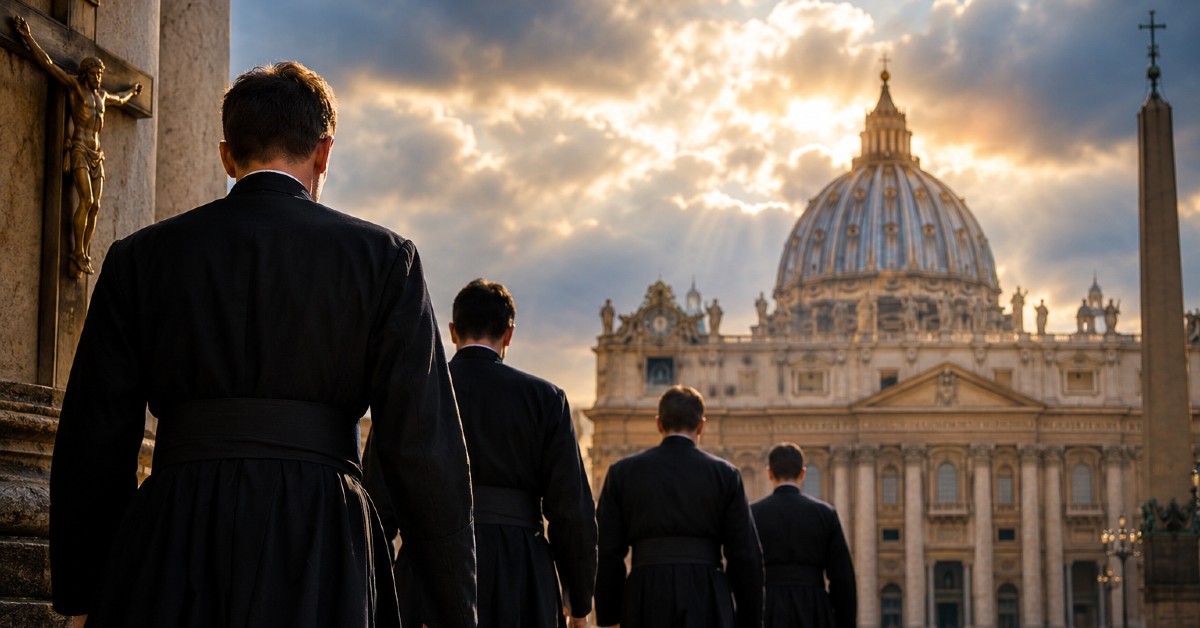

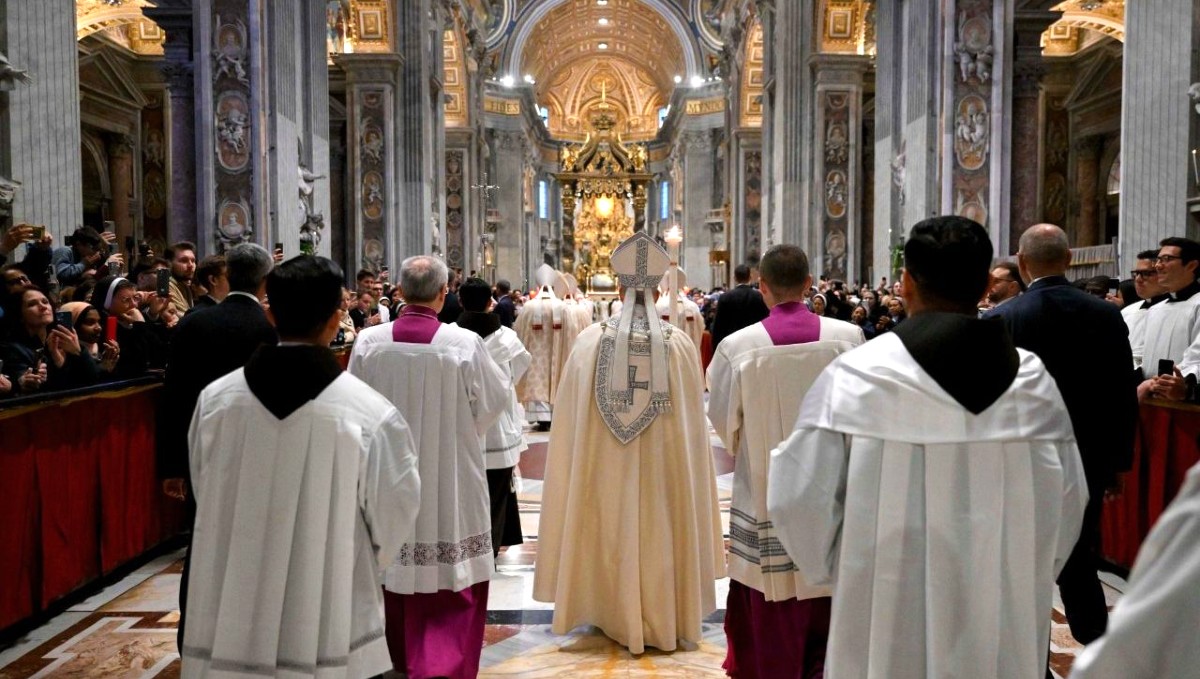
Pope Leo XIV has confirmed that he does not intend to lift the restrictions on the Traditional Latin Mass established by Pope Francis, emphasizing that preserving unity within the Catholic Church remains a central priority of his pontificate.
Speaking to journalists aboard the papal aircraft during his return to Rome from South America in November 2026, the Holy Father addressed questions about the future of the traditional liturgy and whether Catholics might see a change in the Vatican’s approach.
His response indicated that, at least for now, the restrictions introduced in 2021 will remain in place.
“Not right now. Traditions Custodes is the decision of Francis, and we will continue to follow it,” Pope Leo said, according to LifeSiteNews, which reported his remarks from the in-flight press conference.
The decision maintains a policy that has generated considerable discussion among Catholics, particularly those attached to the Traditional Latin Mass, also known as the Vetus Ordo, which follows the Roman liturgical tradition preceding the reforms of the Second Vatican Council.
A Question of Unity Within the Church
In explaining his position, Pope Leo repeatedly returned to the importance of communion among Catholics, presenting unity as a guiding principle in his decisions concerning the Church’s liturgical practices.
“For the unity of the Church,” the pope said, “the vast majority of Catholics around the world celebrate the rite of Vatican II, of Paul VI, and we will continue to do that,” according to LifeSiteNews.
However, the Holy Father also acknowledged that the Traditional Latin Mass can continue to be celebrated under certain circumstances.
“Traditionis Custodes includes the possibility of dispensation, allowing the Vetus Ordo Mass to be celebrated,” he explained, as reported by LifeSiteNews.
“There is an avenue available for those who wish to apply for the dispensation,” the pope added.
His comments clarify that the traditional liturgy is not entirely prohibited, but its celebration remains subject to the permissions established under existing Church regulations.
According to EWTN News, Pope Leo views maintaining these restrictions as part of his broader responsibility to promote reconciliation and unity among Catholics.
How the Latin Mass Restrictions Began
The current debate over the Traditional Latin Mass reflects two different approaches taken by recent popes.
In 2007, Pope Benedict XVI issued Summorum Pontificum, expanding the ability of priests to celebrate the older form of the Roman liturgy without requiring special permission from their bishops.
The decision provided greater freedom for Catholics devoted to the traditional liturgy and encouraged its celebration in communities throughout the world.
That approach changed in July 2021, when Pope Francis issued Traditionis Custodes, introducing new restrictions on the celebration of the Traditional Latin Mass.
The document placed greater authority over celebrations of the older liturgy in the hands of diocesan bishops and established additional requirements for priests and communities seeking to use it.
According to LifeSiteNews, the changes disappointed many traditionalist Catholics who regarded Benedict XVI’s earlier provisions as an important step toward reconciliation within the Church.
Following Pope Leo XIV’s election in May 2025, questions emerged about whether the new pontiff might reconsider those restrictions.
His latest remarks indicate that no immediate reversal is planned.
Pope Leo Leaves Open the Possibility of Future Changes
Although Pope Leo has chosen to maintain the current liturgical regulations, his broader comments suggest that he does not consider every question concerning Church discipline permanently settled.
During the same press conference, the pope addressed whether married men might eventually be ordained to the priesthood in regions experiencing shortages of priests.
He expressed concern that expanding such permissions could create further divisions within the Church.
Ordaining married men is “not the only solution” to the shortage of priests, he explained, according to EWTN News, adding that the proposal could cause division because it lacks universal acceptance.
The pope then described his understanding of the responsibilities facing him as the leader of the Catholic Church.
“It may be in the future that some things will change. However, for right now what I believe [is an] important part of my ministry to the Church is to heal, bring people together … to say, first letʼs come together, letʼs consider what we believe the priorities need to be, and then weʼll see how we walk forward from there,” he said, according to EWTN News.
“All these things are going to take time and we will go with that as the Lord moves us,” he added.
While these remarks were made in the context of priestly ordination, they offer insight into the pope’s wider approach to questions that have generated disagreement among Catholics.
What the Decision Means for Catholics
For Catholics who attend the Traditional Latin Mass, Pope Leo’s statements mean that existing restrictions will continue to shape where and under what circumstances the older liturgy may be celebrated.
Those seeking permission to celebrate the traditional rite must continue working within the framework established by Traditionis Custodes.
For Catholics who had hoped the election of a new pope would bring a different approach, the announcement provides a clearer picture of Leo XIV’s immediate priorities.
At the same time, the pope’s acknowledgment that dispensations remain possible confirms that the Traditional Latin Mass continues to have a place within the Church under existing permissions.
The discussion also highlights an ongoing challenge facing Church leadership: how to preserve a common liturgical life while responding pastorally to Catholics with different spiritual and liturgical attachments.
Pope Leo has made clear that he considers unity essential to meeting that challenge.
For now, his decision signals continuity with Pope Francis’s liturgical policy rather than a return to the broader permissions established under Pope Benedict XVI.
As Catholics continue to discuss the place of the Traditional Latin Mass in the life of the Church, Pope Leo XIV’s message remains centered on bringing the faithful together, even as disagreements over the Church’s liturgical future continue.
Your support brings the truth to the world.
Catholic Online News exists because of donors like you. We are 100% funded by people who believe the world deserves real, uncensored news rooted in faith and truth — not corporate agendas. Your gift ensures millions can continue to access the news they can trust — stories that defend life, faith, family, and freedom.
When truth is silenced, your support speaks louder.