
In the heart of 17th-century North America, amid war, disease, and cultural collision, bloomed a lily—pure, strong, and radiant with the light of Christ. Saint Kateri Tekakwitha, the first Native American saint, is a profound witness to the power of grace to transform suffering into sanctity. For devout Catholics, her life is not only a story of faith, but a call to holiness in the face of hardship.
A Child of Two Worlds
Born in 1656 in the Mohawk village of Ossernenon (in present-day New York), Kateri was the daughter of a Mohawk chief and an Algonquin Christian mother. Her early life was marked by tragedy. A smallpox epidemic claimed the lives of her parents and brother when she was just four years old and left her face scarred and her vision impaired.
Orphaned and frail, Kateri was taken in by her uncle, a prominent Mohawk chief who was hostile to Christianity. Yet, even in this environment, the seeds of faith planted by her mother quietly took root. She was known for her gentle spirit, purity, and deep desire for something beyond the customs of her village.
Baptized by Fire
At age 19, after years of private prayer and learning from Jesuit missionaries, Kateri boldly requested Baptism. It was a radical decision—embracing Christianity meant facing rejection from her people. She was ridiculed, ostracized, and even threatened with violence. But Kateri’s faith burned brighter than the scorn she endured. She clung to Christ with unwavering trust.
Fearing for her life and seeking a Christian community, she fled her village and journeyed over 200 miles to the Catholic mission of Kahnawake, near Montreal. There, she was finally free to live her faith openly.
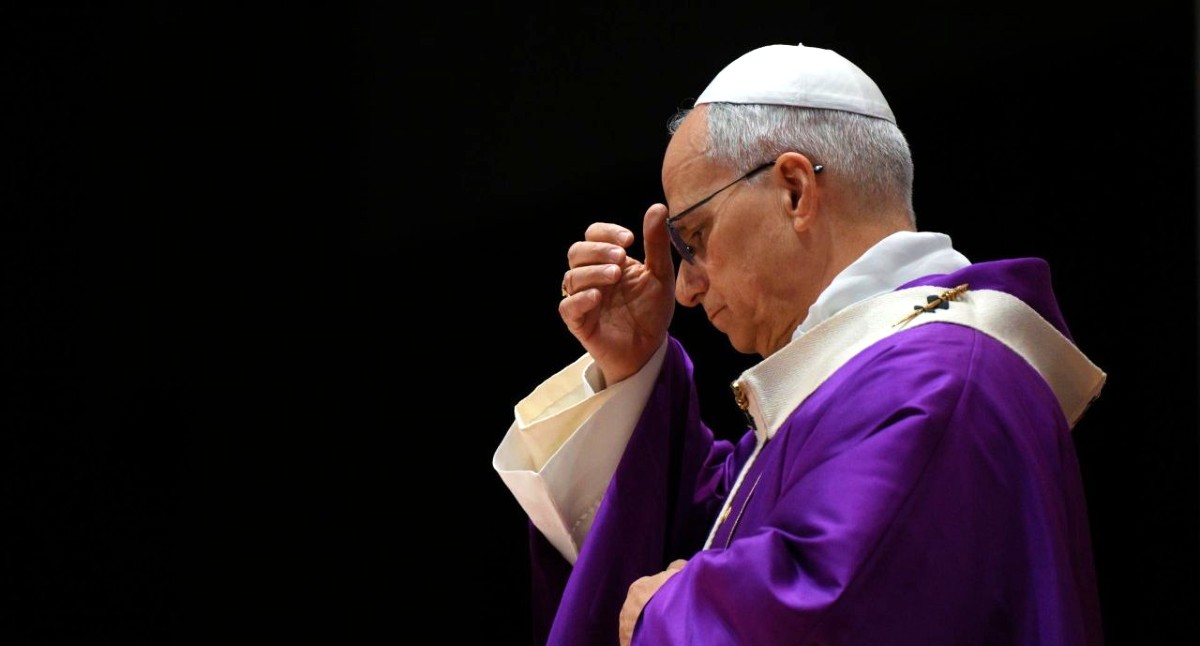
According to LifeSiteNews, Cardinal Müller told the Italian newspaper Il Giornale that while he disagreed with the Society’s decision to consecrate bishops without a papal mandate, he believes the Church should reconsider the restrictions introduced under Traditionis Custodes.
The cardinal cautioned that “using an authoritarian approach to demand blind obedience is not … the Christian way.” He added, “Only in matters of dogma should there be no compromise; in concrete pastoral practice, a certain tolerance is possible.”
Müller also praised Pope Benedict XVI’s earlier liturgical policy, saying, “Benedict XVI had found a good solution with Summorum Pontificum, fully embracing the ancient rite. That motu proprio brought great peace to the Church.” He further stated, “One cannot forbid the rite in its ancient form.”
Archbishop Georg Gänswein, now serving as Apostolic Nuncio to the Baltic States, likewise criticized the Society’s recent consecrations while expressing hope that Rome would adopt a more accommodating approach toward Catholics attached to the older liturgy.
According to LifeSiteNews, Gänswein noted that communities such as the Priestly Fraternity of St. Peter celebrate the Traditional Latin Mass “cum Petro and sub Petro,” remaining in full communion with the Pope. “Frankly speaking,” he said, “I believe that Rome can now open up to the possibility of being more flexible, generous, and fatherly regarding the option of celebrating Mass in Latin.”
Cardinal Kurt Koch also addressed the issue during a podcast for the German edition of the Catholic journal Communio. While condemning the Society’s unauthorized consecrations, he said it would be “self-righteous” to criticize the Society without also considering “whether there are fundamental deficits in the Church today that are being recalled by the Society.”
Reflecting on the current liturgical debate, Koch said Pope Benedict XVI had proposed a path toward unity between the two forms of the Roman Rite, but that “Pope Francis curbed it somewhat radically.” He added, “I think we need to rethink this, especially for those faithful who feel drawn to this form of liturgy without sharing the entire ideological superstructure of the Society. For these faithful, I think we must look for new ways.”
The recent statements indicate that, while these Church leaders reject the SSPX’s decision to proceed with episcopal consecrations without papal approval, many also believe the Church should continue seeking pastoral solutions that strengthen communion while addressing the spiritual needs of Catholics devoted to the Traditional Latin Mass.
Your support brings the truth to the world.
Catholic Online News exists because of donors like you. We are 100% funded by people who believe the world deserves real, uncensored news rooted in faith and truth — not corporate agendas. Your gift ensures millions can continue to access the news they can trust — stories that defend life, faith, family, and freedom.
When truth is silenced, your support speaks louder.