
As conflict, division and uncertainty continue to trouble the world, Pope Leo XIV is reminding Catholics that the responsibility for building peace belongs to everyone, not only political leaders and international institutions.
In a message dated Oct. 13, the Holy Father emphasized that genuine peace requires more than diplomatic agreements or an end to violence. It begins with the choices people make in their everyday lives, especially in how they treat one another, protect the vulnerable and respond to division.
“Safeguarding and promoting peace is a responsibility for each of us and, at the same time, a mission to be nurtured patiently in every sphere of our daily lives,” Pope Leo declared, according to Vatican News.
The message was addressed to Cardinal Pietro Parolin, Vatican Secretary of State and President of the Vatican John Paul I Foundation, for an international conference dedicated to the teachings of Blessed Pope John Paul I.
Held at the Pontifical Gregorian University, the gathering focused on the theme “John Paul I: Iustitia et Pax — Safeguarding and Promoting Peace in This Troubled World.”
For Pope Leo, the conference offered an opportunity to revisit a fundamental Christian responsibility at a time when humanity urgently needs reconciliation, justice, and solidarity.
Peace Begins Long Before Nations Negotiate
One of the central themes of the Pope’s message was that peace cannot be achieved through political efforts alone.
Drawing upon the teachings of his predecessors, Pope Leo recalled Pope Francis’ observation that “peace is not merely the absence of war.” He also referenced St. Augustine’s understanding of peace as tranquillitas ordinis, traditionally understood as the tranquility of order.
These teachings reflect the Catholic understanding that authentic peace requires justice, respect for human dignity, and relationships ordered toward the common good.
“Peace presupposes respect for the dignity and fundamental rights of every person, as well as solidarity among peoples,” Pope Leo emphasized, adding that justice is an essential condition for lasting peace.
According to Vatican News, the Holy Father stressed that the pursuit of peace must begin in the ordinary environments where human relationships are formed.
Families, schools, and local communities all have a role in establishing the trust, understanding, and mutual respect necessary for a peaceful society.
This understanding places a particular responsibility on Catholics to recognize that the way they speak, forgive, listen, and respond to others can contribute to either division or reconciliation.
The Forgotten Lessons of Blessed Pope John Paul I
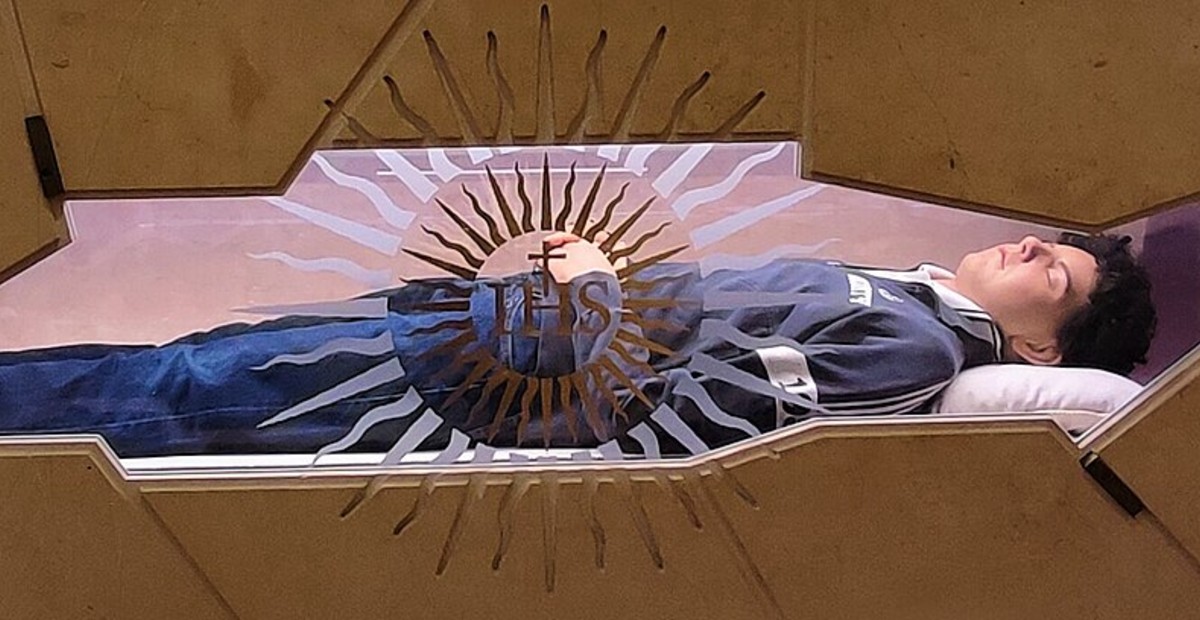
Pope Leo also drew attention to the enduring spiritual and pastoral legacy of Blessed Pope John Paul I, whose brief pontificate in 1978 lasted just 33 days.
Although his time as pope was short, John Paul I left an example of humility, simplicity, and pastoral concern that continues to speak to the Church today.
According to Vatican News, Pope Leo recalled how his predecessor, “with his simple and direct language, insisted on the need for personal involvement, fraternity and charity in building human relationships founded on trust.”
Rather than treating peace as a distant political objective, John Paul I encouraged an understanding of human relationships rooted in Christian charity and personal responsibility.
Pope Leo suggested that this message deserves renewed attention, particularly when international tensions can make ordinary individuals feel powerless to influence the course of world events.
The Holy Father described John Paul I’s teaching as “an invitation not to regard peace as an abstract idea, entrusted solely to those charged with the high responsibility of ensuring stability and social harmony among nations.”
His message makes clear that the responsibility for peace extends beyond governments and international organizations. It also belongs to individuals willing to practice justice, charity, and reconciliation in their own communities.
A Powerful Call to Heal a Divided World
Perhaps the most urgent portion of Pope Leo’s message concerned what promoting peace actually requires.
Rather than speaking only in broad principles, the Holy Father identified concrete actions that individuals and institutions can take to confront division and restore human relationships.
“In a world so deeply shaken,” Pope Leo declared, “safeguarding and promoting peace means mending what is divided, protecting the most vulnerable, forgiving and understanding, listening to and recognizing others, educating people in sincere dialogue, and restoring to the word ‘fraternity’ a concrete ecclesial, social and political dimension.”
His words present peace as an active commitment requiring patience, compassion, and a willingness to encounter others with dignity.
For Catholics, this call has particular significance because reconciliation, forgiveness, and care for the vulnerable are central expressions of the Gospel.
Peace is not simply something Christians are called to pray for. It is something they are called to pursue through their actions.
That responsibility can take many forms, from restoring strained family relationships to defending those whose dignity and fundamental rights are threatened.
It also requires recognizing that justice and charity are not competing priorities, but essential foundations of a society in which genuine peace can flourish.
A Message of Hope for the Church and the World
Pope Leo concluded his message by expressing hope that the international gathering would deepen appreciation for the pastoral work and teachings of Blessed Pope John Paul I.
He also imparted his Apostolic Blessing to those participating in the conference.
According to Vatican News, the Holy Father presented the conference’s theme as a message of hope for humanity, grounded in the conviction that every person has a role in cultivating peace.
His appeal comes with a challenge that reaches beyond the walls of the Vatican and into the daily lives of Catholics around the world.
In a troubled world, the pursuit of peace cannot be left entirely to those who hold positions of power.
It begins wherever people choose understanding over hostility, forgiveness over resentment, and solidarity over indifference.
Through his message, Pope Leo XIV offers a reminder that even amid the world’s deepest divisions, the work of peace remains possible—and every Christian has a responsibility to take part in it.
Your support brings the truth to the world.
Catholic Online News exists because of donors like you. We are 100% funded by people who believe the world deserves real, uncensored news rooted in faith and truth — not corporate agendas. Your gift ensures millions can continue to access the news they can trust — stories that defend life, faith, family, and freedom.
When truth is silenced, your support speaks louder.