

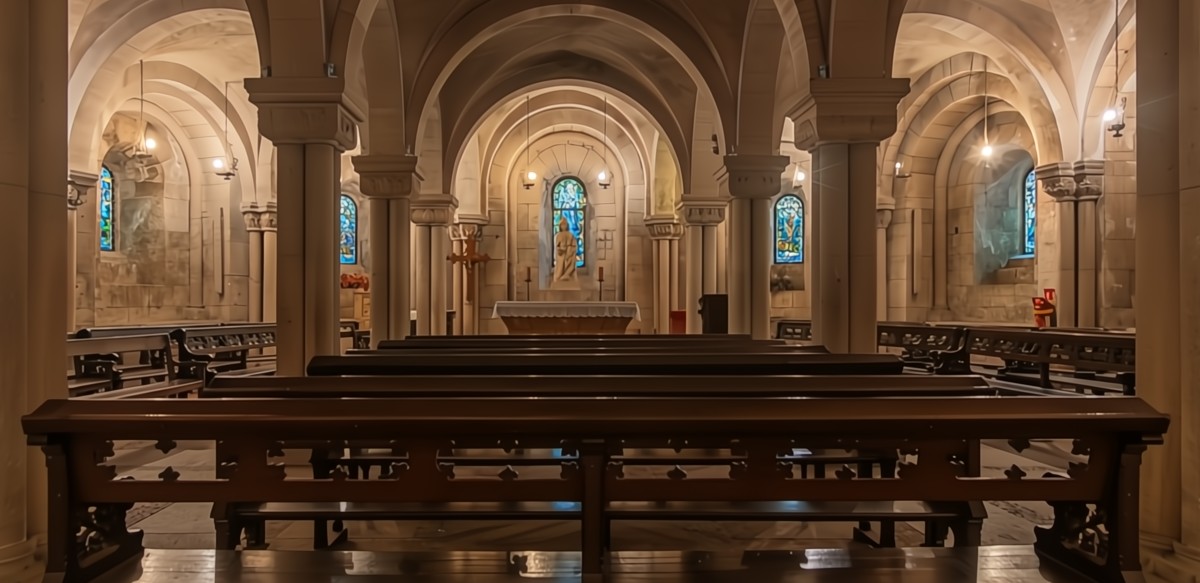
As pilgrims and tourists once again flock to the newly restored Notre-Dame Cathedral, another remarkable restoration is taking place beneath their feet.
Just steps away from the cathedral’s entrance, archaeologists are uncovering centuries of buried history hidden beneath the square in front of one of Christianity’s most iconic churches. What began as a construction project following the devastating 2019 fire has evolved into one of the most significant archaeological excavations in modern Paris.
According to the Associated Press, the dig was made necessary by plans to transform the cathedral’s forecourt into a cooler, greener gathering space with trees and shaded areas. Before construction could begin, archaeologists were required to investigate what might be buried beneath the historic site.
Their discoveries have already revealed layers of history stretching back nearly two millennia.
“It’s a rare opportunity for us to work on something that’s tangibly going to make a difference to the history of Paris,” Lucie Altenburg, a conservator with the Paris archaeology unit, told the Associated Press.
Among the most notable finds is a fourth-century coin bearing the image of Constantine the Great, the Roman emperor whose conversion to Christianity helped transform the course of Christian history. Archaeologists have also uncovered medieval pottery, intact household items, ancient roads, grain pits, and mysterious ceramic fragments marked with undeciphered symbols.
The excavation highlights the remarkable continuity of human civilization on the Île de la Cité, the island in the Seine River where Paris was born and where Notre Dame would later rise.
According to the Associated Press, archaeologists have uncovered the remains of medieval homes that once crowded the area around the cathedral. Beneath those layers lie evidence of earlier societies, including Merovingian and Carolingian settlements dating from the sixth through tenth centuries. Even deeper are traces of Roman Lutetia, the ancient city that eventually became Paris.
Camille Colonna, who leads the excavation, explained that each layer represents a different chapter in the city’s history. The discoveries offer a rare opportunity to see how generations built upon the foundations left behind by those who came before them.
Some of the most fascinating artifacts have emerged from medieval latrines, which also served as refuse pits. Because soft waste helped protect fragile objects, archaeologists have recovered complete ceramic vessels that survived centuries underground.
“It’s rare to find complete ceramics,” archaeologist Valentine Breloux told the Associated Press.
Yet even more intriguing are fragments of pottery bearing faint reddish inscriptions painted on their interiors. According to the report, experts have not yet determined the meaning of the markings, which appear repeatedly on multiple pieces.
The excavation has also provided fresh insight into the final years of Roman influence in the region. Archaeologists discovered evidence that residents reused building materials from older Roman structures, including a Roman doorstep that had been repurposed as paving in a later roadway.
For Catholics, the discoveries offer a powerful reminder that the Church has long stood at the crossroads of history. While Notre Dame itself dates to the twelfth century, the ground beneath it preserves evidence of countless generations who lived, worked, worshiped, and built communities before the cathedral’s first stone was laid.
The excavation is expected to continue as Paris moves forward with plans to redesign the square. According to the Associated Press, the project will ultimately add 160 trees and cooling water features intended to help visitors cope with increasingly hot summers. The renovated public space is expected to be largely completed by 2028.
For now, archaeologists hope to dig even deeper, searching for traces of the Gauls who inhabited the area before the arrival of the Romans.
“The hope is that we are able to go back in time even further than we’ve ever been before,” Altenburg told the Associated Press.
As Notre Dame stands renewed after the fire that captured the world’s attention, the earth beneath the cathedral is revealing another story of endurance—one that stretches far beyond the cathedral itself and deep into the origins of one of Europe’s most historic cities.
Your support brings the truth to the world.
Catholic Online News exists because of donors like you. We are 100% funded by people who believe the world deserves real, uncensored news rooted in faith and truth — not corporate agendas. Your gift ensures millions can continue to access the news they can trust — stories that defend life, faith, family, and freedom.
When truth is silenced, your support speaks louder.