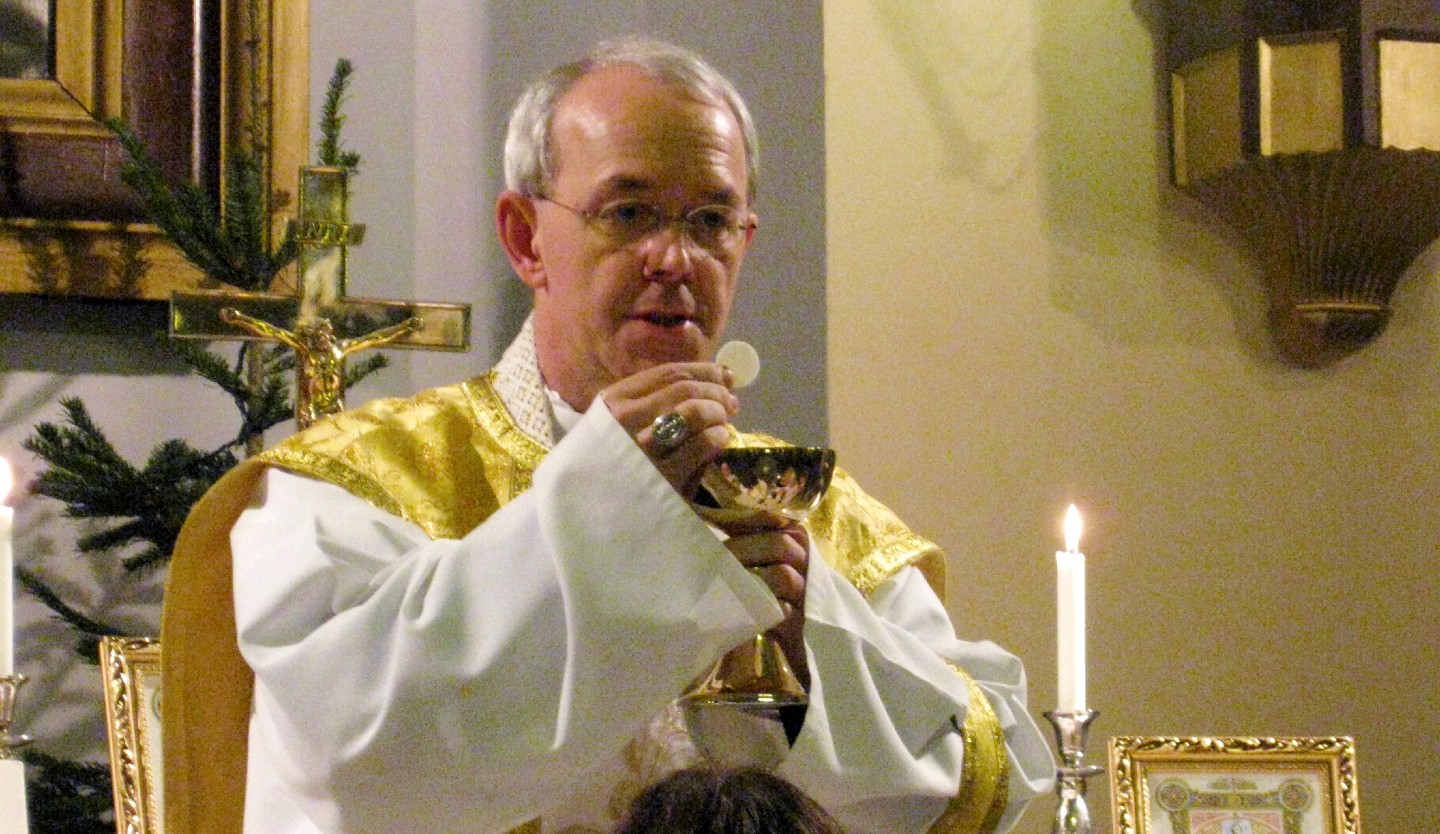


The Vatican formally rejected proposed German bishops’ guidelines for the “blessing” of homosexual and other irregular unions, according to a statement from Cardinal Víctor Manuel Fernández, prefect of the Dicastery for the Doctrine of the Faith.
According to a May 6 statement published by Vatican News, Cardinal Fernández confirmed that the Vatican sent a letter in 2024 to Bishop Stephan Ackermann of Trier, informing the German Bishops’ Conference that its proposed guidelines contradicted the Vatican declaration Fiducia Supplicans.
The controversy centers around the 2023 Vatican document Fiducia Supplicans, which allowed for spontaneous, “non-liturgical” blessings for individuals in irregular situations, while maintaining that the Church cannot formally bless unions contrary to Catholic teaching.
Fernández explained that the Vatican’s concerns also applied to the German bishops’ current “Vademecum,” which outlined pastoral guidance for blessings involving divorced and civilly remarried couples, homosexual “couples,” and other irregular unions. He said the text “does not have the approval of the Congregation for the Doctrine of the Faith.”
In the letter cited by LifeSiteNews, Fernández reiterated that the Church lacks the authority to “liturgically” bless homosexual unions. Quoting Fiducia Supplicans, he wrote: “The Church does not have the power to confer its liturgical blessing when this, in some way, could offer a form of moral legitimization to a union that presumes to be a marriage or to an extra-marital sexual practice.”
Fernández further criticized the German proposal for appearing to create an “official regulation” of relationships outside marriage. He warned that pastors participating in such ceremonies could become the object of an “acclamation,” something normally associated with the sacrament of marriage. “In this sense, the Vademecum effectively legitimizes the status of such couples, in a manner contrary to what is affirmed in Fiducia supplicans,” he wrote.
The cardinal also cautioned that the guidelines risked creating confusion among the faithful.
At the same time, debate over Fiducia Supplicans itself continues throughout the Church. While the document forbids liturgical blessings of same-sex unions, critics argue that permitting any blessing connected to homosexual “couples” has already caused doctrinal confusion.
Among the strongest critics has been Cardinal Gerhard Müller, who warned in a 2024 essay for First Things that the document “contains a denial of Catholic doctrine.” According to LifeSiteNews, Müller wrote that Fiducia Supplicans “logically leads to heresy” and insisted that such blessings “cannot be accepted by the Catholic faithful.”
Despite the Vatican’s objections, the German Bishops’ Conference and the lay organization Central Committee of German Catholics announced in April 2025 that they had adopted the blessing guidelines during a joint conference.
The guidelines describe the blessings as being available for “divorced and remarried couples, couples of all gender identities and sexual orientations,” as well as others unable or unwilling to receive sacramental marriage. The document also states that both clergy and laypeople with episcopal approval may conduct the ceremonies.
Although the German text claims no official liturgical rite is being established, the Vatican’s latest clarification signals continued concern in Rome over how such blessings are being implemented and understood within the Church. Fernández’s recent statement also reportedly confirmed earlier reports that the Dicastery for the Doctrine of the Faith never approved the German guidelines, despite suggestions from some bishops that it had done so.
Your support brings the truth to the world.
Catholic Online News exists because of donors like you. We are 100% funded by people who believe the world deserves real, uncensored news rooted in faith and truth — not corporate agendas. Your gift ensures millions can continue to access the news they can trust — stories that defend life, faith, family, and freedom.
When truth is silenced, your support speaks louder.