
As humanity looks once again toward the moon and even Mars, new scientific discussions are emerging about how life beyond Earth could affect the human body. While these developments point to remarkable technological progress, they also raise deeper questions about what it means to be human—questions that must be approached with both scientific clarity and moral truth.
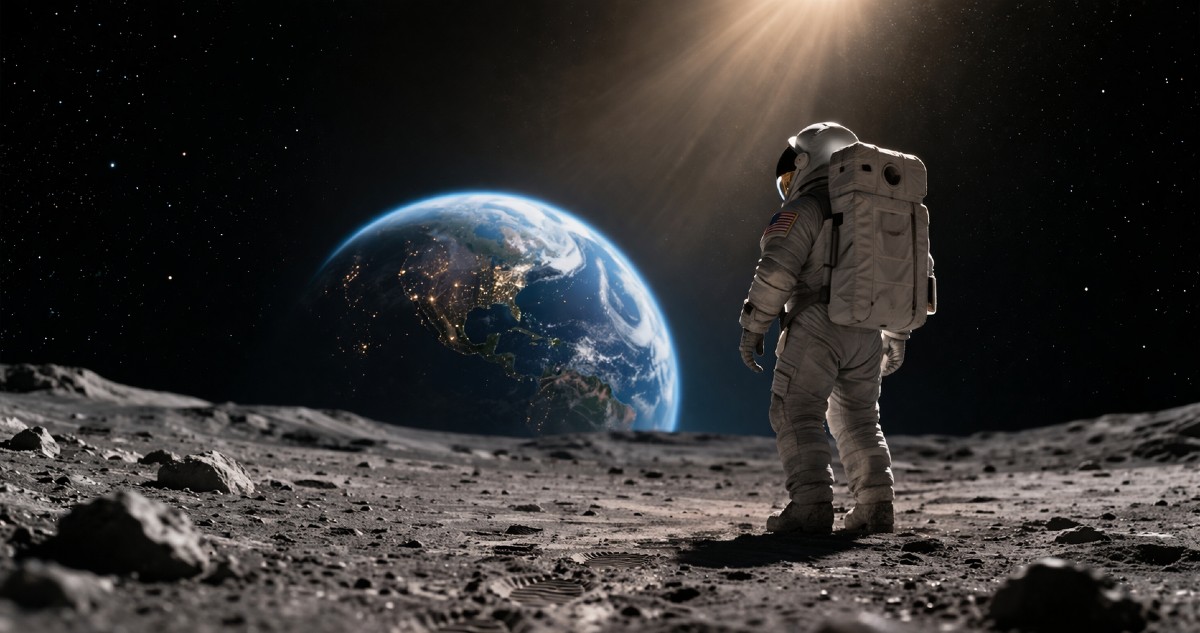
According to reporting from The Washington Post, NASA’s Artemis program aims to establish a sustained human presence on the moon and eventually Mars, with long-term goals that include building a lunar base by the 2030s.
Scientists involved in these discussions note that space environments are drastically different from Earth. Exposure to higher radiation levels, lower gravity, and isolation can affect the human body in significant ways. As the article explains, “being in space alters the human body, from weaker muscles and bones to shifts in body fluids that can lead to vision deterioration,” according to The Washington Post.
Easter Was Just the Beginning… Please Watch
Researchers have also observed genetic and epigenetic changes in astronauts. For example, studies of astronaut Scott Kelly revealed alterations in gene activity and even structural changes in chromosomes after extended time in space. These changes, the article notes, “can be caused by stress” and radiation exposure, and in some cases could potentially be passed to future generations if they affect reproductive cells.
Because of these factors, some scientists speculate that humans living for generations on the moon or Mars could gradually become physically different. The article even suggests that, “given enough time, they could evolve into new human species.”
However, such claims must be approached with caution. From a Catholic perspective, the idea of a “new human species” is not compatible with the Church’s understanding of the human person. Humanity is not defined merely by biological variation, but by the unity of body and soul, created in the image and likeness of God. No environmental condition or physical adaptation can alter that fundamental dignity.
While it is true that human bodies may adapt to different conditions—just as people living in various climates on Earth show physical differences—these changes do not create a new kind of human being. Rather, they reflect the remarkable resilience of the one human family.
The article also raises concerns about whether children born in space could safely return to Earth, noting that low gravity “is predicted to stunt bone growth and could weaken the heart.” Such possibilities highlight the ethical responsibilities that come with advancing space exploration, especially when it involves future generations.
Ultimately, the expansion of human presence into space is a testament to human ingenuity and curiosity. Yet it must always be guided by truth—both scientific and moral. No matter where humanity travels, whether to the moon, Mars, or beyond, the human person remains unchanged in essence: created by God, endowed with dignity, and called to eternal life.
As exploration continues, the challenge will not be redefining what it means to be human, but remembering it.
Your support brings the truth to the world.
Catholic Online News exists because of donors like you. We are 100% funded by people who believe the world deserves real, uncensored news rooted in faith and truth — not corporate agendas. Your gift ensures millions can continue to access the news they can trust — stories that defend life, faith, family, and freedom.
When truth is silenced, your support speaks louder.