

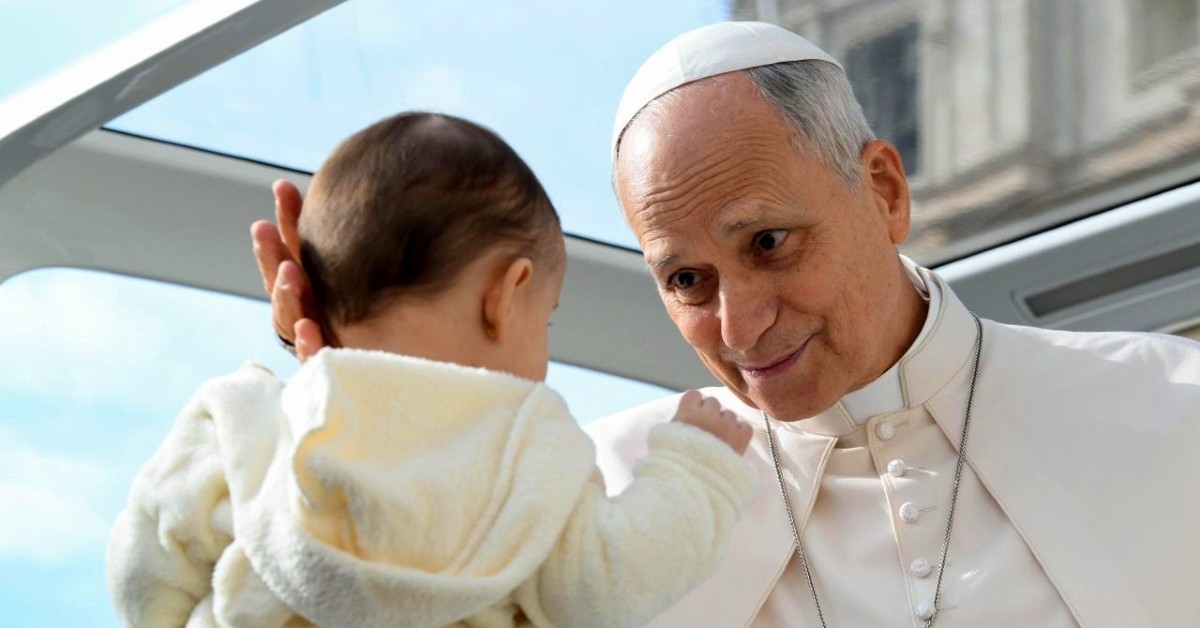
Pope Leo XIV delivered a powerful message on the responsibilities of political and economic leaders during his General Audience on Wednesday, November 4, emphasizing that lasting peace cannot be achieved without justice, human dignity, and a commitment to the common good.
Speaking to the faithful gathered in St. Peter’s Square, the Holy Father encouraged Christians to recognize their responsibility to bring the teachings of the Church into public life, particularly in matters involving economic inequality, workers’ rights, and political leadership.
According to Vatican News, the Pope continued his reflections on Gaudium et Spes, the Second Vatican Council’s Pastoral Constitution on the Church in the Modern World, examining how Catholic social teaching can guide decisions that affect individuals, families, and entire nations.
At the center of his message was a reminder that political leadership must be measured not simply by power or economic success, but by its willingness to protect those who suffer.
“Politics that tends to the wounds of peoples and of those who suffer injustice offers grounds for hope for the future of humanity,” Pope Leo declared.
Peace Requires More Than Economic Progress
The Holy Father warned that economic inequality and development that fails to respect human dignity or creation can undermine peace.
Drawing from the teachings of the Second Vatican Council, he explained that advances in technology and economic productivity do not automatically produce a more just society.
As Gaudium et Spes teaches, “technical progress alone is not enough.”
Instead, economic development must remain centered on the human person, ensuring that prosperity does not come at the expense of vulnerable communities.
Pope Leo also emphasized the Church’s continuing responsibility to defend those who face discrimination, including migrants and other marginalized populations.
“More relevant than ever are the appeals to commit to eliminating discrimination against the most vulnerable social groups and migrants,” he said, according to Vatican News.
His remarks reinforced a central principle of Catholic social teaching: economic systems must serve people, rather than treating human beings merely as instruments of production or profit.
Pope Condemns Exploitation and Dangerous Working Conditions
The dignity of work was another major focus of the Pope’s address.
Pope Leo reminded the faithful that employment is more than a means of earning a living. It allows individuals to contribute to society, develop their abilities, and participate in the life of their communities.
However, he cautioned that economic demands must never override the dignity or safety of workers.
“Work must never be distorted to the detriment of people, the common good or creation,” the Pope stated.
He went further, condemning circumstances that deprive individuals of meaningful employment or expose them to dangerous conditions.
“The real challenge is to offer everyone opportunities to make the most of their abilities: unemployment, exploitation and working conditions that endanger health and life itself are unacceptable.”
According to Vatican News, Pope Leo also affirmed the importance of workers participating in decisions that affect their employment, including through trade unions.
His message reflected the Church’s longstanding teaching that the rights of workers and the responsibilities of employers must be understood within the broader demands of justice and human dignity.
Wealth and Resources Carry Responsibilities to Future Generations
Turning to financial decisions and economic planning, Pope Leo highlighted the Catholic principle of the universal destination of earthly goods.
This teaching recognizes that the resources of the earth are ultimately intended to benefit the entire human family.
The Pope explained that those responsible for investments and economic planning must consider whether their decisions allow individuals and communities to live with dignity.
He also emphasized the responsibility to balance present economic needs with the well-being of future generations.
The message challenged the idea that financial success alone is sufficient to determine whether an economic decision is morally sound.
Within the framework of Catholic social teaching, economic choices must also be evaluated according to their consequences for human life, society, and creation.
Political Leaders Must Put Human Dignity First
Pope Leo also addressed the purpose of government and the responsibilities of those entrusted with political authority.
“The political community exists for the sake of the common good,” he insisted.
According to Vatican News, the Holy Father pointed to the Second Vatican Council’s recognition of growing awareness surrounding human dignity and the importance of protecting fundamental human rights.
He emphasized that political institutions must respond to the circumstances of their communities while maintaining concern for the welfare of humanity as a whole.
The Pope’s reflections also connected political responsibility with the urgent need for peace.
Recalling the words of Pope Francis, he warned that “war is a failure of politics and of humanity, a shameful capitulation, a stinging defeat before the forces of evil.”
The statement underscored the moral consequences of political decisions and the responsibility of leaders to pursue justice rather than conflict.
Church and Government Have Distinct Roles but Shared Responsibilities
While emphasizing the importance of Christian engagement in political life, Pope Leo also reaffirmed the distinction between the Church and civil government.
He recalled the teaching of Gaudium et Spes that the Church and political community are “autonomous and independent from each other.”
Nevertheless, both institutions serve human beings and have responsibilities that can contribute to the welfare of society.
The Holy Father encouraged appropriate cooperation between religious and civil authorities when such cooperation advances the good of all.
He also urged Christian communities to strengthen their understanding of Catholic social doctrine and encouraged young people to look toward faithful men and women who have demonstrated Christian values through their participation in economic and political life.
A Call for Christians to Become Instruments of Justice and Peace
Pope Leo’s November 4 audience offered Catholics a reminder that faith is not confined to personal prayer or religious observance. It also carries responsibilities toward neighbors, workers, vulnerable communities, and future generations.
Through his reflections on Gaudium et Spes, the Holy Father presented political and economic participation as opportunities for Christians to put their beliefs into practice.
His message challenged both public officials and ordinary citizens to consider whether their decisions uphold human dignity, protect the vulnerable, and contribute to peace.
For Catholics seeking to live their faith in the modern world, the Pope’s teaching offers a clear direction: the pursuit of justice, respect for human life, and service to the common good must remain central to building a more peaceful society.
Your support brings the truth to the world.
Catholic Online News exists because of donors like you. We are 100% funded by people who believe the world deserves real, uncensored news rooted in faith and truth — not corporate agendas. Your gift ensures millions can continue to access the news they can trust — stories that defend life, faith, family, and freedom.
When truth is silenced, your support speaks louder.


