
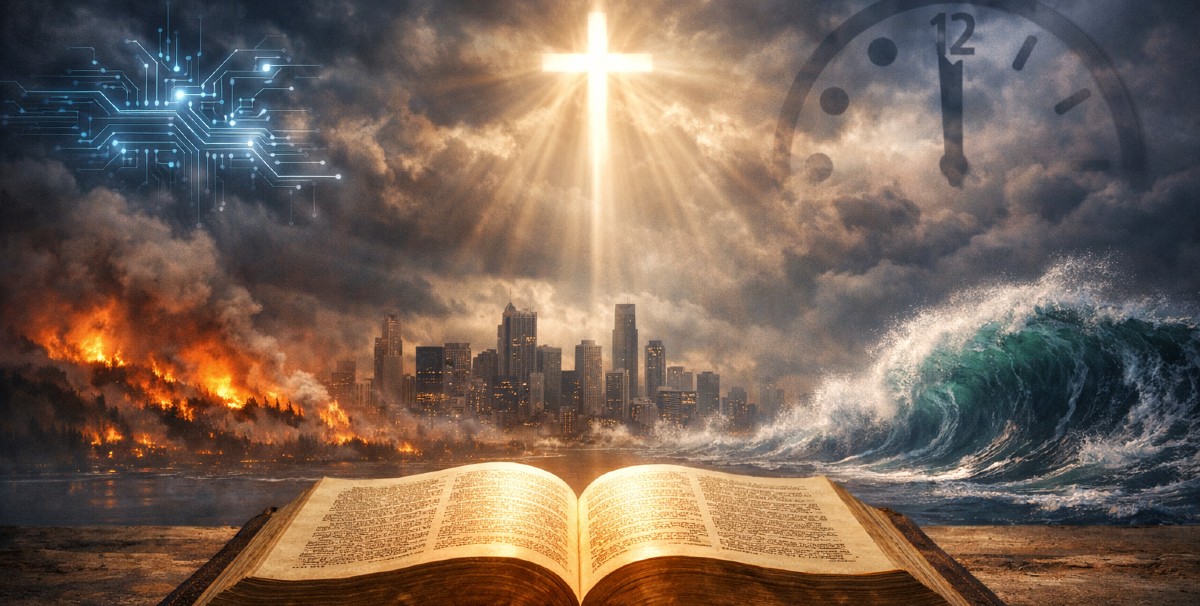
For centuries, Christians have reflected on the possibility that history may be moving toward its final chapter. Today, that question is not only theological—it is also becoming a subject of psychological research. A new study suggests that belief in the end times is far more common than many people realize and may significantly shape how people respond to the world’s most pressing threats.
According to new research published in the Journal of Personality and Social Psychology, a significant portion of Americans believe the end of the world could occur within their lifetime. The study found that “between 29% and 39% of Americans believe they are currently living in the end times,” according to researchers Matthew Billet, Cindel White, Azim Shariff, and Ara Norenzayan.
That belief, the researchers argue, is not confined to religious circles. As the study explains, apocalyptic thinking “cuts across Evangelical congregations, climate activist circles, Silicon Valley boardrooms, and rural prepper communities alike,” according to the study highlighted by Study Finds.
Researchers from the University of British Columbia and the University of California, Irvine surveyed more than 1,400 Americans from various religious backgrounds, including Catholics, Protestants, Jews, Muslims, and people with no religious affiliation. Their goal was to better understand how beliefs about the end of the world influence how people interpret global risks such as climate change, nuclear conflict, economic instability, and artificial intelligence.
Our Important Lenten Message – Please Watch
What they discovered was that belief in the end times is not a simple yes-or-no question. Instead, people hold many different interpretations about how and when the world might end. To measure these differences, the researchers created a scale examining several factors, including how soon people believe the end will occur, whether they think human actions or God will cause it, and whether they view the end of the world with fear or even hope.
As the researchers explain, “apocalyptic belief looks wildly different from person to person,” according to the study. Someone awaiting the Rapture, a scientist warning about climate collapse, or a technologist concerned about artificial intelligence might all believe catastrophe is coming—but for very different reasons.
These beliefs appear to have real-world consequences. The study found that end-times beliefs were among the strongest predictors of how people respond to global threats. Researchers reported that apocalyptic belief “accounted for roughly 15% of the variation in how severely people perceived global threats and about 16% of the variation in how much risk they were willing to tolerate,” according to the study.
Interestingly, the cause people attribute to the end of the world often determines their response. Participants who believed human activity would bring about global catastrophe were more likely to see current dangers as urgent and to support dramatic interventions. Meanwhile, those who believed God ultimately controls the end times were less inclined to support extreme political or social measures to prevent global crises.
The researchers noted this difference clearly. “People who believed God or supernatural forces controlled the end times were significantly less likely to support extreme action to address those same threats,” according to the study.
Yet the research also uncovered an unexpected puzzle. Even participants who believed the apocalypse would ultimately be a positive event often still supported drastic measures to prevent global catastrophe. As the researchers acknowledged, this contradiction remains unexplained. The study states that “people who believe the apocalypse will ultimately be a good thing still tended to support extreme action to prevent existential threats,” according to the research.
Age also appeared to play a role in these beliefs. Younger participants generally expressed stronger apocalyptic views than older respondents. However, the pattern differed within some religious groups, including Evangelical Protestants and Muslims.
Despite its findings, the researchers emphasize that their work cannot prove that end-times beliefs directly cause people to act differently. The study’s design is observational, meaning it identifies patterns rather than definitive cause-and-effect relationships.
Still, the implications are significant. Beliefs about the end of the world, once dismissed as fringe or purely religious speculation, may influence how people respond to some of the most serious issues facing humanity today.
For Catholics, reflection on the end of time has always been part of the Church’s teaching. Sacred Scripture reminds believers to remain spiritually vigilant without attempting to predict the exact moment of Christ’s return. While modern debates about global crises continue to grow louder, the Christian tradition calls the faithful not to panic but to remain rooted in faith, hope, and moral responsibility.
Ultimately, the study reinforces an important truth: beliefs about the future shape how people live in the present. And in a world filled with uncertainty, understanding those beliefs may help explain why people respond so differently to the challenges of our time.
Your support brings the truth to the world.
Catholic Online News exists because of donors like you. We are 100% funded by people who believe the world deserves real, uncensored news rooted in faith and truth — not corporate agendas. Your gift ensures millions can continue to access the news they can trust — stories that defend life, faith, family, and freedom.
When truth is silenced, your support speaks louder.