
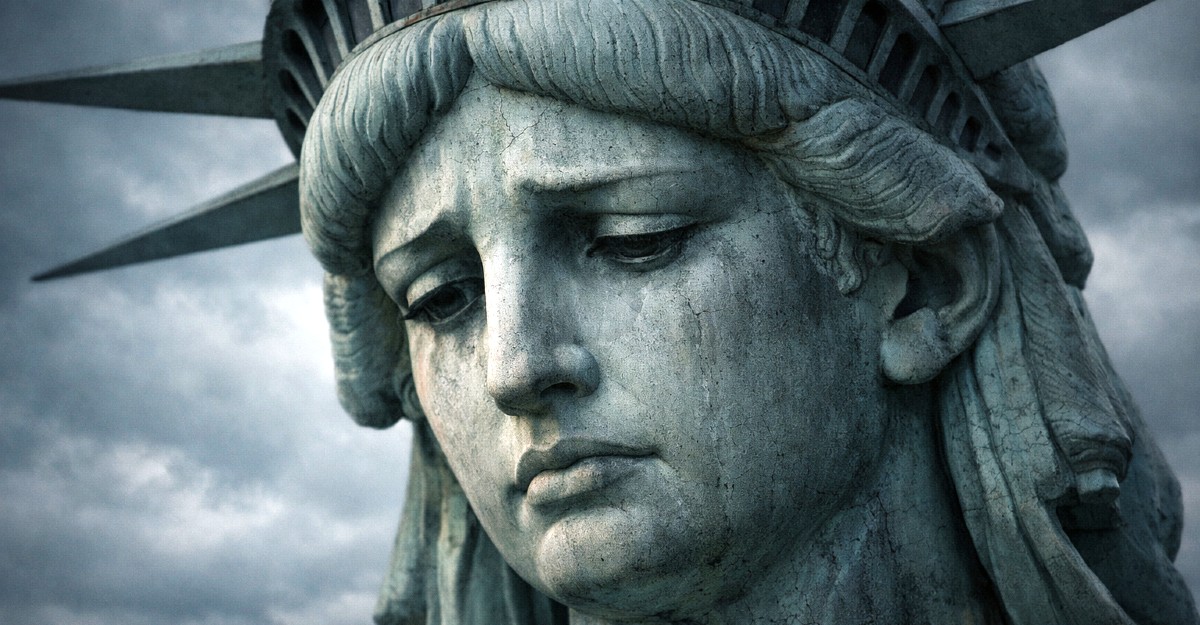
A growing number of Americans no longer believe their lives will be better in the years ahead, according to new findings from Gallup, a trend that raises urgent questions not only about economics and politics, but also about hope, dignity, and the spiritual well-being of the nation.
Gallup reports that in 2025, only 59.2% of U.S. adults anticipate living a high-quality life five years from now, the lowest level recorded since the survey began nearly two decades ago. This marks a sharp decline from recent years and represents what Gallup estimates as 24.5 million fewer people who feel optimistic about their future compared to 2020.
The findings come from the Gallup National Health and Well-Being Index, which surveyed more than 22,000 adults across all 50 states and Washington, D.C. Respondents were asked to imagine their lives using a ladder scale, with zero representing the worst possible life and 10 the best. Participants rated both their current lives and where they expect to stand five years from now.
While Americans’ views of their present circumstances have softened since rebounding after the height of the COVID-19 pandemic, their outlook for the future has declined more steeply. Gallup notes that current life satisfaction reached its lowest point in 2020, but future expectations have steadily eroded since then.
A Lenten Message from Sister Catherine – Please Watch
These declining expectations have had a direct impact on what Gallup classifies as “thriving.” As of late 2025, only 48.0% of U.S. adults meet the criteria for thriving, defined as rating one’s current life a seven or higher and one’s future life an eight or higher. According to Gallup, this places the nation near historic lows previously seen only during the Great Recession and the early months of the pandemic.
Economic pressures appear to be a major factor behind the decline. Gallup explains that the steep drop in optimism from 2021 to 2023 “closely coincides with annual inflation rates that peaked at 7.0% in 2021 and eased only slightly to 6.5% in 2022,” contributing to ongoing affordability challenges for families. Rising costs for food, housing, and healthcare have weighed especially heavily on communities already facing insecurity.
The data also show that the decline in optimism has not affected all groups equally. Gallup found that Black adults, historically among the most optimistic about the future, experienced the largest erosion in optimism between 2021 and 2024. In the most recent year, Hispanic adults saw an even sharper drop.
Political identity has also played a role in recent shifts. Gallup reports that while all major political groups experienced similar declines between 2021 and 2024, Democrats saw an additional 7.6-point drop in future life optimism in 2025, while Republicans remained largely unchanged and independents declined more modestly. Gallup notes that such swings are common when control of the White House changes, reflecting how political transitions shape perceptions of national direction.
For Catholics, these findings touch on more than public policy or economic indicators. They point to a deeper crisis of hope. The Church consistently teaches that every human person is created in the image of God and possesses an inherent dignity that no economic downturn or political shift can erase. Yet widespread pessimism about the future suggests many Americans are struggling to see that dignity reflected in their lived experience.
As Gallup observes, the decline in optimism likely stems from “multiple mechanisms” working together, including economic strain and changing political realities. For people of faith, this moment presents both a warning and an opportunity: a warning that material insecurity can erode hope, and an opportunity for the Church to respond with renewed commitment to solidarity, charity, and the proclamation of Christian hope rooted not in circumstances, but in Christ.
In a time when fewer Americans believe tomorrow will be better than today, the Church’s call to hope, perseverance, and care for the most vulnerable may be more necessary than ever.
Your support brings the truth to the world.
Catholic Online News exists because of donors like you. We are 100% funded by people who believe the world deserves real, uncensored news rooted in faith and truth — not corporate agendas. Your gift ensures millions can continue to access the news they can trust — stories that defend life, faith, family, and freedom.
When truth is silenced, your support speaks louder.


