

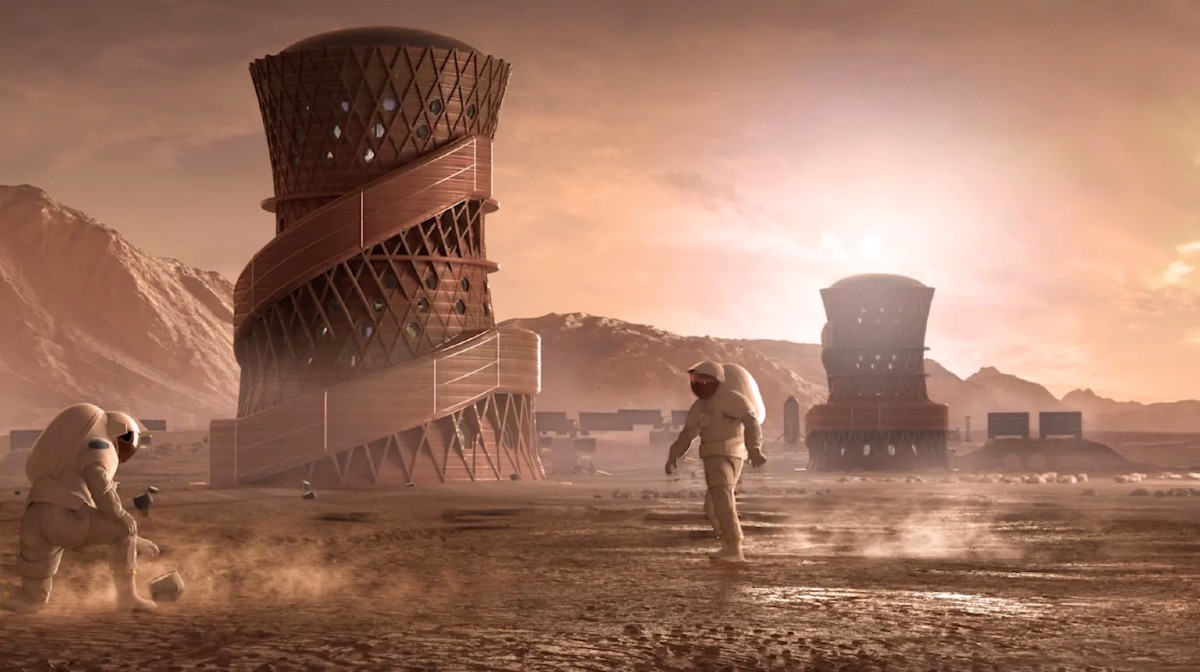
As humanity looks toward returning to the Moon and eventually settling on Mars, scientists and designers are rethinking one of the most basic human needs: shelter. Recent concepts developed through a NASA-led initiative suggest that future space explorers could live inside large, 3D-printed habitats built almost entirely from the soil beneath their feet.
According to The Sun, the designs emerged from NASA’s Centennial Challenge, a multi-year competition that invited teams from around the world to imagine how homes for deep-space exploration could be created with minimal human labor. Rather than hauling massive building materials from Earth, many of the proposed structures rely on regolith—the rocky soil found on the Moon and Mars—as their primary resource.
An Urgent Message from Sister Sara – Please Watch
According to NASA, the challenge was driven by the realities of space travel, where every pound of cargo matters. “Shelter is an obvious necessity as we prepare to explore worlds beyond our home planet,” said Steve Jurczyk, a senior NASA official, during the competition. He noted that spacecraft capacity is limited and must also carry food, water, and life-support systems, which is why researchers are focused on reusing materials already onboard and combining them with local soil at the destination.
Several of the concepts envision robotic “swarms” arriving ahead of human crews. These machines would mine regolith, process it into printable material, and then fabricate habitats layer by layer. Some designs feature thick, curved walls intended to shield inhabitants from radiation, while others use double-shell structures that allow buildings to expand and contract as temperatures swing dramatically between day and night.
Natural light, a rare luxury on the Martian surface, is also a recurring theme. Certain designs omit dense concrete layers in strategic places or use overlapping shells that allow sunlight to enter without sacrificing radiation protection. Inside, the habitats are organized around central living spaces, with smaller rooms branching off for prayer, rest, work, and communal meals.
For a Catholic audience, these visions invite reflection on humanity’s role as stewards and explorers of God’s creation. The ingenuity on display echoes a long tradition of human creativity ordered toward the preservation of life and community, even in the most hostile environments. As Scripture reminds us, the Earth—and indeed the heavens—are gifts entrusted to humanity, to be explored responsibly and with humility.
While there is no guarantee that any of these designs will ever be built on Mars or the Moon, they represent a serious step toward making long-term space habitation possible. According to NASA, the ultimate goal is not science fiction, but practical preparation: ensuring that when humans do venture farther from Earth, they will have safe, sustainable places to live.
As the Church continues to engage with questions of science, ethics, and human dignity, these developments serve as a reminder that even at the edge of the solar system, the fundamental needs for shelter, community, and meaning remain the same.
Your support brings the truth to the world.
Catholic Online News exists because of donors like you. We are 100% funded by people who believe the world deserves real, uncensored news rooted in faith and truth — not corporate agendas. Your gift ensures millions can continue to access the news they can trust — stories that defend life, faith, family, and freedom.
When truth is silenced, your support speaks louder.