

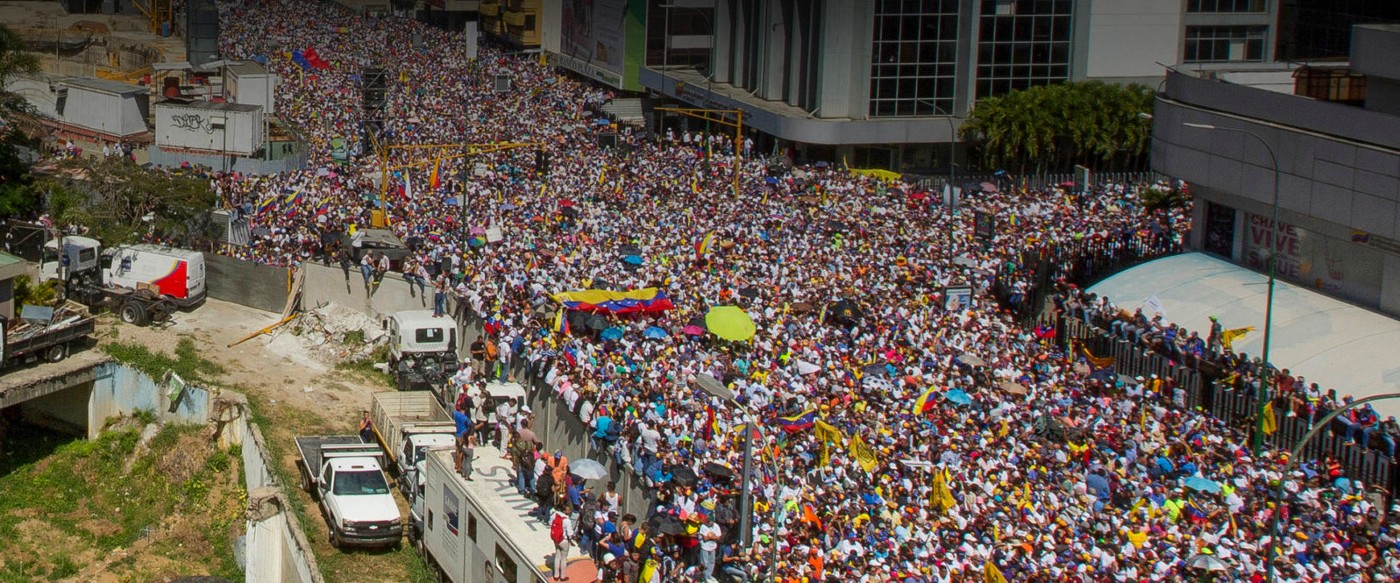
The world is being flooded with migration – and the political class keeps treating it like the solution is endless processing, endless funding, endless programs, endless NGOs, and endless excuses. But Venezuela exposes the lie.
Because Venezuela didn’t “randomly” become a migration crisis. It became one because a nation was hijacked.
As of December 2024, the UN refugee system reports over 7.9 million Venezuelans have fled the country – with 6.7 million (85%) concentrated in Latin America and the Caribbean. That’s not a “wave.” That’s a national hemorrhage. That’s one of the largest displacement crises on Earth, happening in modern times.
And here’s what people don’t want to say out loud: when you have nearly 8 million people leaving, you are not witnessing “normal migration.” You are witnessing a country being emptied.
The Real Cause: Regime Capture, Economic Destruction, and the Forced Exodus
When authoritarian systems seize institutions, crush private ownership, and strip citizens of economic freedom, people don’t migrate because they love adventure. They migrate because staying becomes impossible.
Venezuela’s mass departure is the footprint of collapsed governance – and it is not primarily a U.S. border issue. It is a Venezuela regime issue that radiates outward and destabilizes every neighboring country – and eventually reaches the United States.
That’s why Venezuela matters: it proves the crisis is upstream.
Now Look at the System: How Migration Became a Cash Machine
Here’s where the “numbers don’t lie” reality slams into the conversation.
The United States has spent staggering sums on immigration enforcement – and then on the downstream “migration management” economy built around crisis.
A widely cited U.S. policy analysis estimates that since 2003, the federal government has spent about $409 billion on the agencies carrying out immigration enforcement (primarily CBP and ICE), plus tens of billions more on enforcement-related infrastructure.
That is not a typo. Four hundred and nine billion dollars.
And just to show how deep the spending goes:
- Under President Trump, U.S. border barriers alone cost roughly $15 billion over four years.
- In FY 2024, Congress funded $3.43 billion for immigration detention alone, compared to $840 million for the entire immigration court system and $424 million for USCIS refugee and asylum operations. That means the U.S. spent nearly 3x more on detention than on the legal system required to process cases.
That’s not just inefficient – it’s structurally designed for backlog, chaos, and endless expansion.
Now add the “services economy” around mass arrivals.
FEMA’s Shelter and Services Program (SSP) is a direct example: In FY 2024, DHS/FEMA provided $640.9 million to help offset allowable migrant-service costs for non-federal entities – and the awards list includes major NGO partners and local governments.
This is not theoretical. FEMA’s own awards show specific organizations receiving federal dollars – including major migrant-service nonprofits like Catholic Charities (by diocese), United Way affiliates, and other entities in multiple states.
And that’s not even the whole story. The SSP program itself also provided $291 million in FY 2023 (first tranche alone), according to FEMA’s program totals.
So yes – the system is massive. And when you layer enforcement, detention, courts, and service-provider funding together, you begin to see the bigger truth:
Migration has become an industry.
The Incentive Problem: If the Crisis Ends, the Funding Ends
Let’s say the quiet part out loud:
When billions flow into organizations and contractors because crisis exists, then crisis becomes profitable – and the incentive to permanently solve the root cause gets weaker. It is not “compassion” to build permanent economic dependence around mass migration. It is a business model.
And the tragedy is that many Venezuelans don’t want to leave their homeland at all – they want it back. They want to return. They want their lives, land, businesses, and future restored. The UN figures alone prove the scale of forced displacement.
Venezuela Proves the Solution: Remove the Source, Don’t Monetize the Aftermath
Recent events have ignited fresh debate about whether real solutions come from endlessly “processing migrants,” or from confronting the regime and criminal structures that cause mass exodus in the first place. And regardless of where someone stands politically, one reality holds:
if you want migration to slow down, you must remove the conditions that force people to flee.
ShareNetwork.AI: The Answer to a Broken, Corrupt Model
This is why ShareNetwork.AI isn’t “just another nonprofit idea.” It’s a complete replacement of the old system.
ShareNetwork.AI is built on a radical premise:
aid must be direct, transparent, auditable, and outcome-driven – not bureaucracy-driven.
Instead of feeding an endless pipeline of institutions, ShareNetwork.AI creates a verified network that:
- Connects resources directly to real needs (food, shelter, jobs, medical care, crisis relief)
- Tracks outcomes publicly so every dollar has a visible purpose and measurable result
- Reduces dependency by focusing on stabilization, productivity, and restoration
- Eliminates the black-box model where massive budgets disappear into “program administration”
- Scales globally across poverty relief, disaster response, refugee support, and migration stabilization
This is the future: a real-time, proof-based aid network where communities can support communities – without permanent middleman empires skimming billions while the crisis never ends.
The world doesn’t need more NGOs that grow bigger as suffering grows bigger.
The world needs a model that makes itself unnecessary over time – because people get stabilized, families rebuild, communities recover, and nations regain control of their future.
That’s what ShareNetwork.AI is designed to do.
Because the goal isn’t to manage the poor.
The goal is to end the conditions that create poverty, displacement, and forced migration in the first place.