

Every year, it happens.
You’re running errands, scrolling your phone, or sitting in traffic—and suddenly you notice it. Someone with a gray smudge on their forehead. Then another. And another.
Ash Wednesday has arrived.
Even in a world that changes fast, this ancient Catholic practice hasn’t gone anywhere. In fact, it might be more important now than ever.
With two weeks to go until Ash Wednesday, now is the perfect time to understand why it matters, what the ashes really mean, and how to prepare—without panic, guilt, or turning Lent into a spiritual fitness challenge.
What Ash Wednesday Actually Is (and Isn’t)
Ash Wednesday marks the beginning of Lent, the Church’s 40-day season of prayer, fasting, and almsgiving leading up to Easter. It takes place 46 days before Easter because Sundays are excluded as feast days.
It’s also one of the most widely attended days of the entire Church year—often rivaling Christmas and Easter in participation.
But here’s something that surprises many Catholics:
Ash Wednesday is not a Holy Day of Obligation.
People come anyway. Why?
Because something about the ashes speaks directly to the human heart.
Where Do the Ashes Come From?
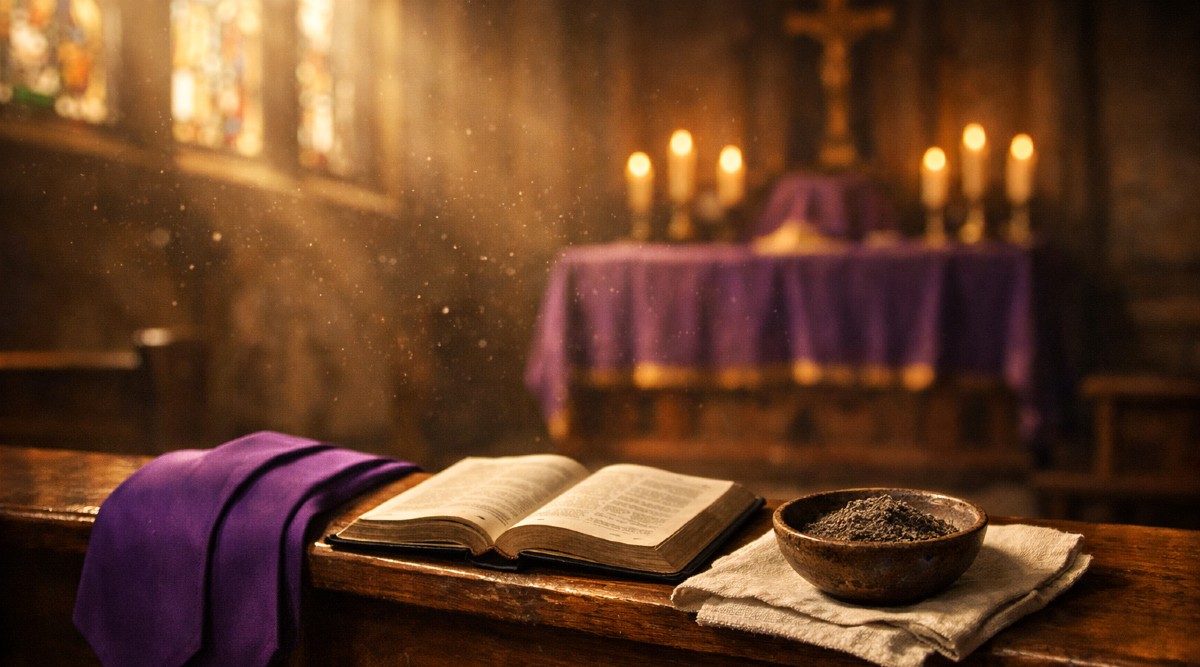
The ashes used on Ash Wednesday are made from the blessed palms of the previous year’s Palm Sunday. Those palms—once waved in joy—are burned, blessed, and placed on our foreheads.
It’s a powerful visual cycle:
- Triumph turns to sacrifice
- Celebration turns to repentance
- Glory turns to humility
When the priest or minister marks your forehead, you’ll hear one of two phrases:
- “Remember that you are dust, and to dust you shall return.”
- “Repent, and believe in the Gospel.”
Neither is meant to shame you.
Both are meant to free you.
Why Ash Wednesday Still Matters So Much
Ash Wednesday cuts through our illusions.
In a culture obsessed with image, control, and self-improvement, the ashes remind us:
- We are not self-made.
- We are not permanent.
- We are not saved by productivity, perfection, or popularity.
The ashes don’t say, “You’re failing.”
They say, “You are human—and God still wants you.”
That’s why Catholics line up year after year, even those who rarely attend Mass otherwise. The ashes tell the truth we’re all quietly carrying.
What Catholics Are Asked to Do on Ash Wednesday
Ash Wednesday is a day of fasting and abstinence for Catholics ages 18–59 (fasting) and 14 and up (abstinence).
That means:
- One full meal
- Two smaller meals that don’t equal a full meal
- No meat
But the Church’s deeper invitation isn’t about food—it’s about focus.
Ash Wednesday asks us to pause and ask:
What has been crowding out God in my life?
What needs to be stripped away?
What needs healing before Easter joy can truly take root?
How to Prepare in the Two Weeks Before Ash Wednesday
You don’t need a color-coded Lent planner or a heroic self-denial strategy.
You need honesty—and a little intentional space.
Here are simple, realistic ways to prepare:
1. Decide what Lent is actually for
Lent is not about proving spiritual toughness. It’s about making room for God. Before choosing what to “give up,” ask what you want more of: peace, prayer, patience, clarity, healing.
2. Choose one meaningful sacrifice
Instead of ten half-hearted resolutions, choose one thing that gently but consistently redirects your heart toward God.
3. Plan one concrete act of charity
Lent isn’t only inward. Decide now how you’ll love outward—through generosity, time, forgiveness, or service.
4. Make a plan for prayer
Even five intentional minutes a day is better than vague good intentions. Pick a time. Pick a place. Keep it simple.
5. Go to Ash Wednesday Mass with intention
Don’t just receive ashes—receive the invitation they represent.
Why This Season Is a Gift, Not a Burden
Ash Wednesday doesn’t begin with “do more.”
It begins with “remember.”
Remember who you are.
Remember who God is.
Remember that conversion is always possible.
The ashes will fade from your forehead within hours—but the grace they point to can carry you all the way to Easter, if you let it.
Two weeks from now, Catholics around the world will once again hear the ancient words and feel the weight of ash.
This year, you don’t have to rush into Lent.
You can walk into it—awake, prepared, and hopeful.
And that makes all the difference.