
A recent report in the New York Times points to a striking development inside American entertainment: mainstream artists, filmmakers, and studios appear increasingly willing to engage religion not as a symbol to subvert, but as a subject to treat with sincerity. According to the Times, this shift has been unfolding for several years and may reflect deeper spiritual questions resurfacing in American culture.
The Times article, written by Lauren Jackson, draws together examples from film, television, and pop music. Jackson notes that prominent artists and major releases in 2025—ranging from Justin Bieber and Rosalía to films like “Heretic,” “The Testament of Ann Lee” and “Eternity”—are wrestling with spiritual themes in ways that would have seemed unlikely in elite entertainment circles even a decade ago. As Jackson reports, two Times writers who cover pop culture say that “yes, something was changing,” and that Americans seem increasingly “conversant with religiosity,” according to the Times film critic Alissa Wilkinson.
Wilkinson suggests that this renewed attention reflects the wider public mood: “It tells you something about what people are interested in right now,” she said, “You can see what we’re worried about or what we’re thinking about,” according to the Times. She traces one turning point to 2018 with First Reformed, a film about a troubled minister that forced studios to reconsider the spiritual questions audiences were willing to grapple with.
Several factors appear to be pushing this return toward the sacred. The Times report highlights the pandemic as a catalyst, describing it as a moment that spurred people toward “a collective reckoning with existential questions.” Pop culture reporter Joe Coscarelli told the Times that “in a time of uncertainty, there were more people looking to whatever God was to them.” This period also coincided with major artists entering a new stage of life and writing more openly about purpose, family, and commitment.
The Times also points to the political climate of recent years, noting Wilkinson’s observation that “mainstream studios are trying to capture what they perceive of as the right-wing audience,” according to the report. But beyond politics, Coscarelli sees something unusual about the tone of today’s spiritual engagement. Artists who once used religious imagery to provoke or invert expectations are now approaching faith “in a much more head-on, straightforward, earnest, and irony-free way,” he said.
From a Catholic perspective, that distinction—earnestness versus aesthetic play—may be the most consequential. American media has long treated religion as a metaphorical resource, often detached from belief. But the Times suggests that many artists in 2025 are not merely appropriating symbols; they are revisiting the questions behind them. Even if these explorations do not align with Catholic teaching, they represent a cultural willingness to name spiritual questions openly again.
This shift does not mean that religion is suddenly fashionable among cultural elites. Coscarelli cautioned that in certain creative circles “you’d still get a sideways look” for bringing up church, according to the Times. Yet he also noted that the stigma is lessening as the broader culture becomes more familiar with religious language, experiences, and communities. In the Times report, Wilkinson adds that “your average person who may not have grown up in church now has some familiarity with that world again because it has become mainstream.”
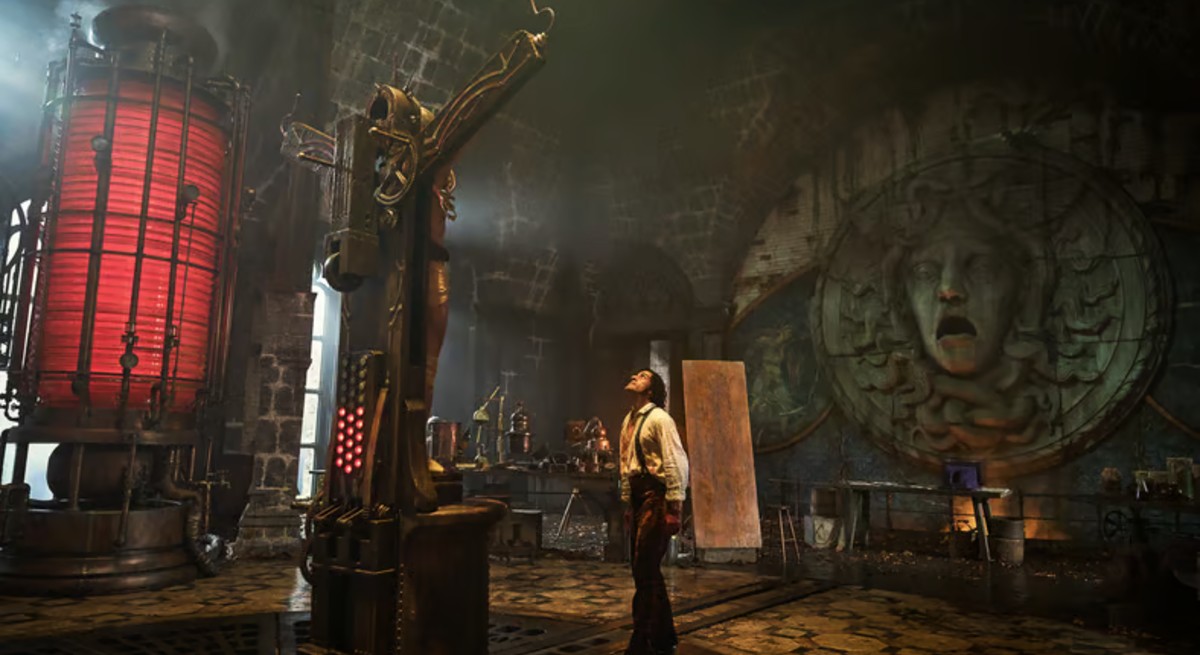
Nowhere is this cultural moment more visible than in films imagining the afterlife itself. Jackson highlights Eternity, a recent A24 production that envisions the next life as a vast transit hub where souls choose their destination. Director David Freyne explained to the Times that he grew up “petrified of my own damnation” in a deeply Catholic Ireland, but wanted to make a world where “you get to decide what your eternity will look like.” Freyne said that working on the film unexpectedly left him “a spiritual person by the end of it,” adding that, though he remains “on the atheist-slash-hedging-your-bets side of things,” he now approaches death “with a lot more curiosity.”
Freyne’s concept of the afterlife—an extension of human anxieties and choices rather than a place of judgment or redemption—differs starkly from Christian teaching. He told the Times: “Your soul is just you. the good, the bad and the ugly,” and argued that a perfected afterlife would not feel authentic. As he put it, “I think perfection doesn’t exist. Even in the afterlife.”
For Catholics, this creative reinterpretation underscores both the opportunity and challenge of the current moment. On one hand, the Times report confirms that America’s secular culture is revisiting ultimate questions that lie at the heart of the Gospel: suffering, salvation, freedom, judgment, and eternal life. Films like Eternity may approach these themes through a lens of radical individualism, but they nevertheless indicate that audiences remain hungry to imagine what lies beyond death.
On the other hand, as these artistic works reshape spiritual concepts according to contemporary sensibilities, they may further blur the distinction between personal preference and revealed truth. Freyne’s view that it is “comforting” to believe eternal destiny is self-determined echoes a broader cultural instinct the Church has long cautioned against: the desire to create God—or heaven—in our own image.
Yet the very fact that mainstream studios, celebrities, and pop culture icons are again reaching for religious language signals something deeper. The Times report suggests that the American imagination is no longer satisfied by material answers alone. Even imperfect or incomplete depictions of the sacred may open new doors for evangelization, dialogue, and reflection.
Catholics need not be surprised that questions of God, death, and eternity return again and again to the human heart. But it is noteworthy when Hollywood rediscovers them. As Wilkinson told the Times, spiritual themes “come in waves.” For the Church, recognizing these waves—and responding with clarity, charity, and confidence—remains an essential part of proclaiming the Gospel in a culture that is still searching.
Your support brings the truth to the world.
Catholic Online News exists because of donors like you. We are 100% funded by people who believe the world deserves real, uncensored news rooted in faith and truth — not corporate agendas. Your gift ensures millions can continue to access the news they can trust — stories that defend life, faith, family, and freedom.
When truth is silenced, your support speaks louder.