

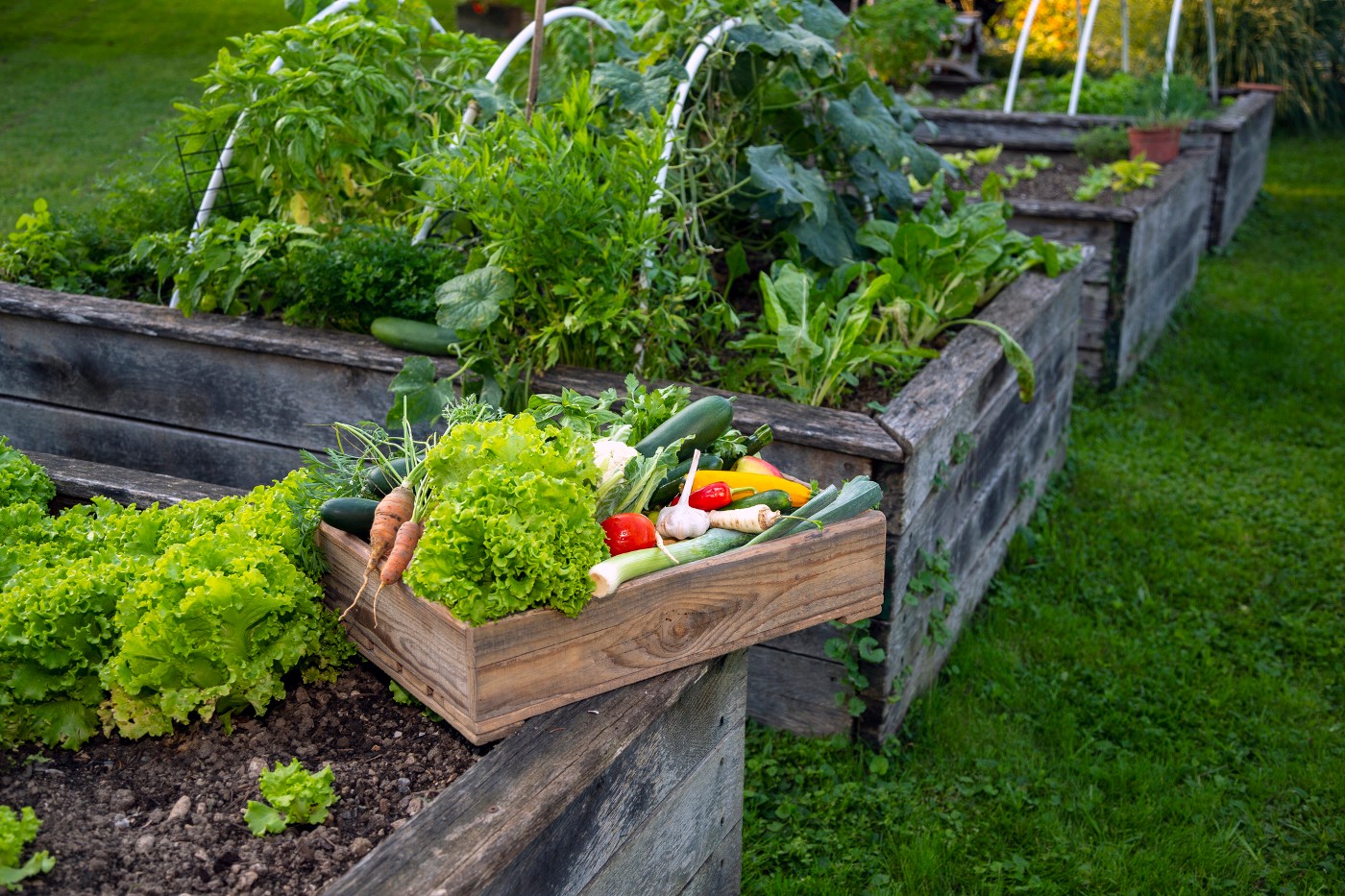
Backyard gardening isn’t a hobby. It’s a local survival skill, a family-strengthening discipline, and a quiet act of independence. And at this point in American life, when food prices are punishing households, “convenience” has become a lifestyle, and too many communities rely on fragile supply chains, we need to bring backyard gardening back in a serious way. Not as a trend. As a return to common sense.
After World War II, a huge percentage of American families maintained backyard gardens. In the 1940s, families came home to a tight economy, rationing memories, and limited cash, and they responded the way capable people do. They grew food. They didn’t wait for a corporation to solve it. They didn’t outsource their health to a drive-thru menu. They built resilience at the local level, right behind their own homes. That mindset is exactly what we need again, because modern America has drifted into a costly, dependent, and frankly fragile way of living.
Look at what we’ve normalized. Families spend hundreds of thousands of dollars, sometimes far more, to buy a home, and then the backyard is a money pit. Ornamental plants. Decorative shrubs. A lawn that produces nothing but higher water bills. And then we pay someone hundreds of dollars a month to mow it, edge it, fertilize it, and keep it alive. We’re literally paying to maintain a space that can’t feed a child, can’t nourish an elderly parent, can’t help a neighbor, and can’t reduce the grocery bill by a single dollar. That is backwards.
Now imagine the alternative. A backyard designed to produce.
If you want trees, plant fruit trees. Not ornamentals that only take. Trees should give. Citrus, apples, plums, figs, peaches, whatever fits your climate. Line your property with food-producing trees. Then use the middle of the yard for a garden space that can be both productive and beautiful. Raised beds, mounded rows, neat pathways, trellises for beans and cucumbers, herbs along the border. A well-designed garden is attractive. It’s alive. It’s a backyard with purpose.
And the benefits are immediate and long-term.
First: food cost relief. Even a modest backyard garden can produce an impressive amount of food. A handful of tomato plants, for example, can supply a family with tomatoes far beyond what you’d expect, especially when you learn to preserve them. Add peppers, zucchini, greens, onions, carrots, herbs, and cucumbers, and you’re no longer buying the same items week after week at premium prices. Your grocery bill drops, and your food quality rises.
Second: nutrition and health. Fresh vegetables picked at peak ripeness are not the same as vegetables shipped across the country and sitting in storage. Homegrown produce supports stronger bodies, better energy, and better long-term health outcomes. It also changes habits. When families grow food, they naturally eat more real food. They cook more. They snack less on processed junk. They rebuild discipline without even calling it discipline.
Third: family stability. This matters. Gardening gets people off the hamster wheel of passive entertainment and back into the work of building a household. Too many families spend their evenings in a fog. Fast food, phones, endless scrolling, and constant consumption. Backyard gardening flips that script. It creates routine. It creates cooperation. It gives children a productive skill and a direct relationship with food. It gives adults a sense of control and capability that modern life has stolen.
Fourth: food storage and self-reliance. We have to revive canning and food preservation, period. A backyard garden becomes truly powerful when it doesn’t stop at harvest. Canning tomatoes, pickling cucumbers, freezing peppers, drying herbs, storing potatoes and onions, these are simple skills that turn a few months of growing into a year-round food supply. And this isn’t extreme or strange. It’s normal. It’s what functioning families used to do.
And here’s something many people don’t realize. Backyard gardens can strengthen the entire local economy.
This approach aligns directly with the Catholic social principle of subsidiarity, which teaches that decisions and responsibilities should be handled at the most local level possible, closest to the family and the community. When families can grow food, preserve it, share it, and support one another locally, they are living subsidiarity in action. It prevents overreach by distant systems, protects human dignity, and strengthens households rather than weakening them. Strong families build strong communities, and strong communities do not depend on centralized systems to survive. Backyard gardening is not just practical, it is moral. It respects the natural order of responsibility by keeping food, care, and provision where they belong, in the hands of families and neighbors.
When enough homes in a neighborhood grow food, you create surplus, and surplus becomes local abundance. Extra eggs, extra tomatoes, extra squash, extra herbs. That surplus can be shared, bartered, sold at local markets, or distributed to families who need food assistance. This is how communities become stronger without begging distant systems for help. This is how we rebuild local networks that actually take care of people.
That’s where ShareNetwork comes in.
ShareNetwork is about re-education and awareness at the local level, teaching people how to reclaim basic skills and rebuild community strength. We’re not here to mimic the same food-handling organizations that have siphoned billions while families get weaker, poorer, and sicker. We’re here to reverse the flow. Back into households. Back into neighborhoods. Back into local abundance. Backyard gardening is one of the most practical starting points because it is immediate, visible, and empowering.
Now, let’s be honest. It will take time. You don’t rebuild a culture overnight. But we can restart the engine right now. We can help families begin with simple steps:
Start small. One raised bed or a few containers.
Grow the highest-impact crops first. Tomatoes, greens, herbs, peppers, cucumbers.
Add fruit trees as a long-term investment.
Learn basic preservation. Start with tomatoes, because they teach confidence fast.
Share knowledge locally. Neighbors teaching neighbors creates momentum.
This is not about perfection. It’s about direction.
We need a national return to local competence. Families who can feed themselves better, spend less, waste less, and live with more purpose. Backyard gardening is one of the clearest ways to do that. It turns wasted land into a productive asset. It turns consumption into creation. And it restores something we desperately need: the habit of taking care of our own.
It’s time to stop treating the backyard like decoration and start treating it like provision. The local level is where this begins, and the local level is where it will grow.
Your support brings the truth to the world.
Catholic Online News exists because of donors like you. We are 100% funded by people who believe the world deserves real, uncensored news rooted in faith and truth — not corporate agendas. Your gift ensures millions can continue to access the news they can trust — stories that defend life, faith, family, and freedom.
When truth is silenced, your support speaks louder.


Great article! We are growing a garden now and have some fruit trees. It is so self satisfying to go pick an orange, pick a tomato and eat it for a snack… I remember my grandma in Iowa had 12 kids and a side lot to her home that was a garden every summer which turned into canned goods for the winter. It is what my Mom always said feed her and her siblings all winter long. My husband and I have got back into this way of eating and it is so much better. A few tomato plants really do go a long way with lots of left overs for family and friends. Pray that many others look at those trees & scrubs that need care & watering all summer long and don’t give anything and turn them into something that gives back nourishment! God bless.