


On December 8, the Catholic Church celebrates the Immaculate Conception, one of the most important Marian doctrines. Contrary to popular misunderstanding, this doctrine does not refer to Jesus’ conception. Instead, it refers to Mary’s conception in the womb of St. Anne.
The Church teaches that from the first instant of her conception, Mary was preserved by God from all stain of original sin. This privilege was given to her in view of the merits of Jesus Christ, the Redeemer.
This teaching is officially defined and infallible.
What the Doctrine Actually Says
The dogma of the Immaculate Conception means:
- Mary received a singular grace from God.
- At the moment she was conceived, she was preserved from original sin.
- This preservation was possible because of Christ’s future sacrifice, applied to her in advance.
This is called “preservative redemption”—a completely accurate theological term rooted in the work of Bl. John Duns Scotus and later affirmed by the Church.
Mary is therefore redeemed by Christ like all humanity, but in a unique way: before sin could touch her.
This doctrine does not say:
- that Mary did not need a Savior
- that Mary’s parents were immaculately conceived
- that Mary was divine
The Church explicitly rejects all of those misunderstandings.
Scriptural Foundations
While the doctrine is not explicitly stated in the New Testament, it is implicitly present and understood through Tradition.
Luke 1:28 — “Full of Grace” (kecharitōmenē)
Gabriel’s greeting uses a perfect participle in Greek—kecharitōmenē—meaning:
- “one who has been endowed with grace”
- in a completed and lasting way
The Catholic Church holds that this term indicates an extraordinary fullness of grace, incompatible with the presence of original sin.
This interpretation is doctrinally sound and supported by multiple Church Fathers.
Genesis 3:15 — The Protoevangelium
“I will put enmity between you and the woman…”
The Church has always understood “the woman” here ultimately to refer to Mary, and “enmity” as total opposition between her and the serpent (Satan).
Total enmity logically implies absence of sin.
Both passages are legitimately cited in magisterial teaching on the doctrine, including in Ineffabilis Deus.
Development of the Doctrine
Early Church (1st–8th centuries)
Fathers such as:
- St. Ephrem the Syrian
- St. Ambrose
- St. Andrew of Crete
frequently described Mary as “all-holy,” “undefiled,” and “spotless.”
Their theological language supports, but does not yet define, the doctrine.
Middle Ages (9th–15th centuries)
The universal belief grew, but theological questions arose:
- If Mary was without sin, did she still need Christ as Savior?
- How could she be redeemed if she was never touched by sin?
Bl. John Duns Scotus (1266–1308) provided the definitive answer:
God applied Christ’s future merits to Mary at the moment of her conception.
This explanation is historically accurate and is the foundation of the Church’s teaching today.
Universal Devotion Before 1854
The Roman Church celebrated the feast for centuries before its dogmatic definition.
By the 1800s, the belief was nearly universal among both clergy and faithful.
Dogmatic Definition (1854)
On December 8, 1854, Pope Pius IX proclaimed the dogma in Ineffabilis Deus.
The exact wording is accurately represented here:
“…the Blessed Virgin Mary, in the first instance of her conception, by a singular grace and privilege granted by Almighty God, in view of the merits of Jesus Christ… was preserved free from all stain of original sin.”
This is an ex cathedra statement—universally binding for all Catholics.
Relation to Mary’s Mission
The Church teaches that Mary’s Immaculate Conception is directly tied to her role as Mother of the Incarnate Word.
By being preserved from original sin:
- her will was fully aligned with God
- her “yes” at the Annunciation was completely free
- she became a pure and fitting dwelling place for Christ
All of this teaching is consistent with the Catechism (CCC 490–493).
Liturgical Celebration
The Feast of the Immaculate Conception, December 8, is:
- a Solemnity
- often a Holy Day of Obligation (including in the United States)
- celebrated during Advent
Liturgical color: white, symbolizing purity and joy.
This is historically and liturgically accurate.
The Immaculate Conception is the Church’s solemn teaching that:
- Mary was preserved from original sin from the first moment of her existence,
- through a unique grace,
- granted by God,
- because of Christ’s future redemptive sacrifice.
This doctrine is rooted in Scripture, affirmed by ancient and medieval tradition, and infallibly defined in 1854.
Your support brings the truth to the world.
Catholic Online News exists because of donors like you. We are 100% funded by people who believe the world deserves real, uncensored news rooted in faith and truth — not corporate agendas. Your gift ensures millions can continue to access the news they can trust — stories that defend life, faith, family, and freedom.
When truth is silenced, your support speaks louder.

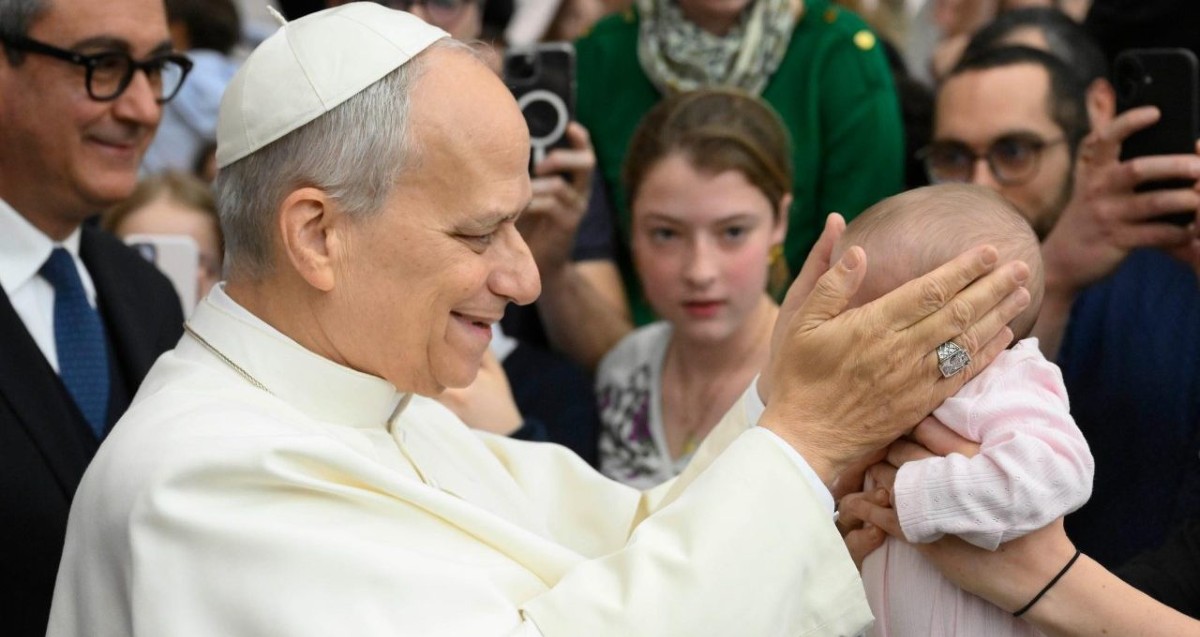

Pope Francis said that Jews do NOT need Baptism to be cleansed from original sin because of their special relationship with GOD
The Virgin Mary as a Jew was already without the original sin, so the doctrine of her Immaculate Conception is redundant and NOT
necessary.