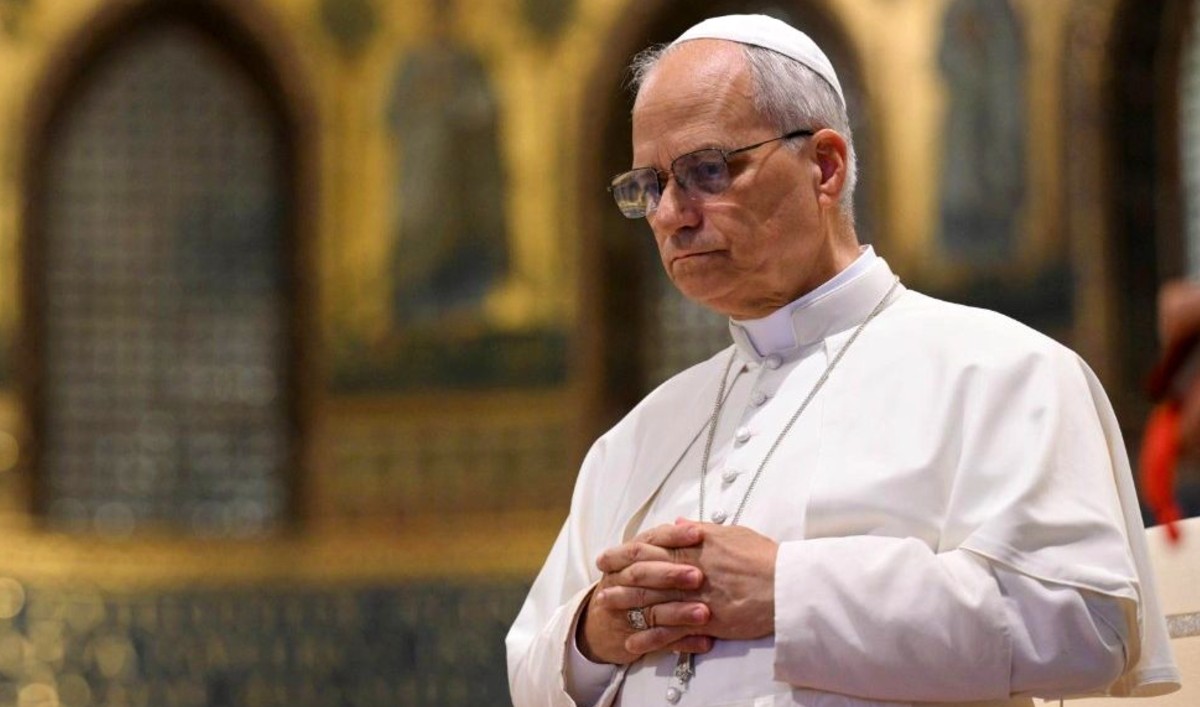

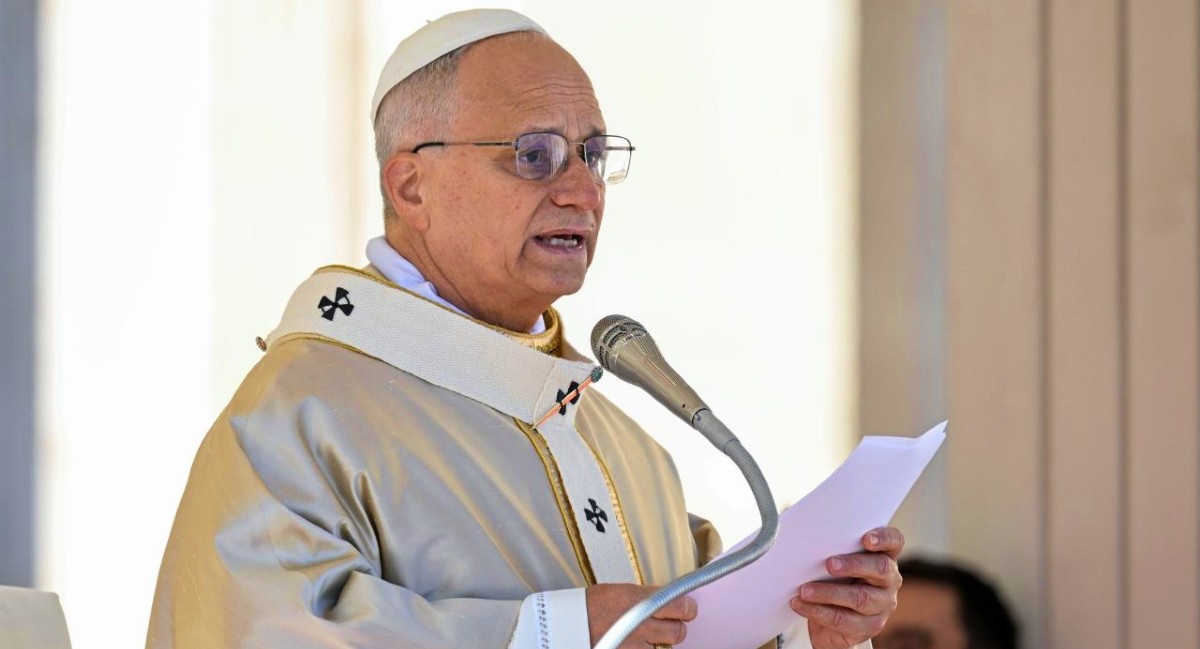
As the Church prepares to observe the World Day of Peace on January 1, Pope Leo XIV has issued a message that challenges prevailing assumptions about how peace is achieved in a world scarred by war, fear, and division. His call for an “unarmed and disarming” peace places Gospel nonviolence at the center of the Church’s moral and pastoral response to global conflict.
According to Vatican News, the Pope’s first World Day of Peace message emphasizes that true peace cannot be built on threats, coercion, or the accumulation of weapons. Instead, Pope Leo insists that peace must be humble, persevering, and rooted in a radically different way of relating to one another—one shaped by the Gospel rather than by fear.
In an interview with Vatican News, Marie Dennis, director of Pax Christi’s Catholic Institute for Nonviolence, explained that the message is fully aligned with the tone Pope Leo XIV has set since the beginning of his pontificate. “It is so entirely consistent with what Pope Leo has been saying from the very beginning,” Dennis said, highlighting his immediate focus on peace that is “unarmed and disarming, and, he adds, humble and persevering.”
An Urgent Message from Sister Sara – Please Watch
Dennis stressed that an “unarmed” peace is not merely symbolic. “The peace of Christ does not rely on violence or coercion or a building up of arms,” she said, pointing to the Pope’s concern over massive global investments in war. Yet the Pope goes further, she noted, by describing peace as “disarming”—an active, demanding process rather than a passive stance. “It is an active process whereby a different way of relating is built between two parties,” Dennis explained. “Peace is unarmed in itself, and it is also disarming.”
The message arrives at a time when international tensions and armed conflicts dominate headlines. Dennis described the present moment as “breathtakingly violent and frightening,” but said the Pope deliberately resists narratives driven by fear. Rather than reinforcing suspicion or hostility, Pope Leo calls believers to humility and relationship-building, insisting on the dignity of every human person.
According to Dennis, this vision directly confronts attitudes that reduce people—especially migrants and the poor—to threats. “Where we are told that immigrants are a threat, not a gift,” she said, “the Pope speaks of a peace that recognises people as human beings with needs, integrity, and gifts to bring to society.”
A key theme of the message is perseverance. Dennis noted that Pope Leo acknowledges peace cannot be rushed or imposed. “It takes time – listening, truth-telling, and relentless persistence – in order to build right relationships,” she said, both between individuals and among nations. In this context, the Pope also emphasizes the importance of strengthening international institutions that promote dialogue rather than dismantling them.
One of the most concrete elements of the message is Pope Leo’s call for communities to become “houses of peace.” According to Dennis, these are places “where hostility is diffused through dialogue, where justice is practised, and where forgiveness is cherished.” She described this as a mission that applies not only to parishes and families, but also to Catholic universities, religious communities, and even the Church’s diplomatic efforts.
Dennis pointed to real-world examples already living out this vision, including the Tent of Nations, a family farm near Bethlehem committed to nonviolence and hope amid conflict. She also noted that in regions suffering extreme violence, there are communities quietly protecting children, caring for women, and preserving human dignity. “There are many people around the world contributing to what Pope Leo calls the most silent of revolutions,” she said.
Addressing the common criticism that nonviolence is unrealistic, Dennis emphasized that the Pope confronts this objection directly. Reflecting on the Gospel, Pope Leo observes that even the disciples struggled with Jesus’ refusal to respond to injustice with violence. Dennis noted that this reaction remains familiar today. “We tend to think that nonviolence in the face of such overwhelming violence is naïve or impossible,” she said.
Yet she pointed to growing research showing otherwise. “We are learning that nonviolent strategies work,” Dennis said, “and they often work better than armed responses.” Nonviolence, she added, is not passive but disciplined, learnable, and effective—even in dire circumstances.
Dennis concluded by expressing gratitude for the Pope’s message, describing it as “a strong articulation of another way.” According to Vatican News, Pope Leo XIV’s appeal is ultimately a claim on hope—not a denial of suffering, but a conviction that peace grounded in Gospel nonviolence remains possible. “The world needs it so badly right now,” Dennis said.
Your support brings the truth to the world.
Catholic Online News exists because of donors like you. We are 100% funded by people who believe the world deserves real, uncensored news rooted in faith and truth — not corporate agendas. Your gift ensures millions can continue to access the news they can trust — stories that defend life, faith, family, and freedom.
When truth is silenced, your support speaks louder.