

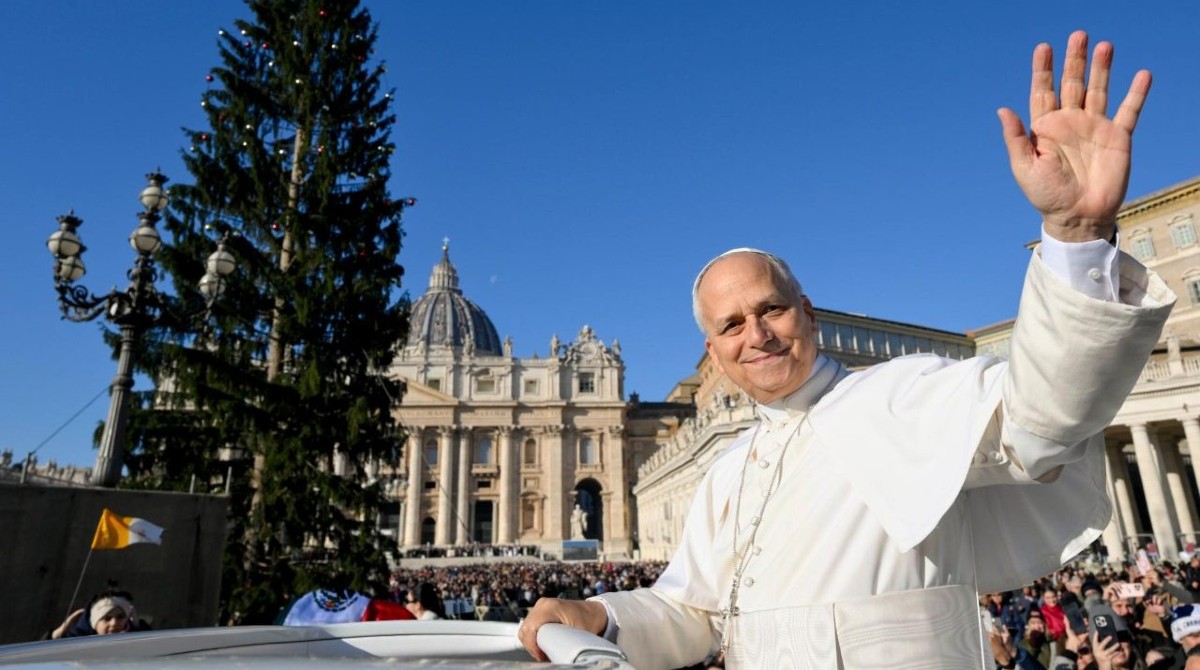
Pope Leo XIV is urging the Church to recognize Christian archaeology as a vital path for understanding the incarnation, the early Christian community, and the ongoing mission of evangelization. His call came in a new Apostolic Letter marking the 100th anniversary of the Pontifical Institute of Christian Archaeology.
According to Vatican News, the Pope describes the work of the Christian archaeologist as one that reaches beyond artifacts to the “hands that forged” them, the “minds that conceived them,” and the “hearts that loved them.” He emphasizes that this discipline makes visible the concrete reality of the Christian story, grounded in places, objects, and events that reveal the faith’s historical depth.
An Urgent Message from Sister Sara – Please Watch
Pope Leo notes that archaeology and theology are deeply connected because Christianity is rooted in the physical world. As Vatican News reports, he writes that Christianity “was not born from an idea, but through flesh… through a womb, a body, and a tomb.” The Holy Father explains that studying ancient sites and evidence allows believers to touch the material expressions of the earliest Christian communities and to see how the Gospel shaped real lives.
This connection with the past is significant not only for scholars, but also for today’s pastoral mission. The Pope observes that properly understood, archaeology teaches that “nothing touched by faith is insignificant,” according to Vatican News. Even small remnants, he says, testify to the faith, prayer, and culture that gave rise to the Church.
The Apostolic Letter highlights that advances in technology now allow researchers to reexamine artifacts once overlooked. In this way, the Pope describes archaeology as “a school of hope,” one that opens new insights into how Revelation entered history and continues to unfold across centuries. Vatican News notes that he insists archaeology must stand alongside church history and patristics as “fundamental disciplines of theological formation.”
For Pope Leo, archaeology also carries a missionary and pastoral dimension. It helps the Church remember its origins and “preserve the memory of its beginnings,” according to Vatican News. By showing how the first believers received, lived, and proclaimed the Gospel, this field becomes a tool for contemporary evangelization—speaking not only to Catholics but to all who search for meaning.
The Pope also points to archaeology’s capacity to foster unity and dialogue. Shared sacred sites, common histories, and the memory of martyrs create, as he explains, “a shared foundation” that can strengthen relationships across cultures and Christian traditions.
Reflecting on the discipline’s relevance for the Church today, Pope Leo emphasizes that true engagement with the past is not nostalgia. Vatican News reports that he calls this approach “living memory,” able to illuminate the present and guide the future through what he describes as “creative fidelity, not mechanical imitation.”
As the Pontifical Institute of Christian Archaeology celebrates its centenary, the Pope urges renewed cooperation among institutions and stresses that archaeological knowledge must not remain restricted to experts. Instead, he encourages sharing discoveries widely, involving young people, and cultivating new vocations in the field.
In a final message of gratitude and encouragement, the Pope affirms the profound value of this work. “Christian archaeology is a service, a vocation and a form of love for the Church and for humanity,” he says, according to Vatican News. He invites all who engage in it to remain rooted in its deepest purpose: making visible “the Word of life” and witnessing that “God became flesh” within human history.
Your support brings the truth to the world.
Catholic Online News exists because of donors like you. We are 100% funded by people who believe the world deserves real, uncensored news rooted in faith and truth — not corporate agendas. Your gift ensures millions can continue to access the news they can trust — stories that defend life, faith, family, and freedom.
When truth is silenced, your support speaks louder.