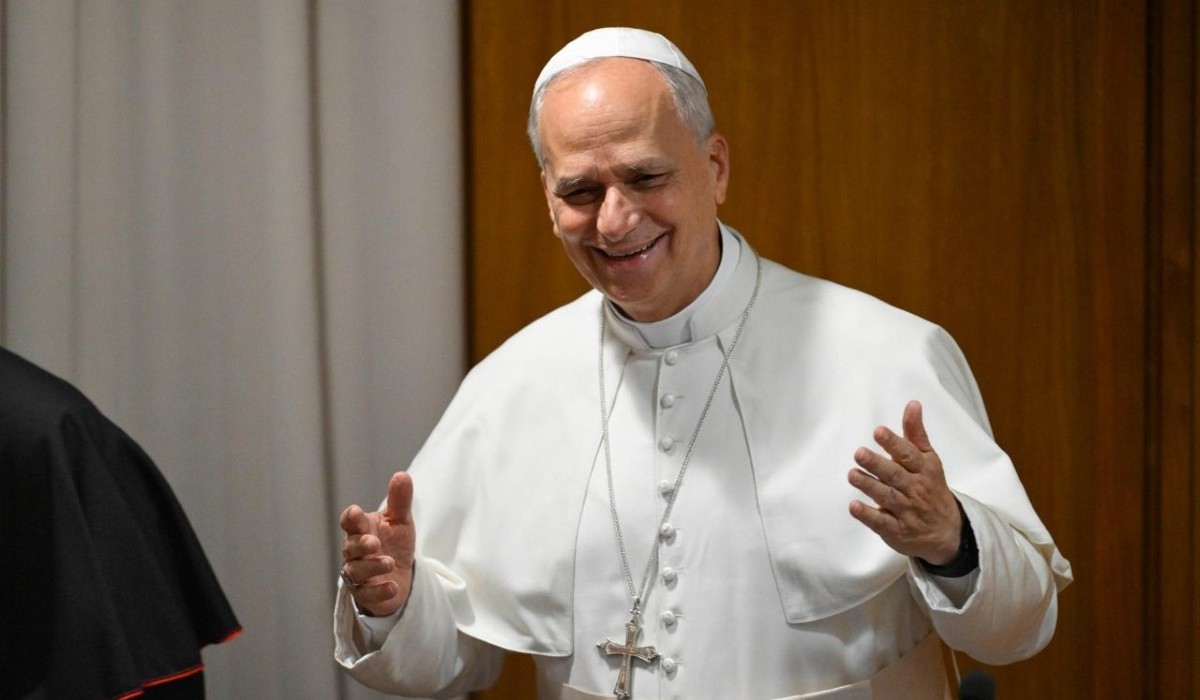

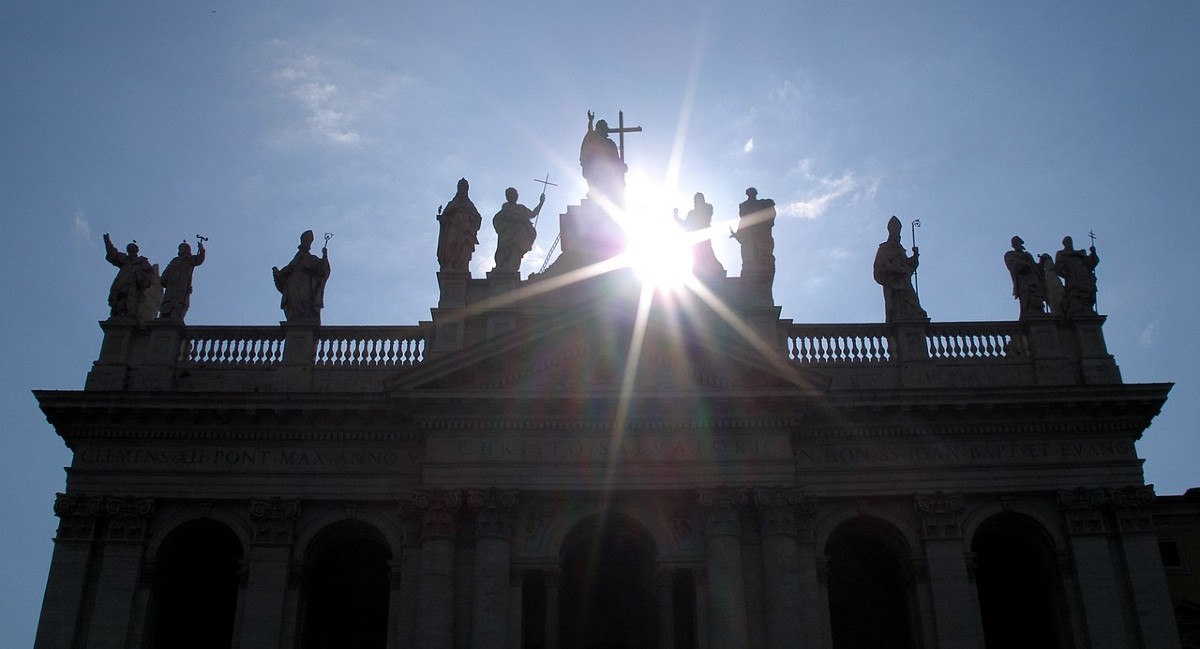
Pope Leo XIV will celebrate the Holy Thursday Mass of the Lord’s Supper this year at the Basilica of St. John Lateran, restoring a liturgical tradition that had not been observed during the pontificate of Pope Francis. The Mass is scheduled for April 2, according to the official calendar of papal liturgies released by the Prefecture of the Pontifical Household.
The Basilica of St. John Lateran holds a unique place in the life of the Church. It is the cathedral of the bishop of Rome and has served as a spiritual center of the city since the early centuries of Christianity. By returning the Holy Thursday evening Mass to this location, Pope Leo XIV signals continuity with a practice followed by popes throughout the last century.
During Pope Francis’ 12-year pontificate, the Holy Thursday Mass was regularly celebrated in prisons, detention centers, and other places associated with suffering and marginalization. In his first Holy Thursday as pope in 2013, Francis celebrated the Mass at Rome’s Casal del Marmo juvenile detention center, washing the feet of inmates as a sign of pastoral closeness to the poor.
Monsignor Giovanni Falbo, a canon of the Lateran basilica and camerlengo of its cathedral chapter, described those years as an exception rather than a replacement of tradition. “The years of Pope Francis’ pontificate,” Falbo explained, “constitute an exception, motivated by the desire to offer the world a clear sign of predilection for the poor and the last, bringing the attention of the bishop of Rome to places of suffering,” according to ACI Prensa, the Spanish-language sister service of EWTN News.
Falbo emphasized that the intention behind Francis’ approach was commendable but had practical limitations. He noted that celebrating the Mass in restricted spaces led to “a certain privatization of the celebration of the Last Supper,” since many priests of the Diocese of Rome were unable to attend, according to ACI Prensa.
An Urgent Message from Sister Sara – Please Watch
With the decision to return to St. John Lateran, Falbo said Pope Leo XIV is resuming “the uninterrupted practice of the last century,” while not diminishing the Church’s concern for the poor. “There are countless occasions throughout the year,” Falbo said, “to underscore the predilection of the Lord and of the Church for the last,” according to ACI Prensa.
Falbo added that the move reflects the pope’s desire “not only to be, but to behave as bishop of Rome,” pointing to Leo XIV’s recent act of formally taking possession of the episcopal chair at the Lateran basilica in May. That ceremony, held at what is considered the first Christian basilica built after the peace of Constantine, marked a foundational moment in the new pontificate.
The foot-washing rite itself, Falbo explained, has deep biblical and historical roots. It originates in Christ’s action at the Last Supper, recorded in the Gospel of John, where Jesus washed the feet of his apostles as a sign of self-giving love and service. “Already in the early Church,” Falbo noted, “the washing of the feet was considered a relevant sign for recognizing the authentic disciples of the Lord,” according to ACI Prensa.
Over the centuries, the rite has taken various forms, including papal customs that involved washing the feet of the poor within the papal residence. Falbo also recalled that, historically, Holy Thursday included multiple Masses throughout the day, and the foot-washing was not always directly connected to the evening Mass of the Lord’s Supper.
Following reforms to the Sacred Triduum under Pope Pius XII in the 1950s, the modern practice developed in which the bishop of Rome celebrated the Holy Thursday evening Mass with the foot-washing rite at St. John Lateran, after the Chrism Mass earlier in the day.
With this year’s celebration, Pope Leo XIV renews that tradition, emphasizing both the liturgical heritage of the Church and his pastoral responsibility as shepherd of the Diocese of Rome, while affirming that care for the poor remains an enduring mission of the Church.
Your support brings the truth to the world.
Catholic Online News exists because of donors like you. We are 100% funded by people who believe the world deserves real, uncensored news rooted in faith and truth — not corporate agendas. Your gift ensures millions can continue to access the news they can trust — stories that defend life, faith, family, and freedom.
When truth is silenced, your support speaks louder.