

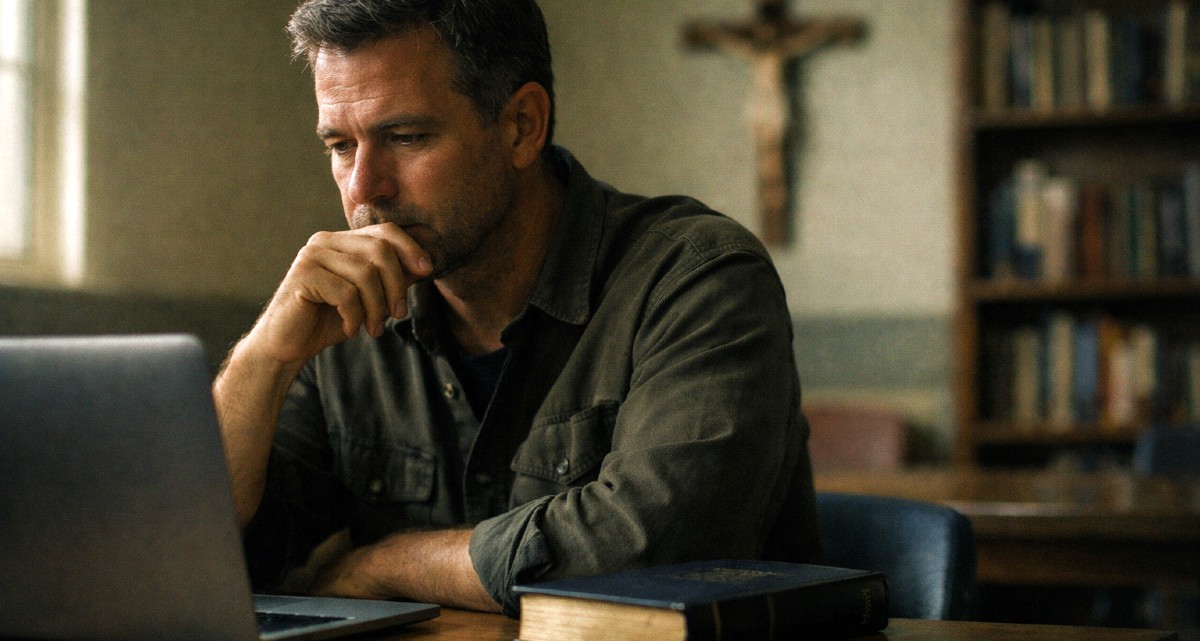
Catholics are not wrong to be cautious.
In recent decades, many have watched institutions dilute doctrine, soften moral teaching, or replace clarity with ambiguity, all while claiming to serve accessibility or relevance. As a result, a quiet assumption has taken root:
If it’s free, something must be missing.
That instinct did not come from nowhere. It was learned.
But when that assumption goes unexamined, it creates a new problem—one that quietly limits the Church’s ability to teach, evangelize, and form the faithful.
Cost has become a proxy for trust.
Paid programs are assumed to be serious. Free resources are treated with suspicion. Over time, this reverses the logic of the faith itself, where truth is not validated by price, but by fidelity.
This matters because the Church is entering a moment where access matters more than ever.
As schools close, parishes consolidate, and families are stretched thin, formation increasingly depends on resources that can reach people where they are. If “free” automatically triggers doubt, then many Catholics will dismiss faithful solutions before ever examining them.
The danger is subtle but real.
When skepticism toward free formation becomes habitual, Catholics begin to equate seriousness with scarcity, and orthodoxy with exclusivity. That is not how the Church has ever measured truth.
The faith was given freely.
The sacraments are not sold.
The Gospel was preached without admission.
Discernment is necessary.
Suspicion as a reflex is not.
If Catholics want formation to remain available to all, especially to those without means, then “free” cannot be treated as a flaw by default. It must be evaluated by fidelity, clarity, and fruit.
Otherwise, the very instinct meant to protect the faith may quietly restrict it.