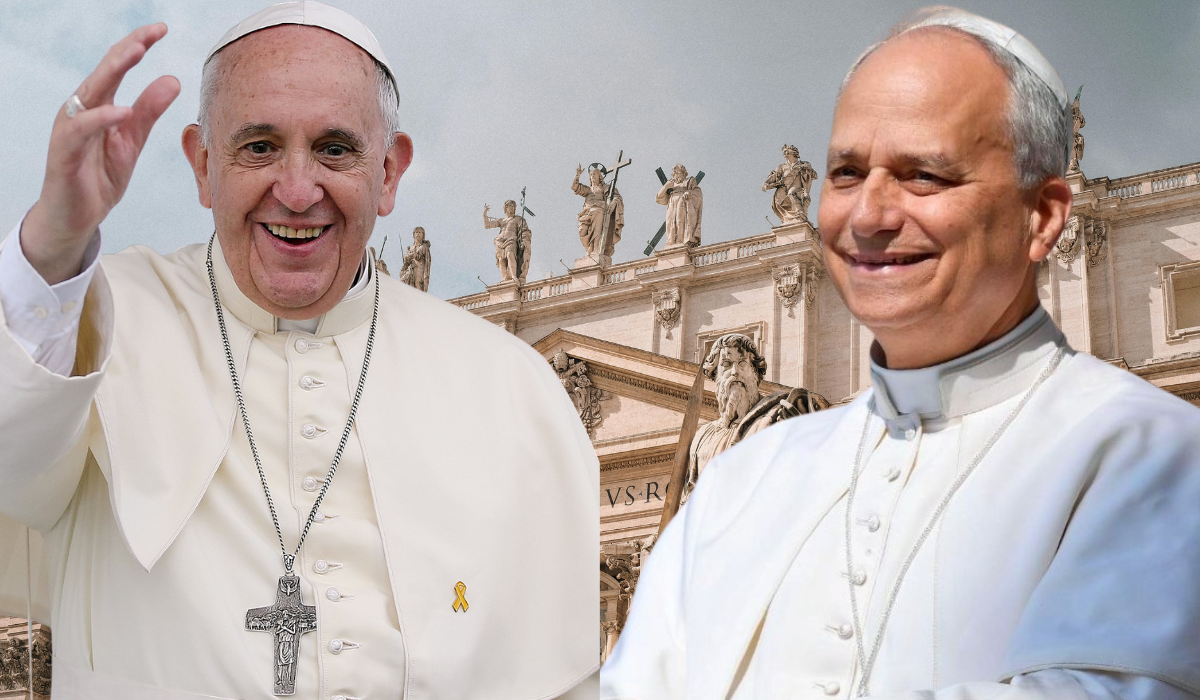
The year 2025 will be remembered by Catholics not for a single headline, but for a profound passage—one that unfolded quietly, prayerfully, and within the rhythm of the Church’s ancient life. It was a year marked by loss, continuity, and renewed responsibility, as the faithful mourned the death of Pope Francis and welcomed a new successor of Peter, Pope Leo XIV.
It was also the Jubilee Year of Hope, a designation announced long before anyone could have foreseen how deeply the theme would resonate with the Church’s experience.
The Passing of a Pope
On Easter Monday in 2025, Pope Francis died after a prolonged period of fragile health. His death came just one day after the Church had celebrated the Resurrection of Christ—a moment that lent particular gravity to the loss. For many Catholics, the timing underscored the paradox at the heart of Christian faith: mourning and hope held together, not in contradiction, but in tension.
Pope Francis’ pontificate, which began in 2013, was marked by a consistent emphasis on mercy, care for the poor, attention to the peripheries, and a call for the Church to be close to wounded humanity. In 2025, tributes reflected not only on his public teachings but on the pastoral tone he set—one that urged bishops, priests, and laypeople alike to encounter others with humility and compassion.
The funeral rites followed the Church’s time-honored tradition. As with every pope before him, Francis was commended to God not as a global figure, but as a servant of Christ, entrusted back to the mercy he so often preached.
A Church That Waits and Prays
The weeks following a pope’s death are never merely administrative. The Church enters a period of sede vacante—a time of waiting that is deliberately prayerful and restrained. In 2025, that stillness was felt across parishes and dioceses worldwide, as Catholics prayed for the College of Cardinals and for the guidance of the Holy Spirit.
This pause matters. It reminds the faithful that the Church does not belong to any one personality or era. The papacy is an office received, not seized; discerned, not engineered.
The Election of Pope Leo XIV
The conclave of 2025 resulted in the election of Pope Leo XIV, who accepted the office as Bishop of Rome and Supreme Pontiff of the universal Church. In choosing the name Leo, the new pope consciously aligned himself with a lineage that includes Leo the Great and Leo XIII—figures associated with doctrinal clarity, pastoral strength, and engagement with the challenges of their times.
From the beginning of his pontificate, Pope Leo XIV emphasized peace, restraint in the use of force, and the dignity of the human person. His early homilies and addresses focused on the Church’s role as a moral witness in a world marked by conflict, polarization, and fear. Rather than dramatic shifts, his words reflected continuity with the Church’s social teaching and the Gospel’s call to reconciliation.
In a year already heavy with transition, his steady tone offered reassurance rather than spectacle.
The Jubilee of Hope
All of this unfolded during the Jubilee Year of Hope, proclaimed well before the events that came to define 2025. Jubilees in the Catholic Church are not commemorations of success, but invitations to conversion—moments when forgiveness, mercy, and renewal are placed at the center of ecclesial life.
Throughout the year, pilgrims traveled to Rome, Holy Doors were opened, and indulgences were offered to the faithful under the usual conditions of confession, communion, prayer, and detachment from sin. The Jubilee did not erase grief or uncertainty, but it framed them within a larger horizon: that Christian hope does not depend on stability, but on fidelity.
A Church Still Standing
By the end of 2025, the Church had not emerged unchanged—but it had emerged intact. A pope had died. Another had been elected. The sacraments continued to be celebrated, the Gospel proclaimed, and the daily life of faith carried on in ordinary places: kitchens, classrooms, hospital rooms, and parish pews.
This is how the Church has always moved through history—not untouched by suffering, but sustained by grace.
In the final accounting, 2025 was not a year defined by disruption, but by continuity through loss. It reminded Catholics that leadership passes, eras close, and beloved pastors depart—but Christ remains. And that, ultimately, is where the Church’s hope has always rested.
Your support brings the truth to the world.
Catholic Online News exists because of donors like you. We are 100% funded by people who believe the world deserves real, uncensored news rooted in faith and truth — not corporate agendas. Your gift ensures millions can continue to access the news they can trust — stories that defend life, faith, family, and freedom.
When truth is silenced, your support speaks louder.