
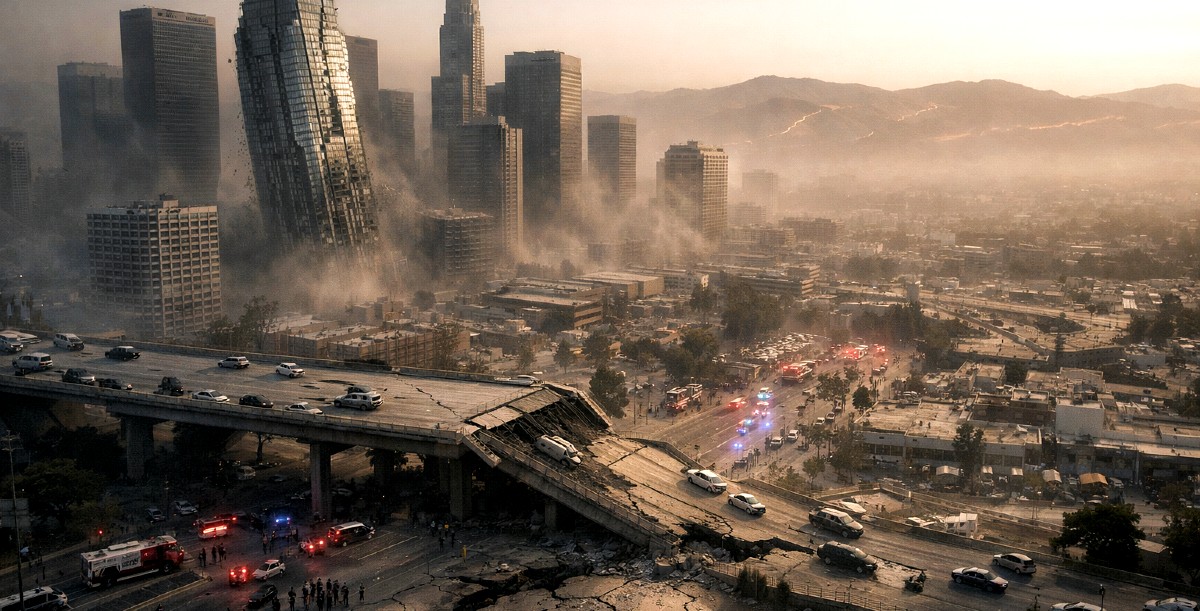
Residents of Northern California have felt a renewed sense of unease as a series of small earthquakes continues to ripple through parts of the East Bay, reminding many of the region’s vulnerability and the need for both preparedness and perspective.
According to the U.S. Geological Survey, a 3.1-magnitude earthquake struck near San Ramon early Tuesday morning, following more than a dozen smaller tremors in the same area. The quake was part of a broader pattern of seismic activity that has affected the city repeatedly over recent weeks, with dozens of minor earthquakes recorded since early November.
An Urgent Message from Sister Sara – Please Watch
San Ramon sits atop the Calaveras Fault, an active branch of the San Andreas Fault system. While the clustering of earthquakes has raised concerns among some residents, scientists emphasize that these smaller events do not signal an imminent major earthquake.
“These small events, as all small events are, are not indicative of an impending large earthquake,” USGS research geophysicist Annemarie Baltay said, according to the Daily Mail. She added that ongoing preparedness remains essential, noting, “We live in earthquake country, so we should always be prepared for a large event.”
Baltay also pointed to long-term risk assessments, stating that “there is a 72 percent chance of a magnitude 6.7 or larger earthquake occurring anywhere in the Bay Area between now and 2043,” according to Daily Mail.
Seismologists explain that the repeated tremors are likely linked to the area’s complex underground fault system rather than a single major fault line. Scientists say the movement of fluids through networks of small fractures beneath the surface can destabilize rock and trigger earthquake swarms.
“It is also possible that these smaller earthquakes pop off as the result of fluid moving up through the earth’s crust, which is a normal process,” Baltay said, according to Daily Mail, noting that the dense concentration of faults in the region may contribute to the frequent tremors.
Similar earthquake swarms have been documented in the San Ramon area in past decades, including in 1970, 1976, 2002, 2003, 2015, and 2018. USGS researchers stress that those earlier episodes were not followed by catastrophic earthquakes.
“This has happened many times before here in the past, and there were no big earthquakes that followed,” said Sarah Minson, a research geophysicist with the USGS Earthquake Science Center, according to SFGATE.
Studies of previous swarms indicate that the fault system beneath San Ramon is far more intricate than previously understood. Research following the 2015 swarm found multiple small, closely spaced faults interacting with one another, with evidence suggesting underground fluids played a role in triggering the activity.
Roland Burgmann, a seismologist at the University of California, Berkeley, believes the current sequence may reflect lingering aftershocks rather than a traditional swarm. Because the strongest quake occurred early in the sequence, Burgmann said he views the activity as “a tense aftershock sequence,” according to SFGATE.
For Catholics living in earthquake-prone regions, such moments can serve as reminders of both human fragility and the importance of spiritual readiness. While scientists urge calm and preparation, the Church has long encouraged prayer, solidarity, and care for one another in times of uncertainty, trusting in God’s presence even amid the shifting ground beneath our feet.
Your support brings the truth to the world.
Catholic Online News exists because of donors like you. We are 100% funded by people who believe the world deserves real, uncensored news rooted in faith and truth — not corporate agendas. Your gift ensures millions can continue to access the news they can trust — stories that defend life, faith, family, and freedom.
When truth is silenced, your support speaks louder.