

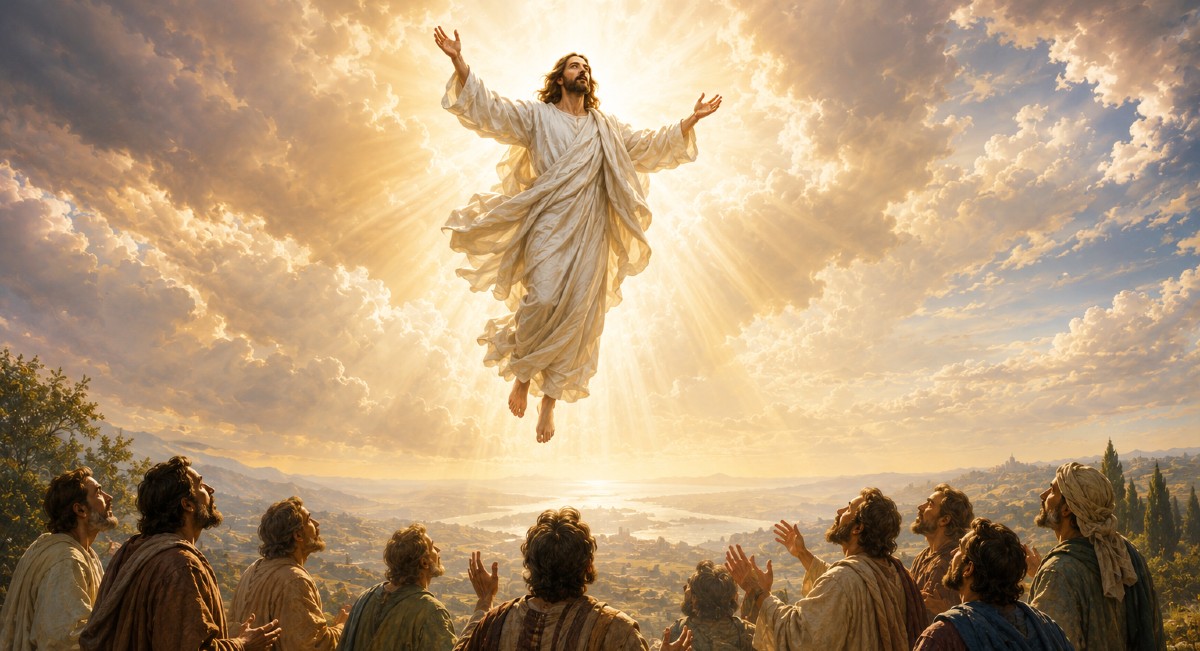
Every Christian rejoices in the Resurrection. Christ conquered death, shattered the power of sin, and opened the gates of heaven. Yet forty days later, something unexpected happens: Jesus ascends into heaven.
For many believers, the Ascension can feel bittersweet. After all, if Christ rose from the dead, why not remain visibly present on earth? Why return to the Father after accomplishing such a glorious victory?
The answer reveals something profound about God’s plan for His people.
When Jesus walked the roads of Galilee, His disciples could see Him, hear His voice, and sit beside Him. His physical presence brought comfort and certainty. Yet Christ repeatedly taught that His mission was not simply to remain with a small group of followers in one place and time. He came to unite all people to Himself.
Before His Passion, Jesus told His disciples, “It is better for you that I go” (John 16:7). These words may have seemed impossible to understand. How could anything be better than having Jesus physically present?
The Lord’s departure was not an abandonment. It was a transformation.
Through His Ascension, Jesus opened the way for the coming of the Holy Spirit at Pentecost. Instead of being physically present in one location, Christ would dwell within His Church and within the hearts of believers throughout the world. His presence would become available to every nation, every generation, and every soul willing to receive Him.
The Ascension also reminds us that our final home is not on earth.
Modern life often encourages us to focus only on what we can see, touch, and possess. Yet Christ’s return to heaven directs our gaze toward eternity. He ascended not to distance Himself from humanity, but to prepare a place for us. As He told His disciples, “I go to prepare a place for you” (John 14:2).
The Ascension is therefore a promise. Where the Head has gone, the Body is called to follow.
This truth offers tremendous hope during times of suffering. When life is marked by illness, grief, uncertainty, or disappointment, we can remember that Christ has already entered the glory that awaits those who remain faithful. Heaven is not merely an idea or a distant dream. It is a reality opened by Jesus Himself.
Yet the Ascension also challenges us.
After watching Jesus ascend, the Apostles did not remain staring into the sky. Empowered by the Holy Spirit, they went out into the world to proclaim the Gospel. The Ascension marked the beginning of the Church’s mission.
The same mission belongs to us today.
Christ may no longer walk beside us in the way He walked beside Peter and John, but He remains truly present. He speaks through Sacred Scripture. He acts through His Church. He strengthens us through prayer. Most importantly, He gives Himself completely in the Holy Eucharist.
At every Mass, heaven touches earth. The risen and ascended Lord becomes present on the altar, inviting us into communion with Him. In Eucharistic Adoration, we kneel before the same Jesus who ascended from the Mount of Olives and now reigns at the right hand of the Father.
The Ascension teaches us that faith is not the absence of Christ but a deeper encounter with Him. Though we cannot see Him with our eyes, we can know Him, love Him, and receive Him.
Far from leaving His people behind, Jesus ascended so that He could draw all people to Himself.
And until the day He comes again in glory, He continues to fulfill His promise:
“I am with you always, to the close of the age” (Matthew 28:20).
Your support brings the truth to the world.
Catholic Online News exists because of donors like you. We are 100% funded by people who believe the world deserves real, uncensored news rooted in faith and truth — not corporate agendas. Your gift ensures millions can continue to access the news they can trust — stories that defend life, faith, family, and freedom.
When truth is silenced, your support speaks louder.


Thank you..
I have set up a monthly giving to Catholic on Line.
Out of all the websites that I have gone to before, I have found this the most fulfilling, the most informative, and definitely the most inspired website in the Catholic faith that I have ever seen.
I will be sharing this with my friends as well..