

A remarkable archaeological discovery in Switzerland is drawing new attention to the ordinary lives of people who lived during the era of Jesus Christ.
Officials in the Swiss town of Windisch recently uncovered a charred Roman bread loaf believed to be nearly 2,000 years old, according to a report from Fox News citing a statement from the Canton of Aargau. The discovery was made during excavations at Vindonissa, an ancient Roman legionary camp once occupied by Roman soldiers.
The loaf, measuring about 10 centimeters wide and three centimeters thick, is believed to be the first Roman bread ever discovered in Switzerland. Archaeologists described it as a “charred, round object that attracted the attention of the excavation team during the uncovering work,” according to the translated statement cited by Fox News.
For Christians, bread carries profound spiritual meaning throughout Scripture. Jesus called Himself “the bread of life” in John 6:35, and bread appears repeatedly throughout both the Old and New Testaments as a sign of God’s provision, fellowship, sacrifice, and ultimately the Eucharist instituted at the Last Supper.
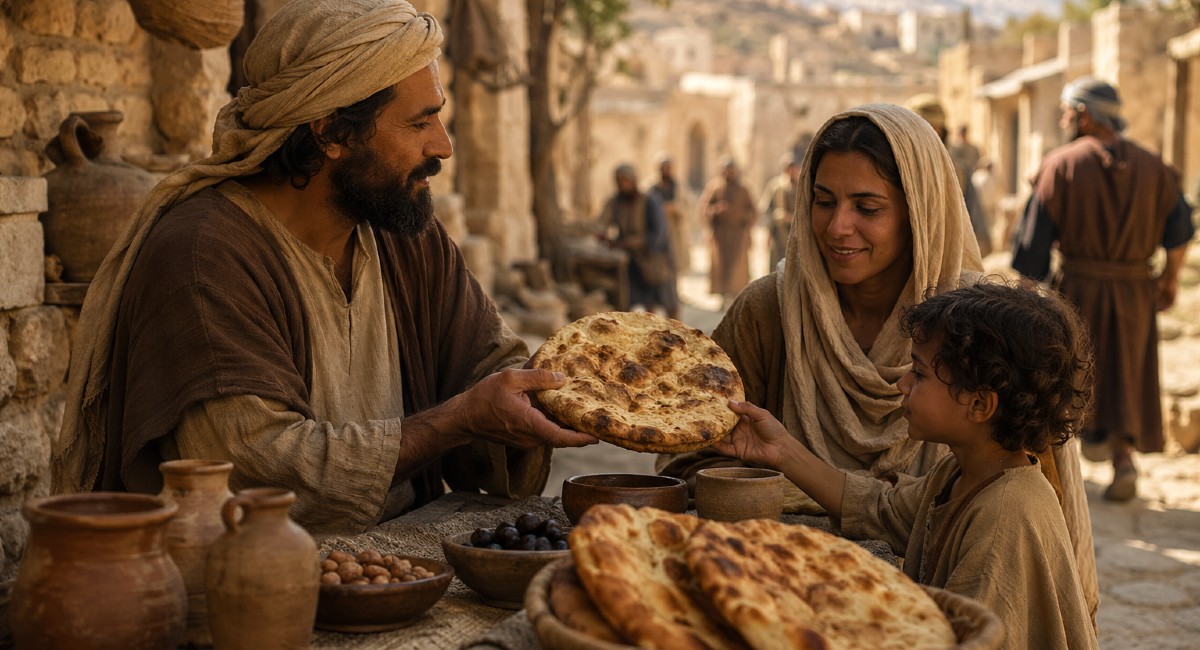
While the Swiss loaf has no direct connection to biblical events, the find offers a vivid reminder of the world in which Christ lived and preached. During the Roman Empire, bread was a staple food eaten daily by rich and poor alike across the Mediterranean world.
According to the Canton of Aargau’s statement, the loaf survived only because it had been burned. Officials explained that Roman bread discoveries are “extremely rare” and are usually preserved only through charring, much like the famous loaves uncovered in Pompeii after the eruption of Mount Vesuvius.
Researchers carefully removed the artifact along with the surrounding soil before transporting it to a restoration laboratory. Fox News reported that initial analysis by an archaeobotanist from the University of Basel indicated “with great probability” that the object is a charred Roman bread.
Additional testing is planned in Vienna to determine the loaf’s exact ingredients and method of preparation.
The excavation uncovered much more than bread alone. Archaeologists also found evidence of blacksmithing activity, metal tools, spearheads, projectile points, and a large clay oven that may help researchers better understand how the Roman camp developed over time.
“A large, carefully constructed clay oven lies directly within the walls of the older camp,” the statement noted, suggesting that commercial or craft activity may have taken place there during the camp’s earliest years.
Officials said the discovery “once again underlines how significant the Vindonissa site is for archaeological science,” according to Fox News.
The find joins several other notable bread discoveries in recent years. Fox News noted that Turkish archaeologists previously uncovered a 5,000-year-old loaf from the Bronze Age, as well as a 1,200-year-old burned loaf bearing the image of Jesus Christ.
For believers today, discoveries like these can serve as small but powerful reminders that the Gospel unfolded within real places, among real people living ordinary lives. The same simple bread eaten by Roman workers and soldiers during the first century became, through Christ, one of the greatest signs of God’s presence and salvation in the Eucharist.
Your support brings the truth to the world.
Catholic Online News exists because of donors like you. We are 100% funded by people who believe the world deserves real, uncensored news rooted in faith and truth — not corporate agendas. Your gift ensures millions can continue to access the news they can trust — stories that defend life, faith, family, and freedom.
When truth is silenced, your support speaks louder.



Such an amazing item to find! A loaf of bread 2000 years old! What does that tell you, the staff of life. God bless us all.