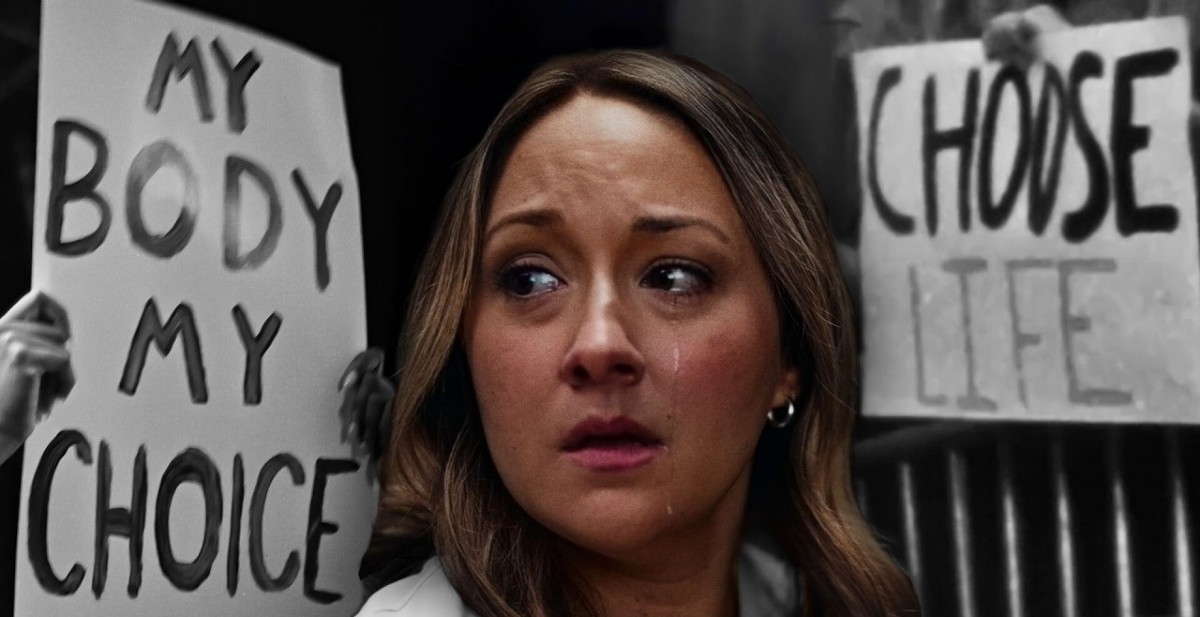


The U.S. Supreme Court has allowed the mail distribution of the abortion pill mifepristone to continue while legal battles move forward, a decision that has sparked strong reactions from pro-life leaders, medical advocates, and women who say they suffered devastating complications after taking the drug.
According to LifeSiteNews, the Court issued an unsigned order extending a block on a lower court ruling that would have restored stricter safeguards requiring in-person dispensing of the abortion pill. Justices Clarence Thomas and Samuel Alito dissented from the decision.
The case centers on a Biden-era Food and Drug Administration policy that permanently removed the requirement for women to see a medical provider in person before receiving mifepristone. The Fifth Circuit Court of Appeals had previously sided with the state of Louisiana, arguing that the policy undermined state pro-life protections and endangered women’s health.
Justice Clarence Thomas sharply criticized the abortion pill manufacturers in his dissent. According to LifeSiteNews, Thomas wrote, “Applicants are not entitled to a stay of an adverse court order based on lost profits from their criminal enterprise.” He added that the companies “cannot, in any legally relevant sense, be irreparably harmed by a court order that makes it more difficult for them to commit crimes.”
Thomas also pointed to the federal Comstock Act of 1873, which prohibits the mailing of abortion drugs through the postal system. According to LifeSiteNews, he argued that mailing abortion pills violates federal law, despite the Biden administration’s refusal to enforce the statute.
The ruling has intensified criticism of the Trump administration from pro-life advocates who hoped federal agencies would move more aggressively against mail-order abortion drugs. LifeSiteNews reported that organizations including Susan B. Anthony Pro-Life America and the Family Research Council urged the administration to restore in-person safeguards and conduct a comprehensive safety review of mifepristone.
At the same time, the debate has been fueled by emotional testimony from women who say the abortion pill caused life-threatening injuries.
In an editorial highlighted by LifeSiteNews, 25-year-old nursing student Shanyce Thomas recounted nearly dying after taking abortion pills at age 19. “As soon as I read the breaking news, memories flooded back to me of the hospital room where I nearly died,” she wrote. “What I remember is the blood, the pain and the terrifying realization that when everything went wrong, I was completely on my own.”
Thomas said she underwent an ultrasound and received in-person medical oversight before taking the pills, but still suffered catastrophic complications. According to LifeSiteNews, she began hemorrhaging after taking the second round of pills and later learned that parts of her deceased baby remained inside her body, causing septic shock.
“I spent about a month and a half in a coma as they worked to save my life,” Thomas wrote, according to LifeSiteNews. She described needing multiple blood transfusions, an ECMO machine, and extensive rehabilitation just to relearn basic daily tasks.
Thomas warned that if such severe complications occurred despite in-person care, the risks could be even greater for women receiving abortion drugs solely through the mail. “Mailing dangerous abortion drugs with no in-person examination, no meaningful safeguards and no regard for state law was never about women’s health,” she wrote. “It was about politics.”
LifeSiteNews also cited recent research claiming that serious adverse events linked to the abortion pill may be significantly higher than what FDA labeling reports.
The Fifth Circuit previously ruled that Louisiana demonstrated “irreparable injury” because the FDA policy undermined the state’s efforts to protect unborn life and increased medical costs associated with treating women harmed by abortion drugs. According to LifeSiteNews, the judges wrote that “the public interest is not served by perpetuating a medical practice whose safety the agency admits was inadequately studied.”
As litigation continues, the future of mail-order abortion pills in America remains uncertain. For many Catholics and pro-life advocates, however, the issue is about far more than policy. They argue the debate concerns both the dignity of unborn life and the safety of women placed at risk by increasingly widespread chemical abortions.
Your support brings the truth to the world.
Catholic Online News exists because of donors like you. We are 100% funded by people who believe the world deserves real, uncensored news rooted in faith and truth — not corporate agendas. Your gift ensures millions can continue to access the news they can trust — stories that defend life, faith, family, and freedom.
When truth is silenced, your support speaks louder.