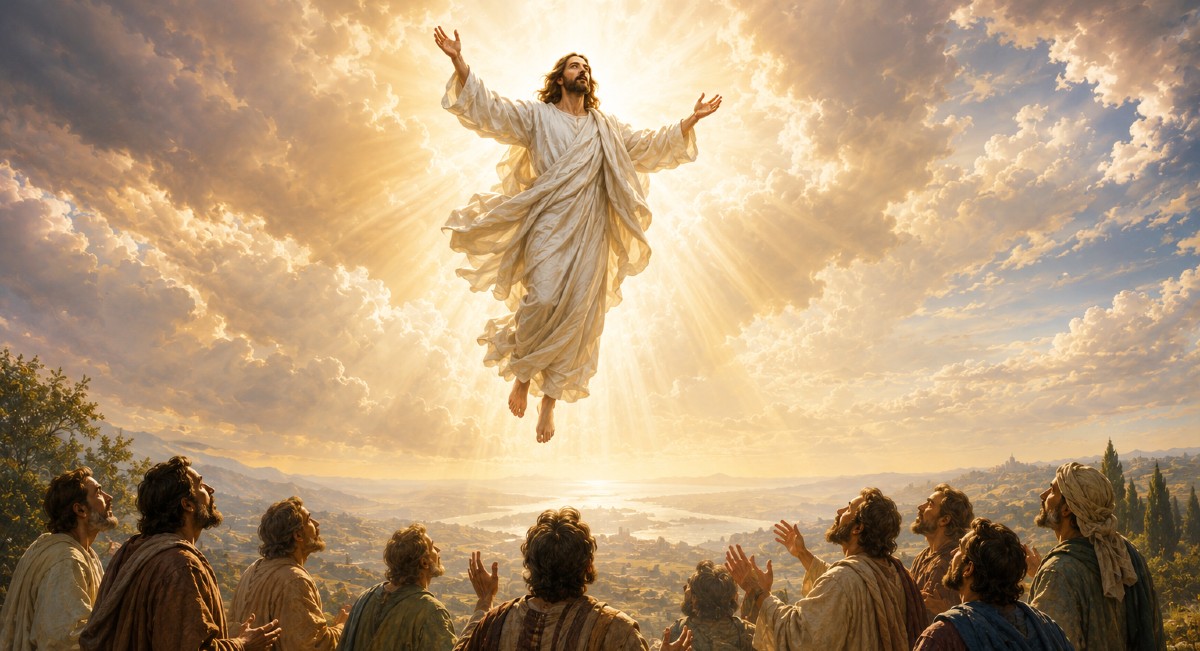
Forty days after Easter, the Church celebrates the glorious feast of the Ascension of the Lord, when Jesus Christ ascended into Heaven before His apostles. For many Catholics, the Ascension can seem like a farewell scene, Christ departing from the earth and leaving His followers behind. But the Church teaches something far deeper. The Ascension is not about absence. It is about victory, kingship, mission, and hope.
The Ascension reveals that Jesus did not simply “go away.” He entered into His heavenly glory as the risen Lord, opening Heaven for humanity and preparing the way for all who remain faithful to Him.
As Catholics pray in the Preface for the Ascension Mass, Christ “was taken up to heaven… that we, His members, might be confident of following where He, our Head and Founder, has gone before.”
Christ the King Enters His Glory
The Ascension marks the completion of Christ’s earthly mission. After His Passion, Death, and Resurrection, Jesus returns to the Father not in defeat, but in triumph. He ascends bearing the wounds of the Cross, eternal signs of His sacrificial love.
The apostles watched as Christ was lifted up before them, disappearing into the clouds. In Sacred Scripture, clouds often signify the presence and glory of God. The Ascension is therefore a revelation of Jesus’ divine authority.
The Catechism of the Catholic Church teaches that Christ’s Ascension “marks the definitive entrance of Jesus’ humanity into God’s heavenly domain” (CCC 665).
This matters deeply for Catholics. Jesus did not abandon humanity. He brought human nature into Heaven itself. In Christ, humanity now has a place before the throne of God.
Why the Ascension Gives Catholics Hope
The Ascension reminds believers that earth is not their final home. Modern culture often encourages people to live only for temporary pleasures, achievements, and comforts. But the Ascension lifts the eyes of the faithful toward eternity.
Jesus told His disciples:
“In my Father’s house there are many dwelling places… I go to prepare a place for you.” (John 14:2)
For devout Catholics, the Ascension is a promise. Christ prepares a place for those who persevere in faith, receive the sacraments, repent of sin, and remain united to Him.
The saints understood this well. Their lives were shaped by the reality of Heaven. The Ascension calls Catholics to live with that same eternal perspective — not ignoring earthly responsibilities, but placing them within God’s greater plan.
The Apostles Were Sent, Not Left Behind
Before ascending, Jesus gave the apostles their mission:
“Go, therefore, and make disciples of all nations.” (Matthew 28:19)
The Ascension is therefore also a missionary feast. Christ entrusts His Church with continuing His work in the world.
This mission belongs not only to priests and religious, but to every baptized Catholic. Parents teaching the faith to their children, Catholics defending truth in public life, believers praying for the suffering, and ordinary people living holiness in daily life all participate in the mission of Christ.
The apostles did not remain staring into the sky after Jesus ascended. Empowered by hope, they prepared for Pentecost and went forth boldly to proclaim the Gospel.
The Ascension reminds Catholics today that faith cannot remain private or passive. Christ calls His people to witness courageously in a world that often rejects Him.
The Ascension and the Eucharist
Though Jesus ascended bodily into Heaven, He remains truly present with His Church.
Many Catholics reflect on the mystery that Christ’s physical departure prepares the way for His sacramental presence in the Eucharist. Before ascending, Jesus promised:
“And behold, I am with you always, until the end of the age.” (Matthew 28:20)
The Church encounters Christ most profoundly in the Holy Eucharist, where He is truly present — Body, Blood, Soul, and Divinity.
The Ascension therefore deepens Eucharistic devotion. Catholics do not worship a distant Savior. They worship the risen and glorified Lord who remains intimately close to His people.
Living the Ascension Every Day
The feast of the Ascension invites Catholics to examine where their hearts are fixed. Are they consumed entirely by worldly anxieties, distractions, and ambitions? Or are they seeking the Kingdom of God?
To live the Ascension means:
- pursuing holiness daily,
- remaining faithful in prayer,
- receiving the sacraments frequently,
- trusting Christ in suffering,
- and remembering that Heaven is the ultimate goal.
The saints often spoke of longing for Heaven not as an escape from life, but as the fulfillment of life in God.
The Ascension reminds believers that Christ reigns now. Even amid confusion, suffering, war, persecution, and personal trials, Jesus Christ is seated at the right hand of the Father.
That truth changes everything.
A Feast of Joy and Expectation
The Ascension is ultimately a feast of joy. Christ has conquered sin and death. Heaven stands open. Humanity has been invited into divine life.
Yet the Church also waits in expectation, just as the apostles waited between the Ascension and Pentecost. Catholics are called to pray for a renewed outpouring of the Holy Spirit upon the Church and the world.
In every Mass, the faithful proclaim this hope:
“We proclaim your Death, O Lord, and profess your Resurrection until you come again.”
The Ascension points Catholics toward that glorious promise — that Christ will return, and those who remain faithful will share forever in His victory.
Your support brings the truth to the world.
Catholic Online News exists because of donors like you. We are 100% funded by people who believe the world deserves real, uncensored news rooted in faith and truth — not corporate agendas. Your gift ensures millions can continue to access the news they can trust — stories that defend life, faith, family, and freedom.
When truth is silenced, your support speaks louder.