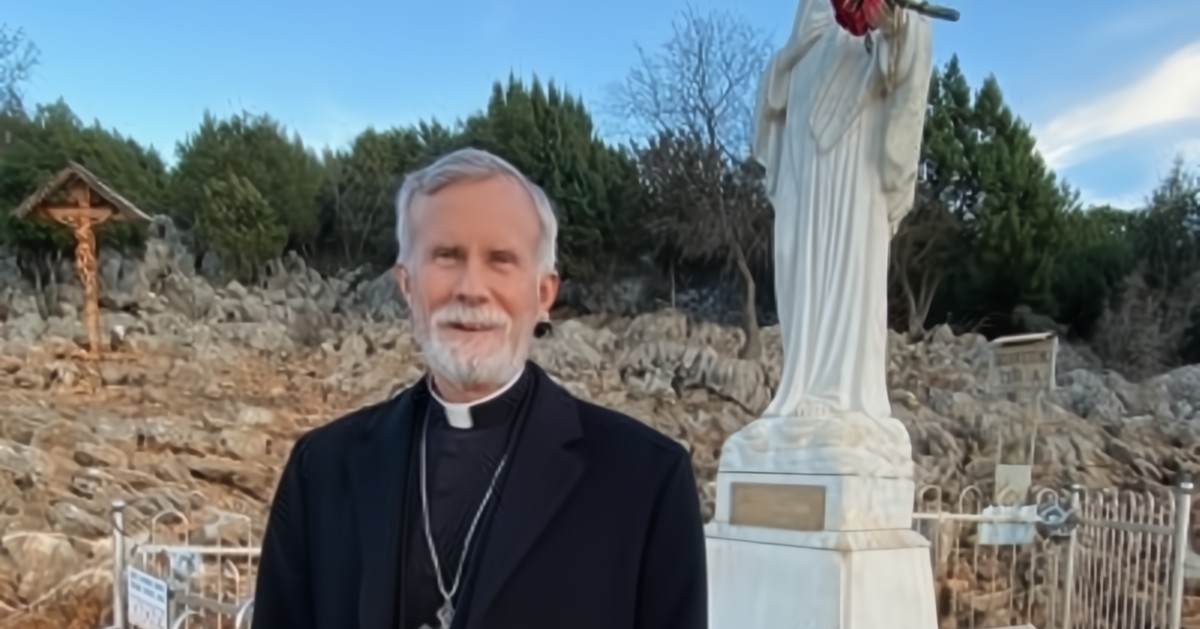
A public warning from Bishop Joseph E. Strickland has reignited debate among Catholics about clarity, reverence, and responsibility within the Church, particularly as questions about worship, doctrine, and leadership continue to weigh heavily on the faithful.
In remarks shared by LifeSiteNews with an episode of The Watchman’s Lamp podcast titled Watchmen at the Altar, the bishop emeritus framed the present moment as one of moral urgency rather than internal politics. He described a responsibility rooted not in public pressure but in accountability before God, saying the time for silence has passed.
“We are living in such a moment,” Bishop Strickland said, referring to what he sees as growing confusion within the Church.
According to the bishop, the most serious threat facing Catholic life today does not come from persecution or hostility from outside the Church, but from uncertainty and ambiguity within it. While affirming that Christ remains the Head of the Church and is present in the Eucharist, he acknowledged that many Catholics feel unsettled and disoriented, sensing that something essential has been weakened or obscured.
An Urgent Message from Sister Sara – Please Watch
Strickland repeatedly returned to the biblical image of the watchman from the Book of Ezekiel, emphasizing that bishops are entrusted with the duty to warn when danger approaches. He noted that a watchman is not tasked with inventing threats, but with seeing clearly and speaking honestly when souls are at risk.
“The greatest danger facing the Church today is not persecution from the outside,” he said. “The deeper danger today is confusion within.”
Much of that confusion, according to Strickland, is experienced most acutely in the Church’s worship. He described the liturgy as the heart of Catholic life, the place where belief is formed and where the Church comes to understand who God is and who she is in relation to Him. When worship loses its sense of transcendence, he warned, belief itself begins to erode.
Drawing attention to widespread concerns among the faithful, the bishop pointed to a perceived loss of sacredness in the liturgy, including diminished silence, informality at the altar, and a shift away from a clear focus on sacrifice and transcendence. He stressed that these concerns are not about nostalgia or rejecting the validity of the Mass, but about the spiritual consequences that follow when reverence fades.
“When worship becomes horizontal, the soul slowly forgets heaven,” Strickland said.
Addressing the legacy of the Second Vatican Council, the bishop emphasized that the council itself called for continuity and fidelity to what had been handed down, warning against unnecessary innovations and ruptures with tradition. However, he argued that in the decades following the council, practices emerged that went beyond what the council fathers envisioned, leading over time to improvisation and a loss of form and discipline.
According to Strickland, the effects of this shift are visible in weakened catechesis, declining belief in the Real Presence, empty seminaries, and Catholics who struggle to articulate what the Church actually teaches. He rejected the idea that the Church is suffering from a lack of information, calling the situation instead “a crisis of will.”
“The problem is no longer that cardinals and bishops do not know,” he said. “The problem is that many have decided it is safer not to act.”
Strickland also addressed what he described as a misunderstanding of mercy, warning that compassion divorced from truth ultimately abandons souls rather than healing them. He emphasized that Christ’s mercy always called for repentance and conversion, not affirmation without direction.
In light of upcoming consistories and gatherings of Church leaders, the bishop cautioned that decisions made without honest reckoning risk deepening confusion rather than resolving it. Silence, he argued, does not preserve unity but quietly communicates that problems will not be confronted.
“Obedience never requires us to deny reality,” Strickland said. “It never demands silence in the face of error.”
Despite the gravity of his warning, the bishop emphasized that his message is not one of despair or rebellion. Instead, he framed it as a call to courage, responsibility, and fidelity to Christ, urging bishops to teach clearly, priests to guard the altar with reverence, and the faithful to remain rooted in prayer and tradition.
“I cannot remain silent,” Strickland said, explaining that his resolve flows from his episcopal responsibility rather than personal ambition. He acknowledged that speaking plainly may bring criticism or marginalization but insisted that the Church was built on sacrifice, not career safety.
As reported by LifeSiteNews, the bishop concluded his remarks with a prayer for the Church, asking God to restore reverence, strengthen the confused, grant courage to bishops, fidelity to priests, and perseverance to the faithful.
For many Catholics who feel caught between obedience and clarity, Strickland’s warning echoes a question increasingly voiced in parishes and pews alike: whether the Church will confront its internal confusion or continue to manage decline in silence.
Your support brings the truth to the world.
Catholic Online News exists because of donors like you. We are 100% funded by people who believe the world deserves real, uncensored news rooted in faith and truth — not corporate agendas. Your gift ensures millions can continue to access the news they can trust — stories that defend life, faith, family, and freedom.
When truth is silenced, your support speaks louder.