
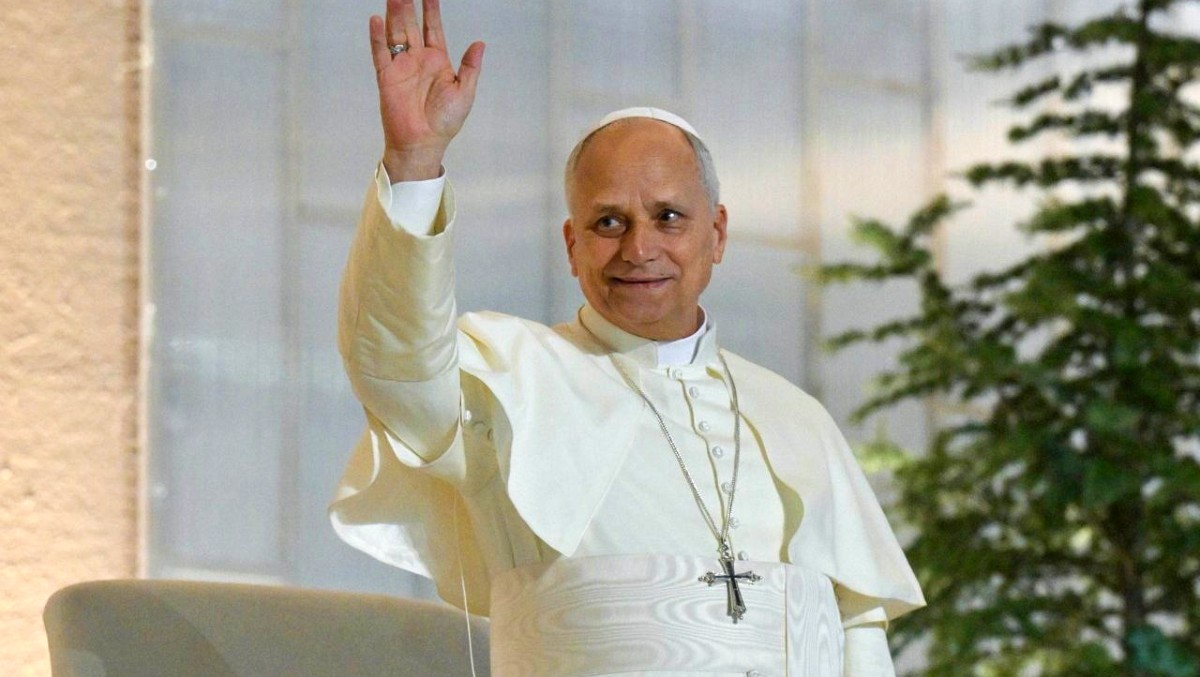
Pope Leo XIV announced this week that he is beginning a new catechesis series dedicated to the Second VaPope Leo XIV has announced the launch of a new catechesis series focused on the Second Vatican Council, reaffirming his support for the Council while reviving long-standing theological debates among clergy and scholars.
According to LifeSiteNews, the pope said the Church is beginning “a fresh reading” of Vatican II and described the Council’s Magisterium as “the North Star guiding the Church’s journey,” in remarks shared publicly this week.
An Urgent Message from Sister Sara – Please Watch
During his general audience on Wednesday, Pope Leo XIV explained that “closely studying the Council documents will help us to be attentive interpreters of the signs of the times, and to proclaim the Gospel to all,” according to LifeSiteNews’ reporting on the audience.
The pope’s emphasis places him in continuity with Pope Francis, who repeatedly characterized Vatican II as “irreversible” and described it as “a visit of God to His Church,” as cited by LifeSiteNews. Pope Leo has not yet provided a detailed outline of the catechesis series, but he used his audience to highlight elements of the Council he holds in high esteem.
Among these was the liturgical reform that followed Vatican II. Pope Leo said the Council “set in motion an important liturgical reform by placing at the center the mystery of salvation and the active and conscious participation of the entire People of God,” according to LifeSiteNews.
That reform was rooted in Sacrosanctum Concilium, the Council’s Constitution on the Sacred Liturgy. Critics have argued that its emphasis on participation represented a departure from earlier priorities. Liturgist and author Peter Kwasniewski stated in 2019 that Vatican II inverted the proper hierarchy of worship, observing that where Pope St. Pius X taught that the “sanctity and dignity of the temple” must come first, Vatican II instead made “full and active participation by all the people” the primary aim, according to commentary cited by LifeSiteNews.
Pope Leo also praised Vatican II for shaping a Church committed to ecumenism and interreligious dialogue, saying it calls Catholics to seek truth “through the way of ecumenism, interreligious dialogue and dialogue with people of good will,” according to LifeSiteNews’ account of his remarks. Critics argue such language risks implying that the fullness of truth does not subsist uniquely within the Catholic Church.
Several prelates have publicly challenged Vatican II’s teachings in this area. Athanasius Schneider has criticized Lumen Gentium for stating that Muslims “along with us adore the one and merciful God.” Schneider argued that this formulation confuses natural worship with supernatural Christian adoration, noting that Christians adore God as adopted sons “in the truth of Christ and in the Holy Spirit,” a distinction he described as “substantial,” according to LifeSiteNews.
Schneider has also objected to passages in Nostra Aetate suggesting that Hindus and Buddhists may attain illumination apart from Christ, calling such claims incompatible with Catholic teaching on grace and salvation, as reported by LifeSiteNews. He further criticized Dignitatis Humanae for proposing what he described as “a theory never before taught by the constant Magisterium of the Church” regarding religious freedom.
Former apostolic nuncio Carlo Maria Viganò has echoed these concerns, stating that Vatican II’s formulation of religious freedom “contradict[s] the testimony of Sacred Scripture and the voice of Tradition,” according to statements cited by LifeSiteNews.
Debate also continues over Unitatis Redintegratio, Vatican II’s Decree on Ecumenism, which allows for prayer with non-Catholic Christians in certain circumstances. Critics point to earlier councils — including Carthage, Laodicea, and Constantinople — that explicitly prohibited common prayer with heretics or schismatics and imposed ecclesiastical penalties for such actions, according to historical conciliar texts referenced by LifeSiteNews.
By describing Vatican II as the “guiding star” of the Church’s path, Pope Leo XIV has signaled that his pontificate will firmly defend the Council’s authority. At the same time, the catechesis series appears poised to reopen unresolved questions about continuity, doctrinal development, and the proper interpretation of one of the most influential councils in the Church’s history, according to ongoing commentary highlighted by LifeSiteNews.
Your support brings the truth to the world.
Catholic Online News exists because of donors like you. We are 100% funded by people who believe the world deserves real, uncensored news rooted in faith and truth — not corporate agendas. Your gift ensures millions can continue to access the news they can trust — stories that defend life, faith, family, and freedom.
When truth is silenced, your support speaks louder.