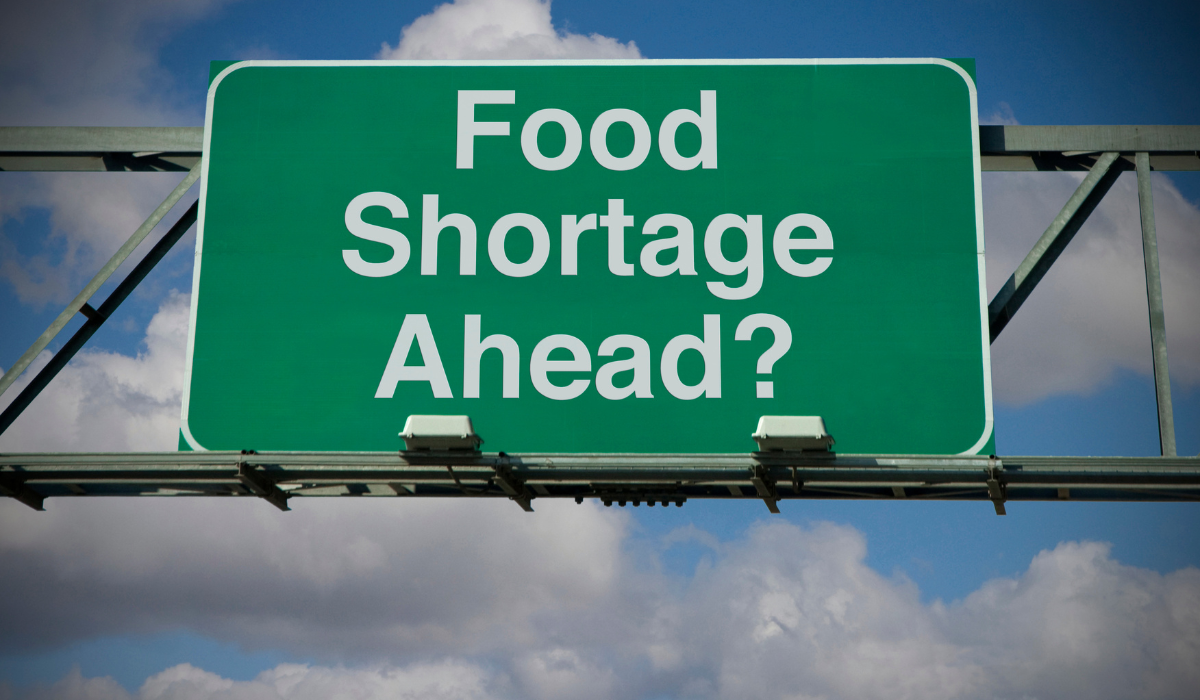

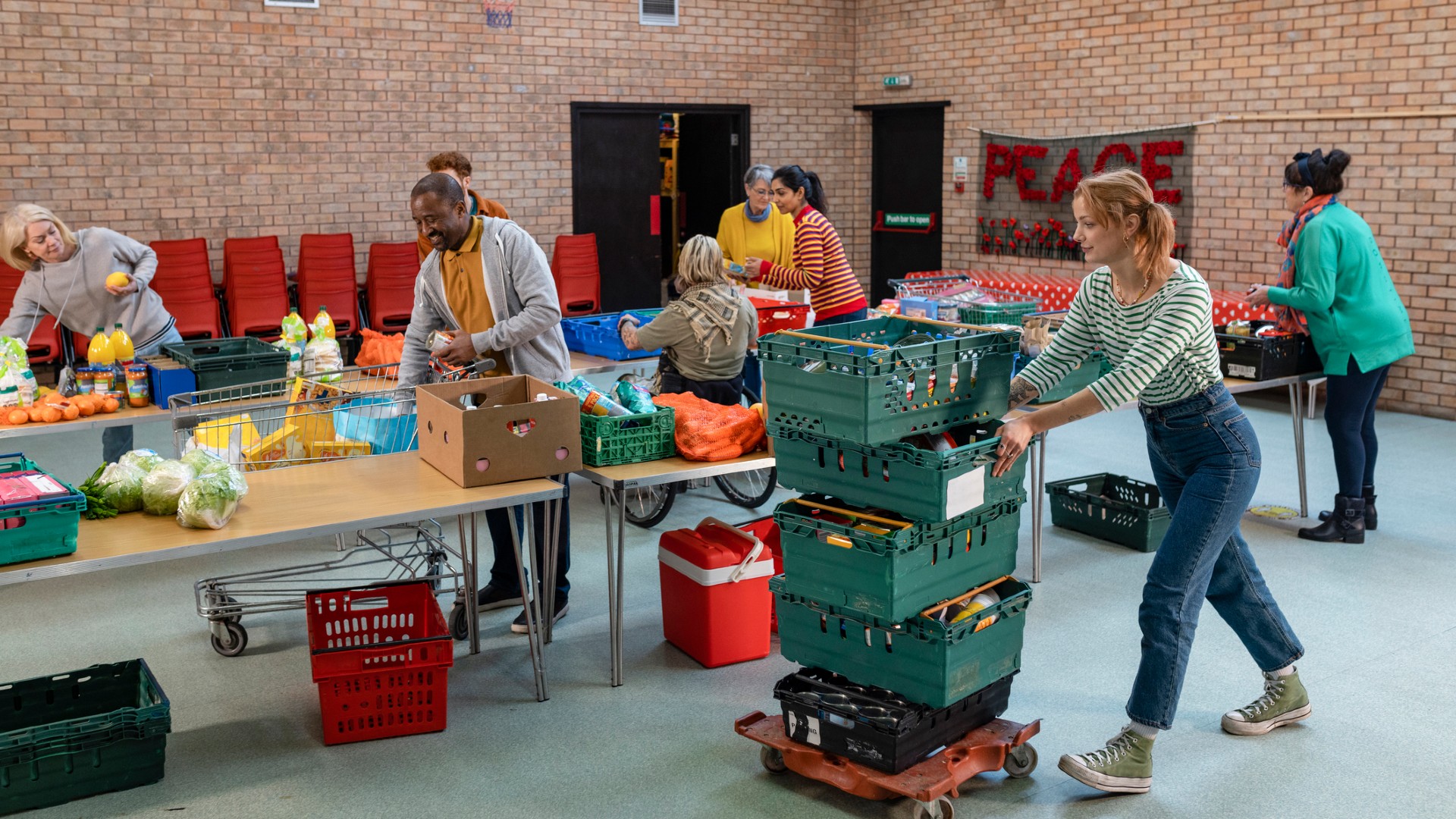
America has spent decades and unimaginable sums “fighting hunger.” Yet food lines still stretch around buildings. Food banks still report record demand. Parents still skip meals so kids can eat. Seniors still choose between prescriptions and groceries.
If this were a temporary crisis, it would make sense.
But this has been happening for generations.
And that forces an uncomfortable question we’ve avoided for far too long:
If hunger programs were built to end hunger… why do we still have hunger after 50 years of funding them?
The Permanent Emergency Nobody Wants to Explain
“Emergency food assistance” has become a permanent feature of American life. We talk about hunger the way we talk about weather: it’s always coming, always here, always “worse than last year.” We raise more money, expand more programs, build more administrative layers, and yet the same communities remain trapped in the same cycle.
In some places, the numbers are staggering. In Central California alone, a regional food bank reports distributing hundreds of thousands of meals every month—an industrial scale response to a problem that is supposedly being solved.
But a system that truly solves hunger doesn’t require endless expansion.
It requires closure.
If a hunger program succeeds, it shrinks the need for itself. If it never shrinks, we have to stop calling that “success” and start calling it what it is:
A structural failure.
This Isn’t About Bad People. It’s About a Bad Design.
Most people inside hunger relief are compassionate. Many are heroic. That’s not the point.
The point is this: you can’t solve a local human problem with a distant machine.
Top-down systems are built for compliance, reporting, and throughput. They are optimized to move resources across large networks and satisfy rules written far away from the families who need help.
But hunger isn’t a paperwork problem.
Hunger is personal. It’s local. It’s deeply human.
And the more centralized the system becomes, the more it tends to produce the same predictable outcomes:
- Distance from real people
- Slow response
- One-size-fits-all solutions
- Waste and inefficiency
- Endless administration
- Little lasting change
In other words: the system gets better at running itself… while families stay stuck.
The Question That Changes Everything
Here is the question that flips the entire conversation:
If hunger programs were truly designed to end hunger, they would not need to exist forever.
So what are they actually designed to do?
They are designed to distribute food within the framework of a centralized model – where communities remain dependent on external pipelines, and local capacity is rarely built. It becomes a system of maintenance, not transformation.
That’s why we keep paying and paying and paying, and the underlying conditions don’t change.
Because the goal quietly became “feed the need,” not “eliminate the need.”
The Missing Principle: Solutions Must Live Where Problems Live
There is a reason real change almost always begins locally.
The people closest to the problem understand it best. They know the families. They know the streets. They know who is embarrassed to ask for help. They know what foods actually get eaten. They know what resources are available right now.
And most importantly: local communities can build the habits and infrastructure that reduce dependency over time.
For Catholic readers, this is the heart of a principle the Church has taught for generations: subsidiarity – the idea that problems should be handled at the most local level competent to address them, rather than being swallowed by distant authorities. It isn’t politics. It’s common sense and human dignity in practice.
A hungry family is not a “case.”
A neighborhood is not a “service area.”
A parish is not a “distribution point.”
They are human communities. And communities don’t heal from a distance.
Here’s the Pivot: What If the System Isn’t Underfunded… But Misbuilt?
We’ve been told for decades that hunger persists because there isn’t enough money, enough awareness, enough funding.
But what if that’s not true?
What if the real reason hunger persists is that we built a structure that moves resources without building local capacity – and then we call that “help”?
What if the problem isn’t a lack of compassion…
…but a system that keeps compassion far away?
Introducing ShareNetwork: A Different Kind of Hunger Solution
ShareNetwork is a decentralized hunger-response and local resilience infrastructure designed to do what the current system rarely does:
Put communities back in control of feeding their own people.
It isn’t a new charity asking you to “trust us.”
It’s a model built to be transparent, local, accountable, and measurable – with the community as the center of gravity, not the bureaucracy.
ShareNetwork is designed around a simple truth:
The shortest distance between help and need is a neighbor.
How ShareNetwork Works (In Plain English)
ShareNetwork functions like a local hub system – a network of community-based distribution points and partnerships that make food access faster, more human, and more efficient.
A ShareNetwork community hub can:
- Coordinate local food sourcing and distribution
- Organize “last mile” delivery where transportation is a barrier
- Build neighborhood-level participation (people helping people)
- Reduce waste through better local routing and matching
- Work with baseline food streams while strengthening local supply
- Create repeatable playbooks so local leaders can scale impact
The goal is not just to “hand out food.”
The goal is to build the local infrastructure that makes hunger less likely in the first place.
Old System vs. ShareNetwork
Here is the cleanest way to see the difference:
The old model says:
“Send money upward, and we’ll send help back down.”
ShareNetwork says:
“Build local capacity where people live, and dependency shrinks.”
- Centralized pipelines → Local hubs
- Opaque spending → Transparent operations
- Distant decisions → Local decision-making
- Endless emergency → Resilience building
- Bureaucracy-first → People-first
- Volume measures → Impact measures
This is not “innovation” for innovation’s sake.
It’s a return to something older and wiser:
Feed people through human hands. Build strength where people live. Make help local again.
This Is a Moral Issue, Not a Marketing Issue
Hunger is not inevitable.
What’s inevitable is what happens when a society funds systems that maintain problems instead of solving them.
At a certain point, continuing to do the same thing becomes a form of consent.
And that’s where you come in.
Not as a spectator. Not as a donor to another endless cycle.
But as someone who refuses to keep funding failure.
What You Can Do Right Now
If you believe hunger should be solved where it exists – locally, transparently, with real accountability – then help build the infrastructure that makes that possible.
Donate to build ShareNetwork hubs and the last-mile systems that put food back into communities – where it belongs.
Your donation isn’t just “support.”
It’s a vote for a better design.