
As families around the world prepare for Christmas Eve, many Catholic households turn to traditions that are meant to prepare both body and soul for the celebration of Christ’s birth. Among Italian and Italian American families, one of the most enduring customs is the Feast of the Seven Fishes, a meal deeply shaped by faith, history, and family memory.
According to Catholic News Agency, the tradition, known in Italian as “La Vigilia,” meaning “The Eve,” is rooted in southern Italy and emerged as a distinctly Catholic way of observing Christmas Eve. Historically, southern Italy was marked by widespread poverty, especially before and after the country’s unification in the 19th century. While resources were scarce, coastal regions had abundant access to fish, which naturally became the centerpiece of Christmas Eve meals.
An Urgent Message from Sister Sara – Please Watch
The custom is also closely tied to the Church’s long-standing practice of abstaining from meat on certain days. As Catholic News Agency explains, the Feast of the Seven Fishes is connected to “the Catholic Church’s practice of not eating meat during certain times of the year — for example, on Fridays during Lent and on the eve of some holidays.” Christmas Eve, traditionally observed as a vigil, became a natural moment for such a meal of seafood rather than meat.
The number seven itself carries rich biblical meaning. Catholic News Agency notes that “the number seven is also symbolic in that it is repeated more than 700 times in the Bible,” and it echoes key elements of Catholic belief, including the seven sacraments and the seven days of creation. While the feast is not part of the official liturgical calendar, the symbolism reinforces its spiritual character as a meal that looks forward to the joy of Christmas Day.
As Italian immigrants arrived in the United States in the late 19th and early 20th centuries, they brought La Vigilia with them. Catholic News Agency reports that many families who fled poverty continued the tradition in their new homes, allowing it to flourish among Italian American communities and eventually spread beyond them.
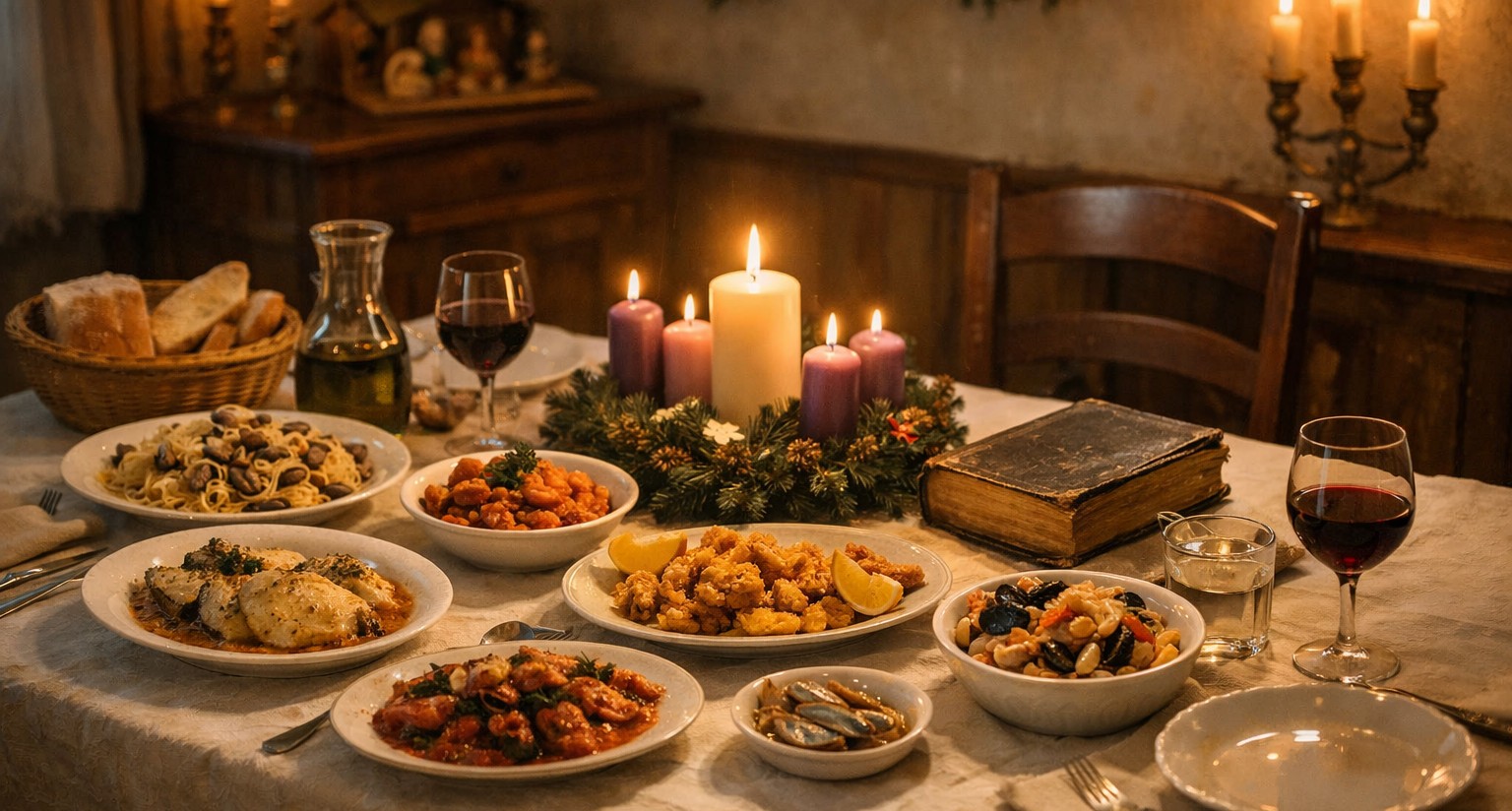
There is no single, fixed menu for the Feast of the Seven Fishes, but the guiding principle is the presence of seven distinct seafood dishes. These often unfold across multiple courses, beginning with appetizers and soups, followed by pasta and main dishes. Common preparations include seafood salads with shrimp, mussels, or octopus, as well as pasta dishes like linguine with mixed seafood. Some families also serve fried fish, eel, crab, or lobster, depending on regional and family preferences.
Dessert marks the joyful conclusion of the vigil meal. Catholic News Agency highlights struffoli, describing them as “little balls of fried dough covered in honey and sprinkles” that are especially associated with Naples. Other traditional sweets, including cookies and sweet breads, often follow, signaling that the fast of the vigil is giving way to the celebration of Christmas.
Though the dishes and recipes may vary from home to home, the heart of the Feast of the Seven Fishes remains the same. It is a meal shaped by faith, restraint, gratitude, and anticipation — a way for families to gather, remember their roots, and prepare to welcome the newborn Christ with hearts and homes made ready.
Your support brings the truth to the world.
Catholic Online News exists because of donors like you. We are 100% funded by people who believe the world deserves real, uncensored news rooted in faith and truth — not corporate agendas. Your gift ensures millions can continue to access the news they can trust — stories that defend life, faith, family, and freedom.
When truth is silenced, your support speaks louder.