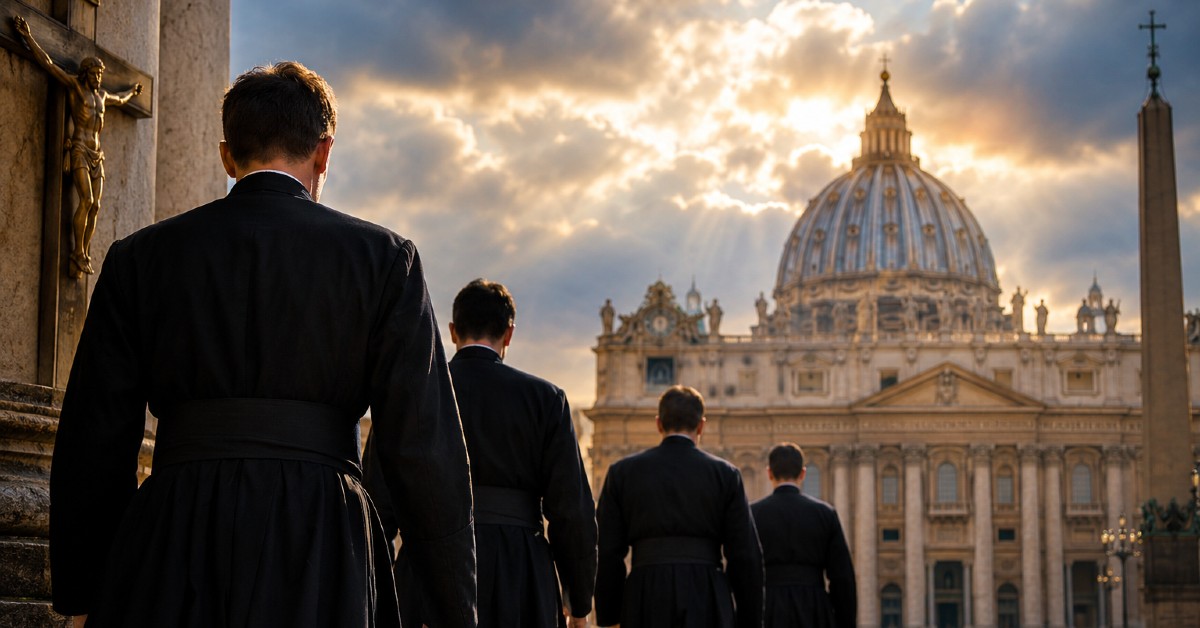


The Vatican has introduced major structural and procedural reforms to the Roman Curia, marking one of the most significant administrative shifts in recent decades. The new Regulation of the Roman Curia, approved by Pope Leo XIV on November 24, updates long-standing norms and introduces modernized workflows, digital processes, and new personnel expectations — while also ending the centuries-old requirement that curial acts be drafted in Latin.
According to LifeSiteNews, the regulation states that official acts may now be written “in another language,” replacing the previous mandate that all such documents be composed in Latin. The Catholic Herald reported that officials have “privately acknowledged” this will likely lead to Latin being abandoned “in practice,” though the Vatican’s “Office of the Latin Language” will continue operating under the Secretariat of State to assist all curial departments.
A central feature of the reform is the consolidation of curial governance under the Vatican Secretariat of State. The new rules “mandate that all acts intended for the pope pass through the Secretariat,” which is currently headed by Cardinal Pietro Parolin, described by LifeSiteNews as “liberal.” The regulation states: “It is up to the Secretariat of State, by order of the Roman Pontiff, to coordinate the activity of the Dicasteries, the Organizations, the Offices of the Roman Curia and the Institutions connected with the Holy See and to ensure their unity of address.”
New expectations for collaboration between curial bodies also appear in the updated norms. Acts involving more than one dicastery will require co-signatures, and all decisions are to be recorded in a “centralized and digital” registry, according to Silere Non Possum. The reforms also mandate digital archiving, access logs, three levels of classification for sensitive documents, and procedures for the “controlled destruction” of materials.
The regulations require greater consultation with local Church leadership. Decisions pertaining to dioceses must involve local bishops, and for matters involving religious institutes, major superiors are to be consulted, LifeSiteNews reported.
Personnel policies have also undergone a substantial update. New norms require that employees demonstrate “exemplary religious and moral conduct, including in their private and family lives, in accordance with the doctrine of the Church.” A six-day work week and limits on part-time arrangements have been formally established, and performance will now be evaluated according to “measurable standards.”
These reforms codify and extend changes originally introduced under Pope Francis through Praedicate Evangelium and replace regulations dating back to 1999 under Pope John Paul II. Their stated goal is “uniformity” across all curial functions, “from drafting procedures and cooperation between dicasteries to personnel discipline,” according to The Catholic Herald.
Reactions within the Vatican remain mixed. The Herald notes that some officials view the reforms as “a welcome return to clarity,” while others express concern that “increased centralisation may burden officials and concentrate too much authority in the Secretariat of State.”
The new regulations take effect as the Vatican continues its broader efforts to modernize internal structures while maintaining fidelity to its mission and governance responsibilities.
Your support brings the truth to the world.
Catholic Online News exists because of donors like you. We are 100% funded by people who believe the world deserves real, uncensored news rooted in faith and truth — not corporate agendas. Your gift ensures millions can continue to access the news they can trust — stories that defend life, faith, family, and freedom.
When truth is silenced, your support speaks louder.